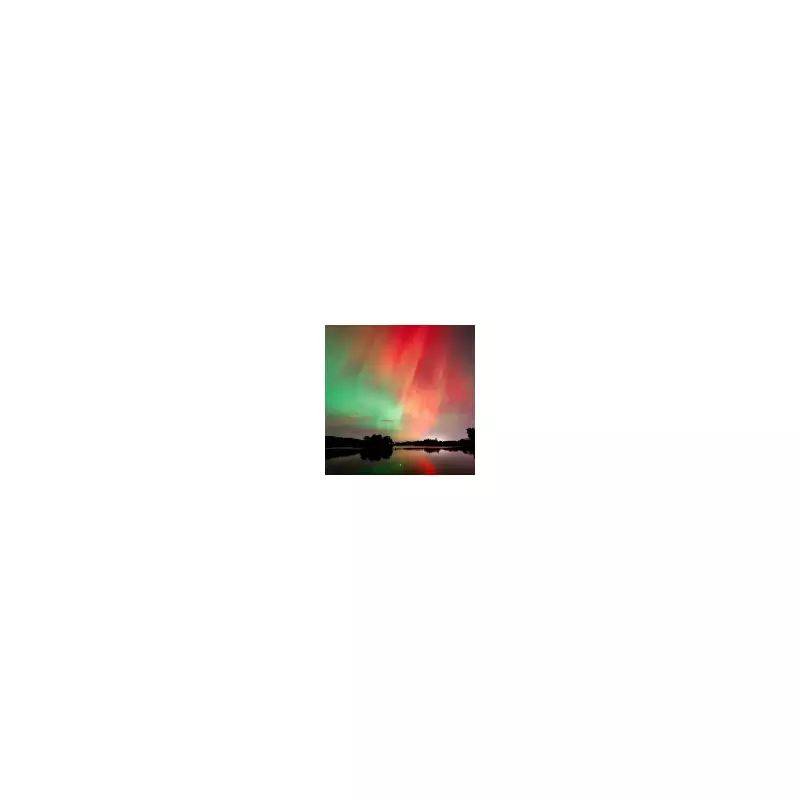
For countless Britons, witnessing the celestial dance of the Northern Lights has shifted from a distant dream to a recurring reality. The phenomenon, typically reserved for Arctic latitudes, has been painting the British night sky with surprising regularity, leaving many to wonder what is behind this increase in otherworldly displays.
A Surreal Sight from City Windows
The experience has been nothing short of surreal for residents across the country. Josh Yonish, a 22-year-old geologist, encapsulates this feeling, having now seen the aurora multiple times from urban UK locations. ‘To be seeing one of the natural wonders of the world through my bedroom window in northeast London on a cold October night felt quite surreal,’ Josh told Metro. He added, ‘Feels like I should be paying money to go to Iceland or Finland to see them, so I’m grateful for that!’
This sentiment was echoed during a remarkable display on the night of Wednesday, November 12, 2025, when vibrant stripes of green, blue, pink, and purple shimmered above the UK, visible even from major cities like Birmingham and London.

The Science Behind the Spectacle
The Aurora Borealis is a natural light show caused by interactions between the Earth's magnetic field and charged particles from the sun. Our planet's magnetic field acts as a protective shield, deflecting most of this solar wind. However, some particles are channelled towards the poles, where they collide with gases in the upper atmosphere.
These collisions energise the gases, causing them to glow. Oxygen produces a greenish hue, while nitrogen can create red or pink tones. The result is the ethereal, curtain-like display we know as the Northern Lights.
Why Now? The Solar Maximum Connection
The key reason for the increased frequency and southern reach of the aurora lies in the sun's activity. According to Jo Farrow, a forecaster for Netweather, the UK is currently near a solar maximum.
A solar maximum is a period in the sun's 11-year cycle when its activity peaks. During this phase, dark areas known as sunspots become more common. When these sunspots erupt, they can release massive bursts of radiation and plasma called solar flares and coronal mass ejections (CMEs).
When a CME is directed at Earth, it can trigger a geomagnetic storm. The Met Office confirmed that an Earthbound CME reached us on the evening of November 12, causing a ‘severe’ geomagnetic storm rated as a G4. This followed a G5 storm back in May 2025.
‘In a time of solar maximum, there are more sunspots, more solar flares, more CMEs, and so more energised particles for the solar wind to bring towards Earth,’ explains Farrow. The strength of these recent storms has been sufficient to push the auroral oval further south, making the lights visible across the UK, especially when combined with clear night skies.
How to Capture the Moment
With the possibility of more sightings, many are eager to photograph the phenomenon. Annika Bizon of Samsung UK offered advice for capturing the lights, even with a smartphone. ‘The truth is, many smartphones now do much of the thinking for you,’ she said. Devices with automatic Night Mode can enhance details and brighten shots in low light, making it easier to capture the aurora's stunning colours.
Tips for photographing the Northern Lights:
- Use a tripod or steady surface to avoid blur.
- Enable your camera's Night Mode for low-light enhancement.
- Experiment with manual settings if possible.
Will the Lights Return?
The opportunity to see the Northern Lights may not be over. AuroraWatch UK, a service run by Lancaster University, had issued a ‘red alert’, indicating the aurora was ‘very likely’ to be visible. However, the Met Office noted that subsequent visibility would become more confined to Scotland as the effects of the recent coronal mass ejection wane, with cloud cover potentially obscuring the view for some.

For witnesses like Josh Yonish, each appearance remains a magical event. ‘My favourite thing to see was how they changed between every photo I took,’ he explained. ‘Even though I couldn’t really see anything with the naked eye it felt like I was watching an artificial light show on a massive scale.’ And for now, it's a show that doesn't require a plane ticket to see.