
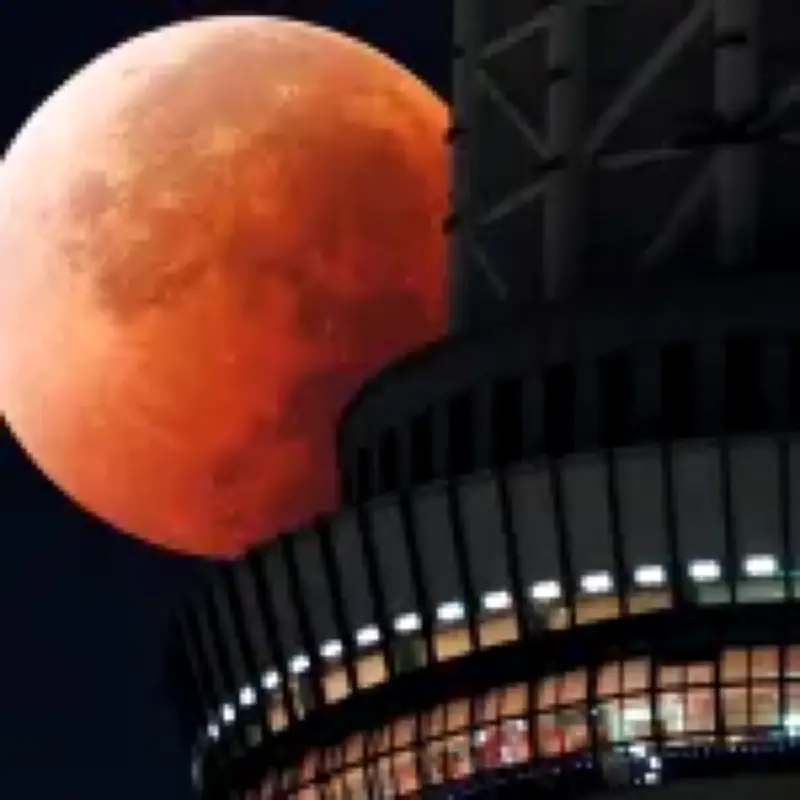
Early risers in the UK will be treated to a partial lunar eclipse on Friday morning, with around 94% of the moon expected to appear a deep blood red, according to Jake Foster, an astronomer at the Royal Observatory Greenwich in London. Unlike the recent partial solar eclipse, this celestial event can be viewed safely with the naked eye, no protective glasses required.
What is a lunar eclipse and why does the moon turn red?
Lunar eclipses occur when the Earth slides directly between the sun and the moon, casting its shadow across the lunar surface. The darkest part of the planet's shadow, called the umbra, blankets the moon, making it shine crimson instead of its usual dusty white. There are three types of lunar eclipses: total, when the umbra swallows the moon whole; partial, when it takes a small bite; and penumbral, when only the outermost part of Earth's shadow, known as the penumbra, grazes past the moon, darkening it without turning it red.
The red hue, often called a blood moon, is not a sign of the end times. Even during nighttime, sunlight still leaks through the edges of the Earth, Foster explains. 'Our atmosphere then filters the sunlight that passes through it, allowing mainly red light to reach the moon and illuminating the lunar surface in an eerie red light,' he says. How red the moon becomes depends partly on how many particles are floating in the skies; clouds, dust storms, and other plumes can scatter blue wavelengths of light even more, making the moon appear a deeper shade of coppery red.
When and where to see the lunar eclipse in the UK
Lunar and solar eclipses always occur about two weeks apart, the time it takes for the moon to move from one side of Earth to the other. This week's event will be a 'strong partial one', Foster says. 'Around 94% of the moon will appear red, with a small sliver maintaining its usual grey tones.' Unlike a solar eclipse, lunar eclipses occur at the same time for everyone and happen slowly over several hours. The penumbral phase, when the moon passes through Earth's outer shadow, will start at 2.23am and last until 8.01am, with around 94% of the moon covered by the Earth's shadow at 5:12am.
'Simply look towards the southwest to spot the moon,' Foster advises. 'It will be fairly low during maximum eclipse, so a clear view of the southwestern horizon is recommended. The moon will set below the horizon around one hour after the eclipse's maximum, meaning UK viewers will miss the latter part of proceedings.'
Viewing tips and weather forecast
Unlike a solar eclipse, no protective eyewear is needed to view this spectacle. Lunar eclipses can be seen with the naked eye, but binoculars or a telescope will provide a better view, and no solar filter is required for professional viewing equipment. However, how much of the blood moon you see will depend on how clear the night sky is. Timeanddate.com reports that most major UK cities, including London, Cardiff, and Glasgow, will be cloudy or rainy on Friday morning.
For those who miss this event, the next one is not far off: a penumbral lunar eclipse will take place between February 20 and 21 next year.



