
Commercial flights may face rerouting or grounding to prevent passenger exposure to space radiation from solar flares, according to new research from the Surrey Space Centre (SCC). The study found that radiation at typical flight altitudes of 5-9 miles could disrupt aircraft electronics, posing a safety risk.
Recent Solar Storm Highlights Risks
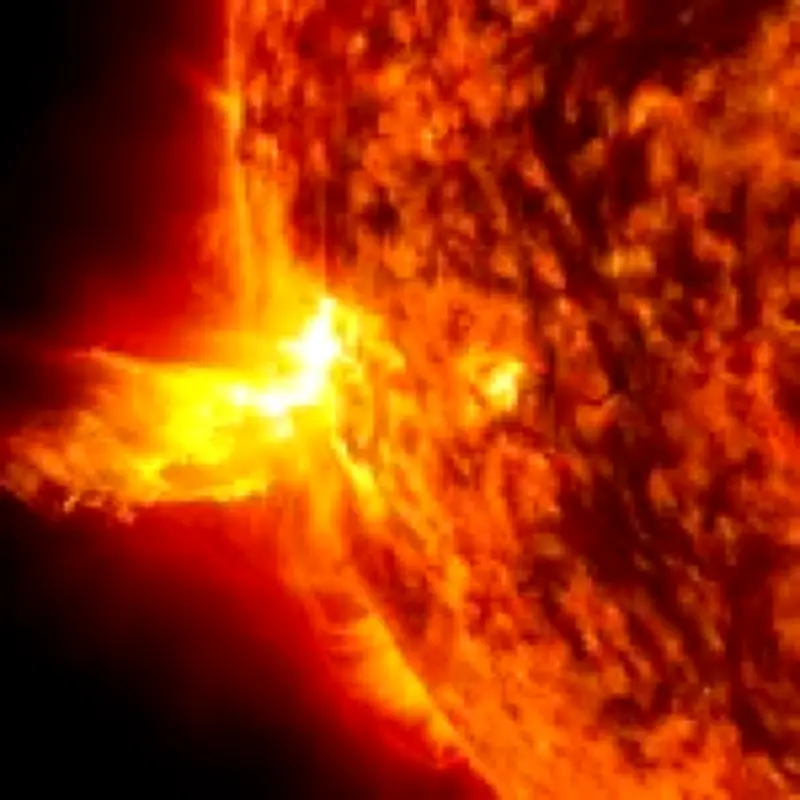
Measurements led by SCC showed that a major solar storm in November 2025 caused radiation levels to briefly rise to nearly 10 times normal flight conditions at high altitudes. The strongest solar storm on record, from 1956, could have exposed passengers to radiation equivalent to a year's worth of flight-related cosmic radiation.
Because the atmosphere shields us from the sun's radiation, commercial flights expose passengers to significantly higher radiation levels than at ground level. A recent incident demonstrated the potential dangers: in October 2025, a JetBlue flight from Cancún to Newark made an emergency landing in Florida after a sudden altitude drop, injuring 15 people. Following this, Airbus temporarily grounded 6,000 A320 aircraft after discovering a vulnerability to 'intense solar radiation' in a flight control computer.
Expert Insights and Electronics Vulnerability
Dr Fan Lei, Senior Research Fellow at the SCC, stated: 'The recent Airbus A320 grounding linked to cosmic radiation shows that space weather is not a theoretical risk; it is already affecting aviation.' He added, 'As aircraft systems become more advanced and increasingly reliant on electronics, understanding and preparing for these events will be critical to maintaining flight safety.'
The study explains that high-energy particles from space can interfere with onboard electronics, causing Single Event Upsets (SEUs) – small errors that can accumulate and disrupt critical systems. These disruptions may present a greater operational challenge than radiation exposure to passengers and crew, increasing pilot workload and the risk of in-flight problems. In extreme scenarios, SEUs could rise from a few per hour to thousands.
Polar Routes and Gaps in Safety Frameworks
The greatest risks are on polar flight routes, including those between London Heathrow and Vancouver International Airport, where the Earth's magnetic shielding is weakest. However, during severe geomagnetic storms, these effects can extend further south, including over the UK.
The findings highlight a gap in current aviation safety frameworks, which mostly focus on routine radiation exposure without fully accounting for extreme space weather events. To help the aviation sector respond more effectively, the research team has proposed a new atmospheric radiation scale designed specifically for aviation, providing clearer thresholds for when action should be taken. It proposes increased monitoring, as well as rerouting or grounding flights during severe events.
Professor Keith Ryden, leader of the Space Environment and Protection research team at the SCC, added: 'At the moment, there is no consistent way for the aviation sector to assess and respond to extreme space weather risks. We've introduced a clearer, aviation-specific radiation scale to help support more informed decision-making in aviation, helping operators act quickly to protect passengers, crew and critical onboard systems.'
While such delays may frustrate passengers stuck at airports, a few hours in duty-free may be preferable to a terrifying incident like the one that occurred last October.



