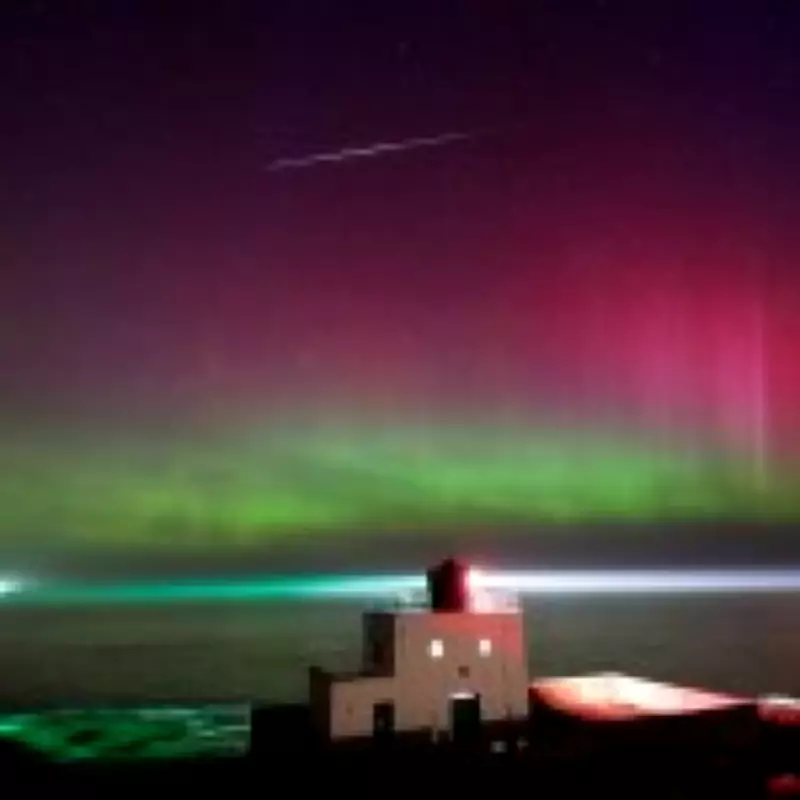
Northern Lights Dazzle UK Skies with Potential Return Tonight
The spectacular Northern Lights, typically reserved for Arctic regions, illuminated skies across much of the United Kingdom last night, reaching as far south as Norfolk. This rare celestial display, known scientifically as the Aurora Borealis, captivated observers from Northern Scotland to North Wales, with forecasts suggesting a possible encore performance this evening.
Friday Night's Spectacular Display
On Friday evening, residents across Northern Scotland, North Wales, and even parts of Norfolk witnessed the vibrant colors of the Northern Lights painting the night sky. This extraordinary event resulted from severe geomagnetic storms that have been affecting Earth's magnetic field. While these storms are expected to diminish today, their effects created memorable viewing opportunities across unexpected latitudes.
The timing coincided with the Spring Equinox, which meteorological experts believe may have enhanced visibility conditions. The equinox creates optimal alignment between Earth's magnetic field and incoming solar winds through a phenomenon called the Russell-McPherron effect, potentially strengthening auroral displays.

Tonight's Viewing Prospects
For those who missed Friday's spectacle, the Met Office offers encouraging news. In a recent social media update, the national weather service confirmed that the Northern Lights may still be visible tonight across certain regions.
The Met Office statement emphasized: "Keep an eye out as there is a chance of seeing the northern lights over the next couple of nights. Sightings are most likely across Scotland where skies are clear but perhaps into northern England too."
Clear skies will be essential for optimal viewing, with Scotland offering the best prospects, though northern England may also experience visibility if atmospheric conditions cooperate.
Increased Aurora Frequency Explained
Traditionally, Northern Lights displays have been confined to high-latitude destinations like Iceland, Scandinavia, Canada, and Alaska. However, over the past year, an unusually broad section of the Northern Hemisphere has enjoyed these colorful atmospheric phenomena.
Jo Farrow, a forecaster with Netweather, explains this increased frequency: "The reason we are seeing more northern lights events, the aurora borealis, here in the UK is that we are near a solar maximum."
Solar maximum represents a peak period in the sun's 11-year activity cycle when our star exhibits heightened energy output and increased solar eruptions. This elevated solar activity generates more frequent and intense geomagnetic storms that can push auroral displays to lower latitudes than usual.
The Science Behind the Lights
The Northern Lights originate from complex interactions between solar particles and Earth's protective magnetic field. Our planet's magnetic shield normally deflects space debris and solar radiation, functioning like a protective barrier around the atmosphere.
During solar events, the sun ejects massive clouds of charged particles called plasma at incredible speeds up to 45 million miles per hour. When these solar particles collide with Earth's magnetic field, they're funneled toward the polar regions where they interact with atmospheric gases.
These collisions excite oxygen and nitrogen molecules in the upper atmosphere, causing them to emit light at specific wavelengths. Oxygen typically produces greenish hues, while nitrogen contributes red and purple tones. The combination of these colorful emissions creates the mesmerizing light shows we recognize as the Aurora Borealis.
As solar activity continues during this period of solar maximum, UK residents may enjoy additional opportunities to witness these normally Arctic-bound displays, provided clear skies and favorable geomagnetic conditions align.