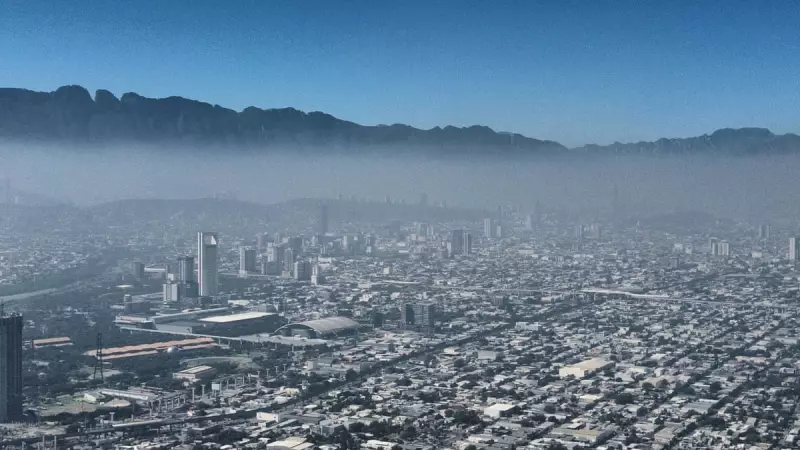
A major journalistic investigation has exposed a severe air pollution crisis in Monterrey, Mexico, directly linked to its role as a booming industrial hub supplying goods to the United States. The metropolitan area, home to 5.3 million people, is now ranked as having the worst fine-particulate air pollution in Mexico, the US, or Canada, with residents reporting they are effectively "breathing poison".
Industrial Boom at a Cost to Public Health
The joint investigation by the Guardian and Quinto Elemento Lab analysed emissions data from thousands of facilities in the Monterrey region. It found that factories, many operated by international companies from the US, Europe, and Asia, are pumping alarming levels of toxic heavy metals into the air. These emissions, which include lead, cadmium, and arsenic, exceed the totals reported in many US states and pose a grave threat to public health.
Long-term exposure to this pollution is linked to thousands of deaths annually in the area. On a daily basis, residents endure about twice the levels of fine particulate pollution as those in Los Angeles, historically America's most polluted major city. The Sierra Madre mountains, which frame the city, are frequently obscured by smog.
"You have to wonder: How are we not suffocating?" said environmental activist Aldo Salazar, describing the visible "gray basin of smog" from the surrounding hills.
Staggering Emissions from US-Linked Factories
The analysis provides stark figures. Between 2021 and 2023, plants in Monterrey reported releasing an average of 4,362 pounds of toxic lead into the air each year. A single European steel plant, Ternium, reported emitting over 1,000 pounds of lead in 2023 alone—more than all companies combined in the New York/New Jersey metropolitan area.
In the case of carcinogenic cadmium, facilities reported 301 pounds per year on average, a level rarely seen near dense urban populations in the US. Arsenic emissions averaged 66 pounds annually. A significant portion of these dangerous emissions comes from a cluster of plants within 5 miles of each other in the densely populated, working-class area of San Nicolás de los Garza.
Many top polluters are integral to the supply chain for US consumers. They include factories recycling millions of used US car batteries and hazardous waste like toxic steel dust, as well as plants producing finished goods—from tractors and beer mugs to chocolate cookies—for export north of the border.
Failed Regulation and Mounting Public Anger
Experts point to outdated Mexican environmental standards and lax enforcement as key enablers of the crisis. Governor Samuel García of Nuevo León has called the existing thresholds for pollution "extremely high." Meanwhile, emissions reporting is incomplete, with some data removed by regulators over accuracy concerns.
The health consequences are becoming tragically clear. A 2023 state study linked the pollution to up to 2,500 premature deaths yearly. Guadalupe Rodríguez, director of the regional public nursery school system, said children are suffering. "We're breathing in a capsule of poison throughout the entire metropolitan area," she stated, noting that lead testing has now been initiated for schoolchildren following the investigation's findings.
Public protests have surged, with residents carrying signs reading "We want to breathe" and "Mexico is not the trash dump for the United States." This pressure has led to temporary closures of some facilities, including the Zinc Nacional recycling plant, and promises of a crackdown from state and federal officials.
Mexican President Claudia Sheinbaum, a climate scientist, has said she awaits detailed research to identify polluters. Federal environment secretary Alicia Bárcena acknowledged the problem and said actions are being taken, including updating emissions standards.
However, researchers like Hugo Barrera warn that meaningful change, such as relocating factories outside the urban area, will be politically and economically difficult. The future of Monterrey now hangs in the balance, caught between its economic success as a manufacturing powerhouse and the dire health of its citizens.