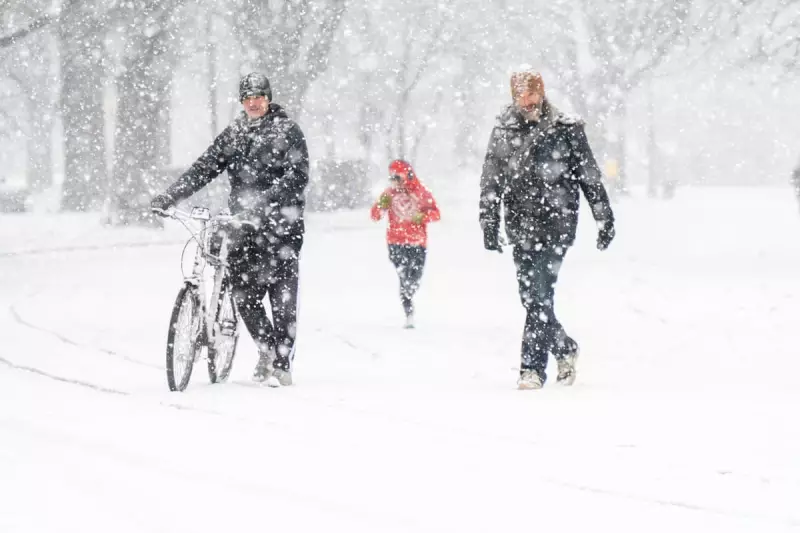
A significant winter weather event is poised to impact a vast portion of the United States beginning this Friday, bringing with it a dangerous combination of heavy snowfall, ice accumulation, and bitterly cold temperatures. The storm system is forecast to stretch an impressive 2,000 miles from the south-western regions all the way to the eastern seaboard, potentially affecting more than 200 million residents across numerous states.
Widespread Disruption and Severe Conditions Expected
Meteorologists are warning that this extensive weather system will likely cause substantial travel disruptions, bring down trees and power lines, and create significant risks of prolonged power outages. The situation is expected to be exacerbated by the arrival of dangerously cold air following the initial precipitation. By the weekend, the storm's reach will extend to a long list of major metropolitan areas including Dallas, Oklahoma City, Memphis, Nashville, St Louis, Indianapolis, Louisville, Charlotte, Norfolk, Washington DC, Baltimore, Philadelphia, and New York City.
Geographical Spread and Precipitation Varieties
The storm's influence is also predicted to extend into the Great Lakes region and New England, impacting cities such as Pittsburgh, Cleveland, Buffalo, and Boston. Precipitation types will vary significantly across different areas, with some locations potentially receiving over a foot of snow while others face the threat of severe ice buildup that could make roads treacherous and increase the likelihood of power infrastructure damage.

Forecasters anticipate the storm will reach its peak intensity on Sunday, when approximately 55% of the population in the contiguous United States will simultaneously experience some form of winter precipitation, whether snow, sleet, or freezing rain. What makes this particular system especially concerning is not just the precipitation itself but the extreme cold temperatures associated with it. As the polar vortex moves southward, parts of the midwest, Great Lakes, and New England could see temperatures plummet below minus 30 degrees Fahrenheit.
Meteorological Factors and Expert Warnings
When this frigid Arctic air collides with moisture flowing from both the Pacific Ocean and the Gulf of Mexico, it will fuel what is shaping up to be the most powerful winter storm of the current season. Eric Webb, a defense department meteorologist, highlighted the severity of the situation on social media platform X, describing it as "a truly legendary winter storm setup in the Southern US later this week" that will contain "a ridiculous amount of snow/ice."
Timeline and Regional Impacts
The severe conditions will first develop in the Rocky Mountains and Plains regions on Friday before expanding eastward throughout the weekend. The system is not expected to fully release its grip on the eastern coast until early next week. Initial impacts will be felt in cities including Denver, Albuquerque, Wichita, and Oklahoma City, with accumulating snow also reaching parts of Wyoming, Colorado, and New Mexico.
On Saturday, more than 100 million people could be affected simultaneously by the storm's various elements. A broad zone stretching from northern Texas through Kentucky may see average snow accumulations of 6 to 12 inches, while farther south a dangerous ice storm could extend from Texas into the Carolinas, creating hazardous travel conditions along major highway systems.
Preparation and Safety Recommendations
With power outages considered likely in the most affected areas, residents have been advised to take precautionary measures including fueling generators, obtaining necessary medications, and securing adequate supplies of water and non-perishable food items. Gusty winds reaching 20 to 30 miles per hour could lead to blowing snow and the snapping of ice-coated tree branches, further complicating recovery efforts.
East Coast Focus and Storm Departure
By Sunday, the storm's core will shift toward the eastern seaboard, with the heaviest snowfall expected to be centered over the mid-Atlantic region. This puts Washington DC and Baltimore in line for major snow accumulations before the system finally moves offshore late on Sunday, though snow may continue to affect parts of the north-eastern United States even as the main storm system departs.