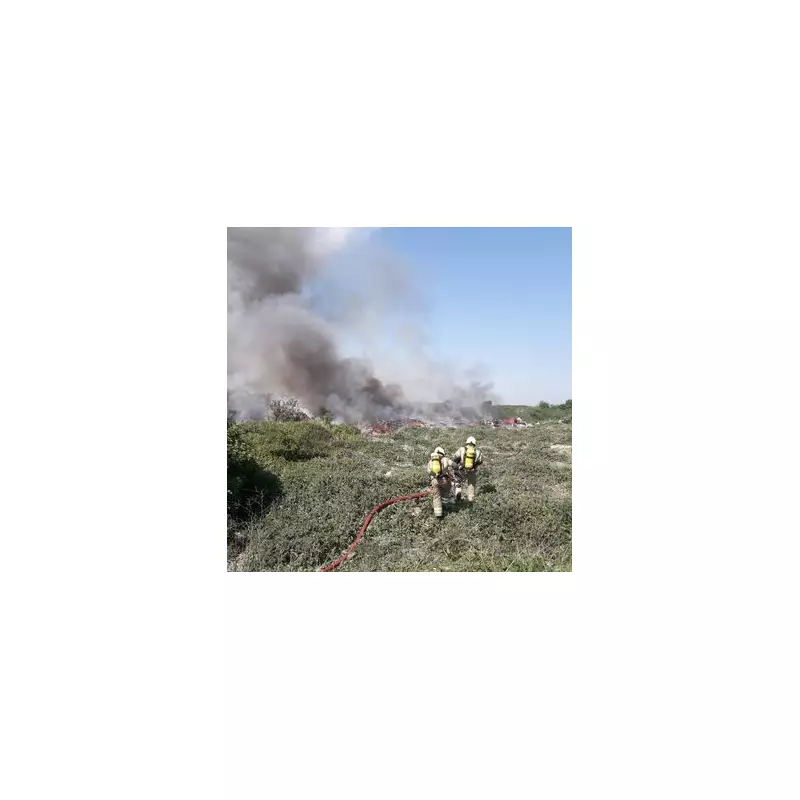
Havering Council should begin planning for potential long-term health consequences arising from a persistently burning rubbish dump in Rainham, according to local councillors. The call comes as concerns mount over the repeated fires at Arnolds Field on Launders Lane, which have plagued the area for years.
A History of Persistent Blazes
Since 2019, the Arnolds Field site has caught fire more than one hundred times, with significant incidents requiring major firefighting responses. In 2020, around seventy firefighters were deployed to tackle a major blaze at the location. These recurring fires consistently send harmful smoke drifting towards nearby residential properties, creating an ongoing nuisance and potential health hazard for the local community.
Residents' Daily Struggles
People living in Rainham have reported experiencing physical symptoms including stinging eyes and persistent, nasty coughs directly attributed to the smoke from the burning tip. Many residents say they are compelled to keep their windows firmly shut during the summer months to avoid the polluted air, significantly impacting their quality of life and comfort in their own homes.

The council has officially designated the land as contaminated following a protracted legal battle. This action was spearheaded by a coalition of concerned residents operating under the banner of Clean the Air Havering. Despite this designation, councillors are now advocating for more proactive measures rather than reactive responses.
Political Calls for Proactive Planning
At a recent Cabinet meeting, senior councillors were presented with several recommendations from the scrutiny committee. Among eight proposals put forward was a specific request that the council "plans to monitor and to detect long-term health impacts in order that an action plan around detecting long-term health impacts be put in place".
Conservative opposition councillor David Taylor emphasised the importance of forward planning, stating: "While we might not be seeing health impacts immediately, they could be something that crops up in a decade or so. The council shouldn't wait until they appear to tackle them. They are something we should begin to look at and plan for now."
Council Leadership's Response
Council Leader Ray Morgon, representing the Havering Residents Association (HRA), responded by highlighting that "permanent" measures to monitor air quality are already operational. He asserted that the council is "really focused on making sure the health and wellbeing of our residents is maintained" and added, "We are actively working all the time."
The council has thrown its support behind the Zane's Law campaign, named in memory of seven-year-old Zane Gbangbola who tragically died from landfill gas exposure in Surrey in 2014. This campaign advocates for three key governmental changes:
- The introduction of public registers documenting contaminated land sites.
- Increased funding for local authorities across the UK to facilitate land remediation.
- Adherence to the 'polluter pays' principle, enabling cost recovery from identifiable responsible parties.
Councillor Morgon explained the rationale for this support: "The legislation is out of date and that's why we're pushing forward with Zane's Law. The changes it will bring about will be very, very positive for both councils and residents." He added pointedly that "no council wants to have a situation like Launders Lane in their borough".
Root Causes and Historical Context
The council has identified the fundamental cause of the ongoing fires and smoke problem. Between 2002 and 2014, Arnolds Field became a hotspot for significant criminal activity and environmental mismanagement. The site was used for:
- Extensive fly-tipping of illegal waste.
- The storage of illegal firearms.
- Drug production operations.
The massive volume of illegally dumped waste, combined with a complete absence of proper site management during this period, created the conditions that led to the persistent fires that continue to affect the area today. This historical context underscores the complexity of resolving the issue and the importance of sustained monitoring and intervention.