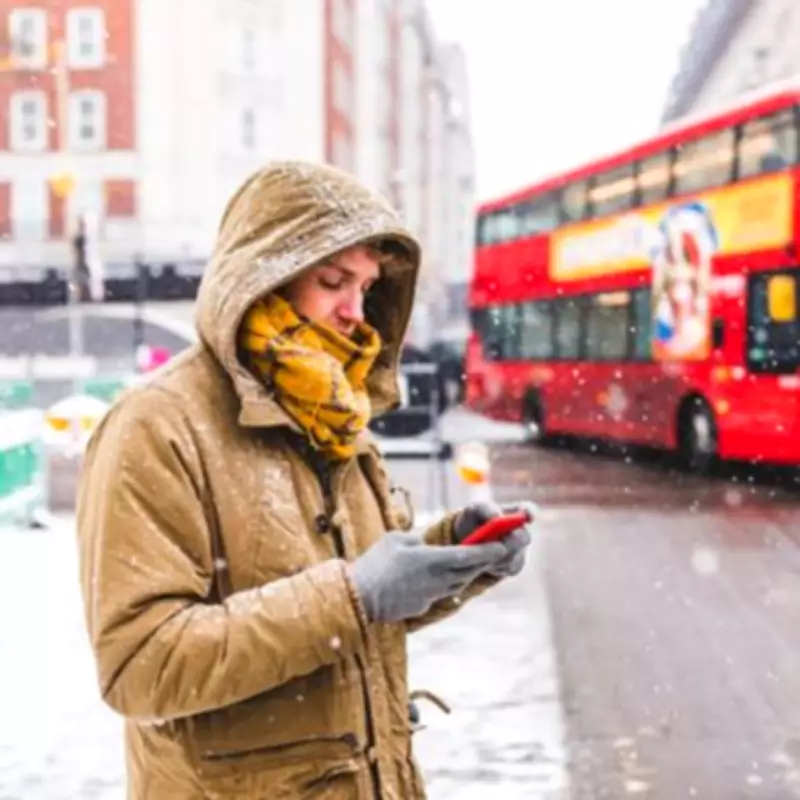
London's February Snow Prospects: Expert Analysis Reveals Uncertain Outlook
As Londoners brace for a typically damp February, conflicting weather forecasts have sparked debate about whether the capital will experience snowfall this month. While the BBC predicts persistent rain until mid-February, alternative models suggest a significant chance of snow, leaving residents wondering what to expect.
Conflicting Forecasts Create Weather Uncertainty
The meteorological picture for London this February appears divided. The BBC's outlook forecasts continuous rainfall throughout the first half of the month, painting a gloomy picture for those hoping for winter precipitation. However, NetWeather presents a contrasting view, with their mapping system indicating a substantial probability of snow accumulation across the capital.
NetWeather's visual representation uses colour-coded shading to illustrate snow probability percentages, with orange areas indicating a 70-75% likelihood of snowfall. This stark contrast between major forecasting services has created genuine uncertainty about London's February weather patterns.

Expert Verdict: London on Meteorological 'Knife-Edge'
We consulted Jim Dales, a respected meteorologist at British Weather Services, for professional insight into this weather conundrum. Dales describes London's current position as being on a "knife-edge" regarding snow potential, with probabilities that "could easily" escalate to 70%.
"We're calling out the polar vortex dislocation - cold air coming from the North Pole direction," Dales explained. "Originally, this was due to arrive around mid-month, and I don't anticipate anything significant until that period."
The expert elaborated on the complex atmospheric dynamics at play: "The cold air is certainly moving down across Scandinavia into Germany and Poland, but London sits on the periphery of this system. Unless the system shifts several hundred miles westward, we might narrowly miss the main snow event."
Probability Assessment and Seasonal Context
Dales provided a nuanced probability assessment for London: "The snow risk exists for London, and I'd currently estimate it at about 40% - slightly against rather than in favour. However, this could easily increase to 60 or 70%. The jury remains far from settled on this forecast."
The meteorologist placed this uncertainty within seasonal context: "February has historically been a snowy month in recent years. We remain firmly in winter conditions, with no immediate signs of spring's arrival. London currently occupies a transitional zone between rainfall patterns and the snow affecting Scotland."
Dales concluded with a note about the evolving situation: "We'll continue to see fluctuations in these weather patterns until the polar vortex dislocation fully manifests. The situation requires careful monitoring as February progresses."
Regional Variations and What This Means for Londoners
While London's snow prospects remain uncertain, Dales noted clearer predictions for other regions: "Scotland will likely experience significant snowfall from this weather system. The question is whether the cold air will extend sufficiently southward to affect the capital."
This meteorological uncertainty means London residents should prepare for multiple scenarios. The period around February 19th appears particularly significant according to forecasting models, though exact timing and intensity remain subject to atmospheric changes in coming days.
The conflicting forecasts highlight the challenges of predicting winter weather in Britain's variable climate, where small shifts in air masses can dramatically alter precipitation types across relatively short distances.