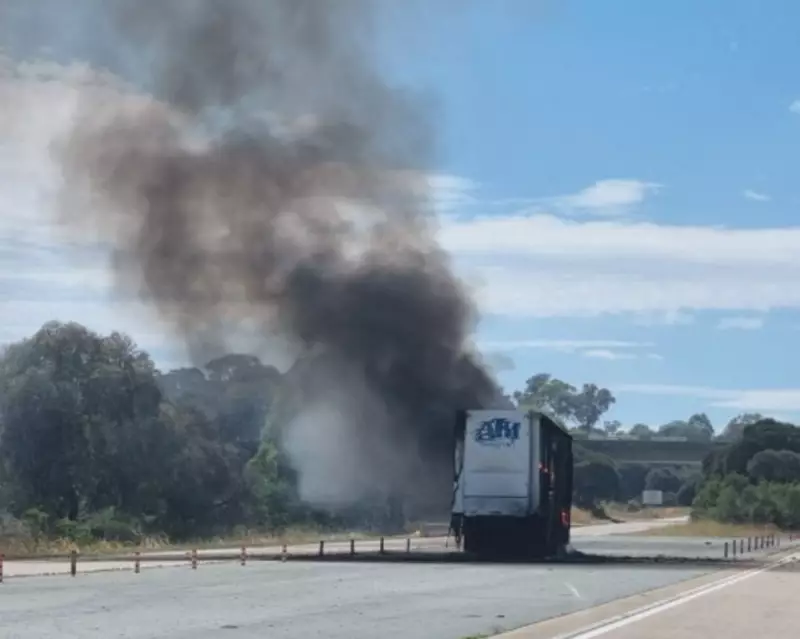
A major transport artery in New South Wales has been shut down after a truck carrying a significant load of lithium-ion batteries caught fire, creating a serious public health hazard.
Highway Closed Amid Toxic Cloud Fears
The incident occurred on the Hume Highway near Yass, north of Canberra, at approximately 9am on Saturday. The vehicle involved was a two-trailer truck transporting around 15 tonnes of lithium-ion batteries. Fire and Rescue NSW confirmed the B-trailer contained about 50 individual batteries, each weighing 300kg.
Superintendent Michael Jay reported that crews acted swiftly to detach the truck's front cabin and a smaller second trailer from the burning unit, preventing the fire from spreading further. Due to the significant risk posed by the blaze, public access was cut off for a 700-metre radius around the site. This precaution was taken because lithium-ion fires can produce dangerous vapour clouds containing toxic gases, a threat to both the public and emergency responders.
Letting the Fire Burn and Lasting Disruption
The hazardous nature of the fire led to a strategic decision by firefighters. Superintendent Jay indicated crews were likely to let the fire burn out under controlled conditions, citing insufficient water to extinguish it effectively. An additional concern was the difficulty of capturing any contaminated runoff that could flow into nearby waterways.
The immediate consequence was the complete closure of the Hume Highway in both directions for six hours, with traffic diverted through contraflow lanes in Yass. Fire and Rescue NSW has warned the travelling public that disruption is likely to last for a number of days and advised people to delay any plans to move through the affected area.
A Growing Fire Risk Across the State
This dramatic incident underscores a rapidly escalating safety issue. On Monday, a state inquiry heard evidence that exploding lithium-ion batteries pose an increasingly lethal danger, having been linked to three fatal incidents and countless fires in NSW. These batteries are ubiquitous in modern life, powering devices from e-bikes and e-scooters to numerous household appliances.
The primary causes of such dangerous battery failures include overheating and physical damage. Recognising the scale of the threat, Fire and Rescue NSW has labelled lithium-ion batteries the state's "fastest-growing fire risk" since 2024. This has prompted increased government action to regulate their safe handling and disposal.
NSW Police stated the fire is not being treated as suspicious, and no confirmed injuries have been reported.