
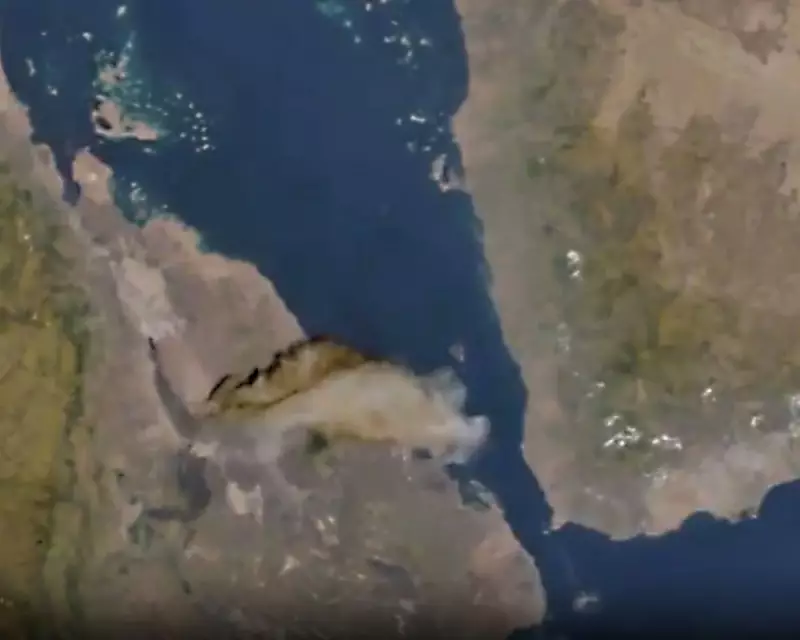
Ancient Ethiopian Volcano Awakens After Millennia of Silence
In a remarkable geological event, Ethiopia's Hayli Gubbi volcano has erupted for the first time in approximately 12,000 years, according to satellite imagery and volcanic monitoring agencies. The dramatic eruption occurred on Sunday, sending thick plumes of volcanic ash soaring an astonishing nine miles (14km) into the atmosphere.
Regional Impact and Ash Cloud Spread
The Toulouse Volcanic Ash Advisory Centre confirmed that ash clouds from the eruption have travelled significant distances, affecting air quality and visibility across Yemen, Oman, India and northern Pakistan. The volcanic activity lasted for several hours, with social media videos showing a substantial column of white smoke rising from the volcano, though these recordings await official verification by news agencies.
Geological Significance and Historical Context
Located in Ethiopia's Afar region approximately 500 miles north-east of Addis Ababa near the Eritrean border, Hayli Gubbi stands about 500 metres in altitude. The volcano occupies a critical position within the Rift Valley, a zone of intense geological activity where two tectonic plates converge.
Professor Simon Carn, a volcanologist at Michigan Technological University, verified on Bluesky that Hayli Gubbi "has no record of Holocene eruptions" - the geological epoch that began around 12,000 years ago at the conclusion of the last ice age. This confirmation from the Smithsonian Institution's Global Volcanism Program underscores the exceptional nature of this eruption.
Local authorities in the Afar region have not yet provided information regarding potential casualties or displacement numbers resulting from the volcanic activity. The eruption marks a significant event in the geological history of the Horn of Africa and demonstrates the ongoing dynamic nature of the Earth's crust in this seismically active region.



