A Car Crash Caused by Smog: My Terrifying Experience in California
I had haze in my vision – then the car crash happened. ‘I’m scared’, I said to my friend Bill, as I sat in a state of confusion, unable to grasp where I was or what had occurred. Bill reassured me I would be okay, but flashing lights filled my sight, and I watched a firefighter cut my airbag away from the car. Something was profoundly wrong.
After being pulled from the vehicle, a paramedic asked if I could walk to the ambulance. I insisted I could, but stumbled, feeling as if I were in a daze. We had been at a junction just minutes from our lodge for the night when another car smashed into our side at 50mph. That impact caused everything to go blank.
The Road Trip That Turned Dangerous
It wasn’t until memories slowly returned that I realised smog was the cause of the crash. Just four days earlier, I had travelled from London to meet Bill in California for a week-long road trip. We had originally met in New York through mutual friends while I was living there, and I agreed to join him to scout landscapes for his next artwork.

I was excited – California evokes images of sun, surf, and iconic national parks. Although I had visited before, the state is vast, America’s third largest, and we were exploring new locations. Air pollution wasn’t something I gave much thought to when we set out.
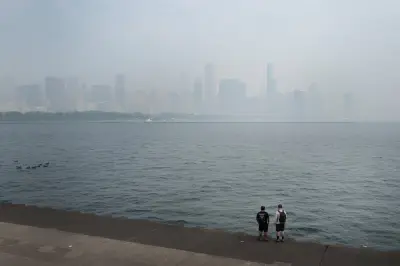
Everything was going smoothly until midway through the journey, as we drove towards Bakersfield in California’s Central Valley. We noticed a haze settling into the air as the sun dipped below the horizon. At first, it looked almost cinematic, but as we pressed on, the haze thickened into an oppressive grey, with a faint, smoky smell seeping through the air vents.
Understanding the Air Quality Crisis
Concerned, we did a quick Google search, which revealed that air quality in Bakersfield that day was classified as unhealthy for sensitive groups, including children and those with conditions like asthma. The dominant pollutant was PM2.5 – fine particulate matter small enough to penetrate deep into the lungs. This pollutant causes significant health impacts globally and contributes to millions of deaths annually.
On that particular day, levels far exceeded World Health Organization guidelines. Air-quality advisories warned against exercising outdoors, recommended keeping windows closed, and suggested wearing masks where possible. This situation, it turned out, is not unusual for California, which frequently tops national lists for year-round particle pollution and struggles with high ozone levels, the primary component of smog.
The Crash and Its Aftermath
We continued with Bill at the wheel, but as night fell, driving through the smog became increasingly unnerving. I struggled to see anything; fruit trees lined the road, serving as the only guide to where the tarmac ended. Road markings were almost impossible to make out, as were the headlights of oncoming traffic emerging suddenly from the gloom.
That’s when our car was hit. Bill later informed me that while we were stopped at an intersection, another driver, unable to see through the thick smog, struck us side-on, impacting the driver’s side. While Bill escaped unscathed, the force of the collision and the deployment of my airbag thrust me forward, causing the side of my face to strike the dashboard and knock me unconscious.
I was transported to the nearest major trauma unit in Fresno. My head throbbed intensely, and when I asked the ambulance driver what had happened, he showed me a photo on his phone: an egg-sized lump swelling from the side of my skull. At the hospital, I was rushed for a CT scan. Fortunately, doctors found only a very small bleed on my brain, so surgery wasn’t required, which brought immense relief.
Neurologists diagnosed a mild concussion, prescribing rest and painkillers. Hospital staff mentioned that dozens of other patients had been admitted following car accidents linked to the smog, with beds in short supply. After 26 hours of observation, I was discharged.

Broader Environmental and Health Context
Despite California’s grim reputation for air quality, efforts to clean up the air have been underway for decades. Local air quality authorities and state regulators have introduced stricter vehicle emissions standards, controls on industrial and agricultural pollution, and incentives to transition to cleaner equipment.
Public health and environmental campaigns continue to push for stronger protections, particularly for communities most vulnerable to poor air quality, such as those in low-income housing near industrial waste sites and agricultural areas. Progress has been made, with pollution levels lower than several decades ago, but the region still fails to meet federal air quality standards, and climate change threatens to undo some gains.
Groups like the Central California Asthma Collaborative, California Environmental Justice Alliance partners, Leadership Counsel for Justice and Accountability, and local community coalitions in Kern County have been advocating for cleaner air by documenting health impacts, pressuring regulators, and participating in state hearings on issues like oil drilling, pesticide use, and transportation emissions.
Lessons Learned and a Call to Action
For visitors, this experience can be jarring – a stark reminder that beneath California’s postcard beauty lies an environmental crisis as persistent as it is invisible, until it suddenly isn’t. My near-death experience and hospital stay will serve as a lasting reminder of that reality.
If you decide to explore this glorious landscape, I urge you to travel with awareness. Check air-quality forecasts before you buckle up and plan driving during daylight hours. Walk, linger, and support local communities working to protect the land you’ve come to admire. California offers extraordinary beauty, but it also demands respect. How we move through it matters, for our own health and for the future of the places that take our breath away.