Winter Storm Brings 'Very Heavy' Snow and More Rain to California
A significant winter storm is currently blanketing California, bringing the coldest air mass in three years to the state. This weather system has resulted in heavy snowfall, road closures, and widespread power outages across various regions.
Avalanche Warning for Sierra Nevadas
The Sierra Avalanche Center has issued an avalanche warning for the Central Sierra Nevadas through early Wednesday morning. In their official statement, they warned that "a widespread natural avalanche cycle is expected over the next 24 hours." This warning comes after multiple backcountry skiers were reported missing following an avalanche in the Castle Peak area on Tuesday afternoon.
Heavy Snowfall Predictions
The National Weather Service predicts "multi-day, very heavy snow totals of more than a foot" through the southern Cascades down to southern California and east into the Rockies. The heaviest snowfall is expected in the Sierra Nevada mountains, where locations above 6,000 feet elevation could see 3 to 5 feet of snow, with up to 7 feet possible at higher elevations.

The University of California Berkeley's Central Sierra Snow Lab, located near Donner Pass, reported 28 inches of snow on Tuesday alone, with another three feet expected in the next two days. Interstate 80 has been closed from Colfax to the Nevada state line due to the dangerous snow conditions.
Ski Resort Closures and Travel Disruptions
Several Lake Tahoe area ski resorts have announced closures due to the severe weather conditions. All lifts at Palisades and Alpine closed around noon on Tuesday "due to conditions, visibility, and wind." Other resorts are warning skiers to check road conditions before attempting to travel to mountain areas.
Yosemite National Park remains open but with significant restrictions, including tire chain requirements and road closure warnings. The park has also announced that the famous February Firefall at Horsetail Fall will likely not be visible due to cloudy conditions expected to persist through the weekend.
Southern California Flooding Concerns
While northern California battles heavy snow, southern California is experiencing different but equally serious weather challenges. The National Weather Service Los Angeles/Oxnard office has warned of possible heavy snow along the I-5 and I-14 corridors, with wind gusts potentially reaching 60 to 70 mph.
Flood watches are in effect throughout Los Angeles County, where evacuation warnings have been issued for regions impacted by recent wildfires. Areas near the Canyon, Bethany, Eaton, Palisades, Kenneth, Sunset, Lidia, Hurst, Franklin, and Bridge fires should prepare to evacuate if orders are issued, according to county officials.
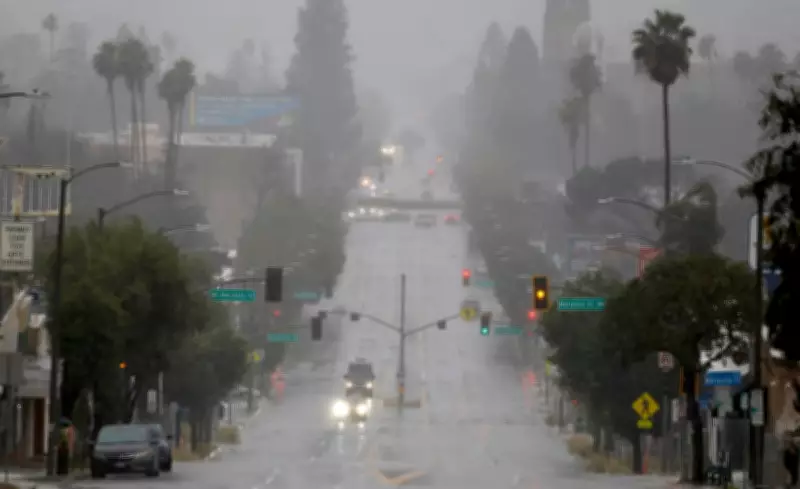
Floodwaters have already caused significant problems in Los Angeles, with parts of the city experiencing inundation on Monday. The flooding has affected even unconventional transportation, with reports of a local food delivery robot becoming stuck in floodwaters in West Hollywood.
Additional Storm Impacts Across California
The storm's effects are being felt throughout the state, even in areas where snow isn't expected. Stanford University closed for approximately two hours on Tuesday morning following a power outage caused by damage to one of the main PG&E transmission lines feeding the campus.
Further south, sections of Highway 1 remain closed after Caltrans shut down a 45-mile stretch of the coastal highway on Monday following a landslide. The road is currently closed in two sections: from 2.3 miles north of Lucia to 16.3 miles south of Big Sur, and from 1.8 miles north of the junction of Route 135 and Soloman Road to 7.4 miles south of Guadalupe at Black Road.
This closure comes just weeks after Caltrans had reopened a section of the highway following three years of repairs necessitated by previous landslide damage from heavy rains.
Two Pacific storms are expected to continue affecting California, bringing more than three feet of snow to the Sierra Nevadas and heavy rainfall to lower elevation parts of the state, including Los Angeles and San Diego, where flooding could occur in recent burn scars.