
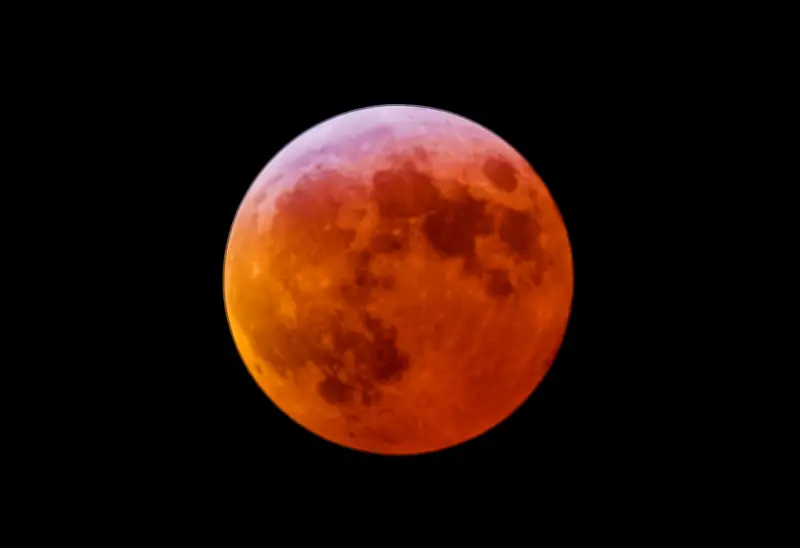
A partial lunar eclipse, often called a 'blood moon', will be visible from London in the early hours of Friday August 28, 2026. The phenomenon will begin at 3.33am and reach its maximum at 5.12am, according to Time Out London. Around 93 percent of the moon will pass through the darkest part of Earth's shadow, the umbra, giving it a deep coppery red hue.
What causes a lunar eclipse and the 'blood moon' effect
A lunar eclipse occurs when the moon passes through the umbra, the darkest part of Earth's shadow. This happens two to four times per year globally, but a given location can only see it from specific places once every year and a half. Total lunar eclipses occur every two-and-a-half years.
The red colour appears because sunlight passing through Earth's atmosphere is scattered and reflected back towards the moon. This is why the event is also known as a 'blood moon'. The upcoming event is a partial eclipse, with 93 percent of the moon within the umbra.
Best places in London to view the eclipse
Most major London parks will be closed at the time of the eclipse, so locations like Primrose Hill and Greenwich Park are not options. However, Hampstead Heath is open 24 hours, and Parliament Hill within it offers a good vantage point. Since the moon will be low on the horizon during the eclipse, viewers should find a high point with a clear, uninterrupted view to the southwest.
How to watch and weather forecast
Unlike a solar eclipse, no special glasses are needed to view a lunar eclipse safely. Binoculars can enhance the view of the moon's surface. The weather forecast for Friday morning is not promising, with clouds and light rain expected in the early hours, according to forecasters. Last-minute changes are possible.
This lunar eclipse follows the partial solar eclipse that drew thousands to London's parks two weeks earlier. The timing is not coincidental, as lunar eclipses typically occur roughly two weeks before or after a solar eclipse. While not as rare as a solar eclipse, the lunar event remains a notable celestial sight for Londoners.



