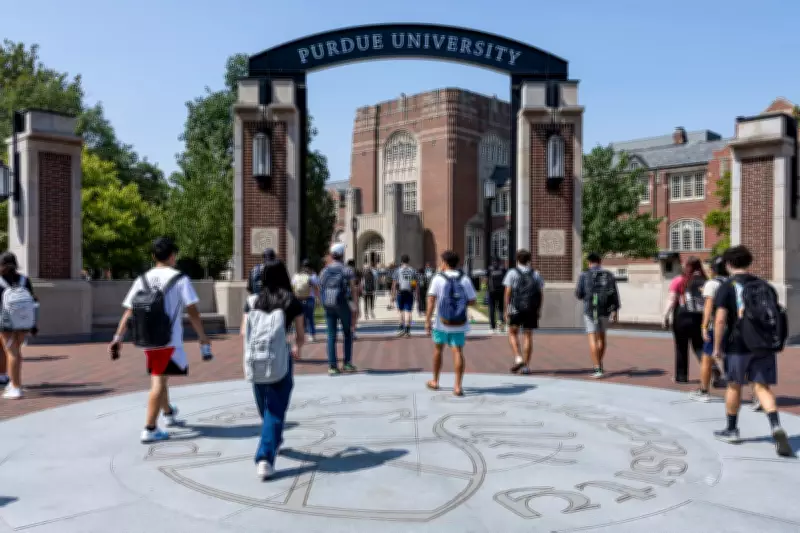
Purdue University Faces Allegations of Unofficial Ban on Chinese Student Admissions
Students and faculty at Purdue University in Indiana have raised serious concerns about an alleged unofficial policy that automatically rejects applicants from China and several other countries. This development comes amid heightened political pressure from US legislators targeting academic collaborations with Chinese institutions.
Political Pressure and University Responses
The controversy stems from a letter sent last year by the US House's select committee on the Chinese Communist Party to six universities, including Purdue. The committee demanded data on Chinese students, citing national security risks and claiming that their admission into STEM programs might disadvantage qualified American candidates. In response, Purdue and other universities have reportedly taken steps to limit engagements with Chinese entities.
Purdue University has officially denied implementing any ban on Chinese students. Erin Murphy, a university spokesperson, stated unequivocally that "there is no ban." However, the university did not address specific allegations regarding rescinded offers or internal directives to admissions committees.

Impact on Students and Academic Freedom
Numerous international students have reported having their offers and funding rescinded by Purdue without explanation, often after they had declined other opportunities and made housing arrangements. One affected Chinese student described the experience as shocking and opaque, noting that even faculty supervisors were left in the dark about the decisions.
In a letter to Purdue leadership, dozens of signatories, including students, faculty, and alumni, argued that such practices undermine core academic values like meritocracy and equality. They called for transparency and the restoration of offers to affected students.
Broader Context and Escalating Tensions
This situation is part of a wider trend in US higher education, where universities are scaling back partnerships with Chinese institutions due to political pressures. For instance, the University of Illinois Urbana-Champaign announced it would "wind down" certain collaborations, while Columbia University canceled an exchange program linked to China.
Experts warn that these actions could harm the global standing of US scientific research by deterring top international talent. The Federation of Asian Professor Associations has condemned the alleged ban as potentially unethical and in violation of civil rights laws.
Historical and Legal Background
The targeting of Chinese scholars in the US has intensified in recent years, with policies like Proclamation 10043, which restricts visas for students with ties to the Chinese military, and the now-defunct China Initiative, which faced criticism for racial profiling. Despite the Biden administration ending the China Initiative, Proclamation 10043 remains active, contributing to a climate of caution among Chinese students and researchers.
Advocates like Valentina Dallona of Justice Is Global emphasize that national security concerns are overshadowing decades of academic collaboration, potentially leading to a brain drain as students seek opportunities in other countries like Canada or Australia.
As debates continue, the case at Purdue highlights the complex interplay between education, politics, and international relations, with lasting implications for diversity and innovation in American universities.