
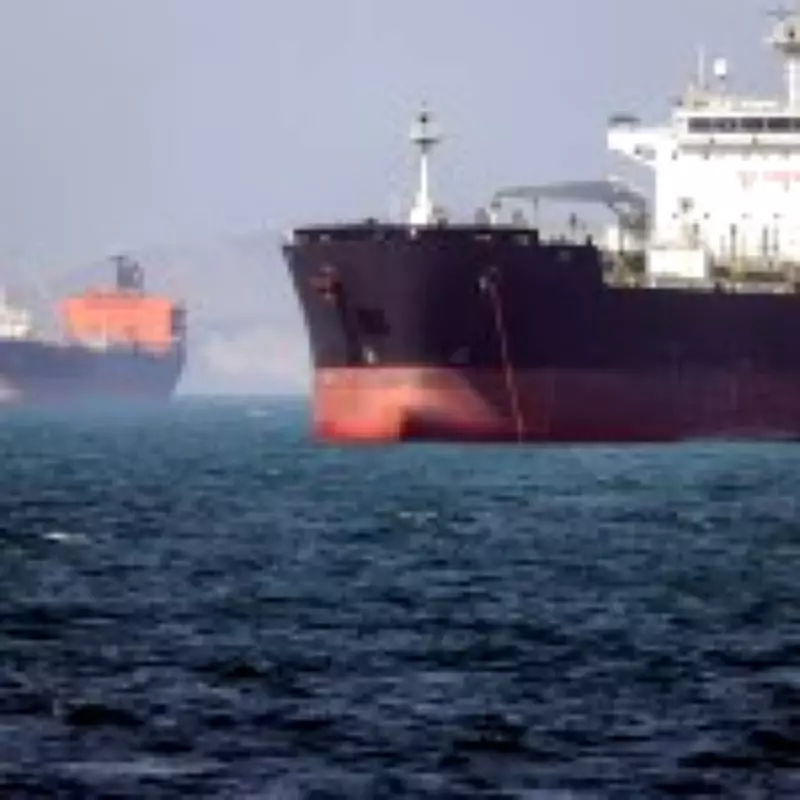
Hope for the reopening of the Strait of Hormuz is growing after US President Donald Trump paused a military operation to free stranded ships off Iran, as a potential peace deal emerges. This development gives millions of holidaymakers hope for a summer getaway after nine weeks of conflict in the Middle East.
Impact of the Conflict
The conflict has caused fuel prices to soar due to Tehran's chokehold on the Strait of Hormuz, leading airlines to cancel planned flights to cope with shortages. Aviation analytics company Cirium revealed that 120 flights from the UK have been axed so far this month as jet fuel prices surged. Seating capacity on planes has fallen by 2 million this month, with 13,005 flights cancelled worldwide. Around 20% of global oil is shipped through the Strait of Hormuz, off Iran's coast.
Trump's Decision
US President Donald Trump announced that Project Freedom was being put on hold as a deal, reportedly based on a 14-page A4 document, appeared possible. He posted on Truth Social: 'If they don't agree, the bombing starts, and it will be, sadly, at a much higher level and intensity than it was before.' He added that the Strait of Hormuz would reopen 'assuming Iran agrees to give what has been agreed to, which is, perhaps, a big assumption.'
Economic Effects
Oil prices plunged on news of a possible deal. Brent crude, the global benchmark, fell more than 10% to below $100 per barrel. Though still well above the average $70 before the conflict began, the fall helped US stock markets rise. Only two merchant ships are known to have passed through the route protected by American ships and aircraft, and hundreds of merchant ships remain stranded.
Ceasefire and Tensions
A shaky ceasefire had largely held, despite exchanges of fire and the sinking of six small Iranian boats, as the operation in the strait began on Monday. However, the cautiously optimistic situation was tested when a US fighter jet fired at an Iranian-flagged ship to prevent it from reaching a blockaded port, according to US Central Command. US Secretary of State Marco Rubio stated that the offensive stage of the war, Operation Epic Fury, is over. Iran's hard-line religious regime said the statements meant the US had 'retreated' but did not respond to suggestions a deal was close.
Proposed Deal
Trump has argued that the war, which began on February 28 with a missile attack that killed Iran's leader Ayatollah Ali Khamenei, was to stop Iran from building a nuclear bomb. The proposed deal is said to involve Iran halting all uranium enrichment for 12 to 15 years, with extra years added if it violates terms. It would also require Iran to move its stockpiles of highly enriched uranium out of the country. Iran claims its stocks are for a nuclear power programme, not weapons. Trump has called his predecessor Barack Obama's 2015 agreement with Iran the 'worst deal ever', but the new plan is said to echo it, with sanctions lifted and assets worth billions gradually released.
International Reactions
Iran's foreign ministry spokesperson Esmail Baghaei later said the proposal to end the war is 'still being considered', but another official described the plan as more of a 'wish-list than reality'. Both sides hope China can bridge the gap between them, after repeated breakdowns of peace talks brokered by Pakistan. Trump is due to visit Beijing next week to meet President Xi Jinping. China's close economic and political ties to Tehran give it unique influence. Iranian Foreign Minister Abbas Araghchi was in China for his first visit since the US and Israel attacked. Chinese Foreign Minister Wang Yi said the conflict 'has not only caused serious losses to the Iranian people, but also had a severe impact on regional and global peace. China is deeply distressed by this. We believe a comprehensive ceasefire is urgently needed.'
US Response
At a White House briefing, Rubio responded: 'I hope the Chinese tell him [Araghchi] what he needs to be told… that what you are doing in the strait is causing you to be globally isolated. You're the bad guy in this.'
Travel Disruption
The final week of May is half-term at many schools, and a peak getaway period. UK Transport Secretary Heidi Alexander vowed that summer holiday plans will not face major disruption, as fuel for planes is being imported from the US. However, Paul Charles, founder of travel consultancy The PC Agency, warned that if the conflict continues, 'there will need to be many more cancellations as the jet fuel supply is squeezed.'




