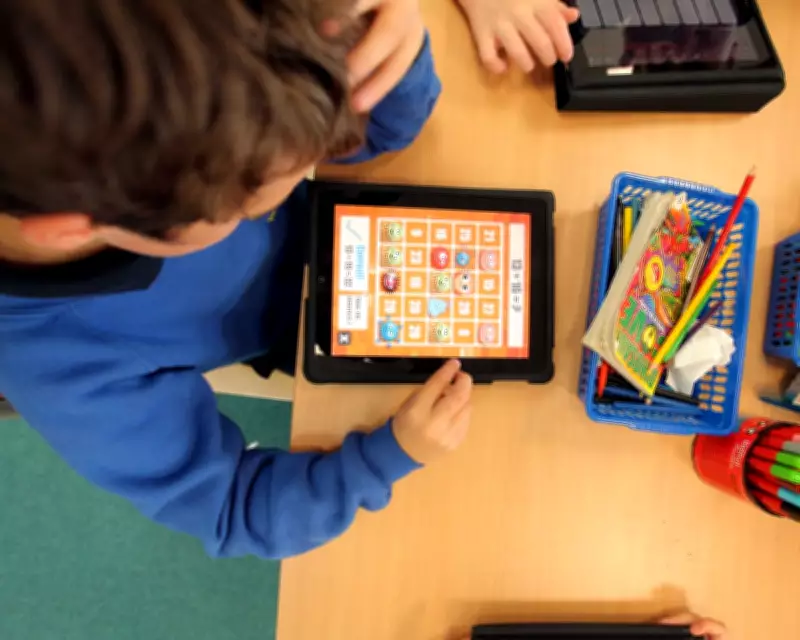
Parents and teachers are raising alarms about the increasing reliance on screens in schools, with many arguing that basic skills such as handwriting, sustained reading, and face-to-face discussion are being sidelined. As one parent of two primary schoolchildren noted, their school recently introduced a one-to-one iPad scheme, and almost all of the children's work is now completed on iPads. Parents are also expected to manage multiple, often poorly designed apps for communication, payments, and recording reading progress.
Growing Unease Over Screen Time
Many parents feel uneasy about this shift, especially as schools increase screen time at a moment when there is little clear evidence of overall benefit. Meanwhile, research highlights downsides such as distraction, reduced concentration, difficulty sustaining attention, and poorer literacy outcomes. In practice, iPads often become a barrier rather than a learning aid.
Parental Concerns and Institutional Resistance
Parents find themselves in a difficult position: they limit screen time at home for their children's wellbeing, yet schools dramatically increase it during the school day. It becomes almost impossible to enforce healthy boundaries when educational institutions normalize constant device use. Schools and trusts commit large sums to iPads and software without demonstrating clear educational value, and when concerns are raised, leaders often respond defensively rather than engaging genuinely.

Evidence Against Educational Technology
One letter writer, Deb Evans, disputes the notion that educational technology should not be expected to change. She cites evidence from Dr. Jared Cooney Horvath, who points to OECD PISA, PIRLS, and TIMSS scores showing that devices like laptops and iPads are detrimental to educational progress. The evidence for dependency, cognitive offloading, and safeguarding risk is now too substantial to ignore. Sweden has already replaced screens with pen and paper, recognizing that pupil-facing tech is a distraction.
Impact on Teaching and Learning
A primary school teacher with years of experience reports that their multi-academy trust directs them to teach a curriculum based purely on PowerPoint lessons. Children stare at classroom screens for at least an hour and a half a day, not counting computer lessons with iPads or Chromebooks. The teacher notes that lessons used to be far more creative, varied, and dynamic before the heavy use of PowerPoint. They also call for studies on the effects of YouTube and scrolling on young children's concentration spans, which are being severely impacted.
Call for Change
Parents and educators are calling for evidence-based education rather than expensive digital experiments. They argue that technology used by teachers to reduce bureaucracy is appropriate, but pupil-facing educational technology needs to be rolled back. Returning to basic principles—focus instead of multitasking, handwriting instead of touch-typing—may be the key to a bright future for children.