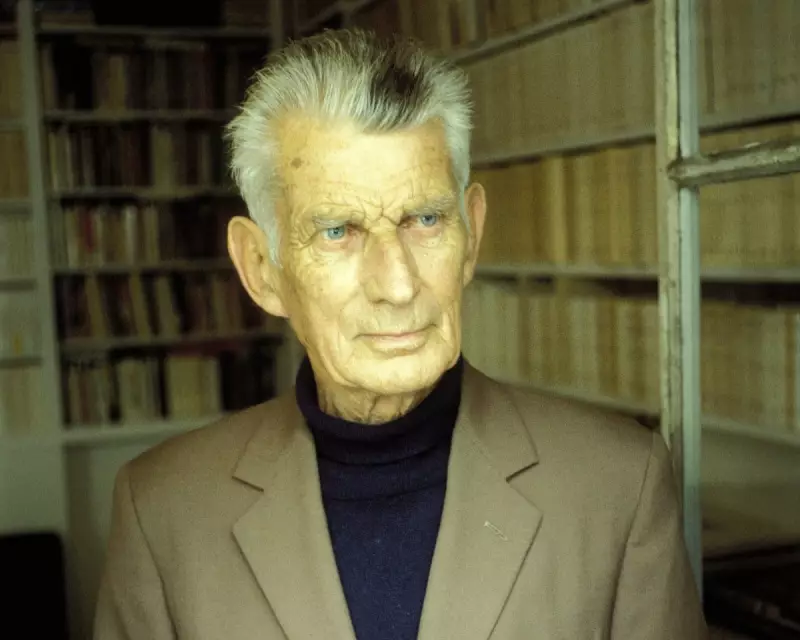
A landmark production of Samuel Beckett's seminal play Waiting for Godot, performed entirely in the Ulster Scots language, is set to make its world premiere in the Northern Irish countryside in 2026. This groundbreaking event forms a centrepiece of the newly announced Samuel Beckett Biennale, a major cross-border arts festival.
A 'Coming of Age' for Ulster Scots on a Bleak Antrim Hillside
The performance, with the working title Ettlin Fur Godot, is scheduled for Good Friday, 3 April 2026—a date poignantly aligning with Beckett's own birth on a Good Friday. Audiences will embark on a 3km uphill trek to a stark location on the Antrim Plateau, an "existential landscape of heath, moss and bog" chosen by festival organiser Arts Over Borders.
Seán Doran of Arts Over Borders stated that this remote, outdoor setting in County Antrim perfectly complements a script "peppered with exterior references." However, he emphasised that the "forceful pronunciation and sound" of delivering the play in Ulster Scots—also known as Ullans—for the first time in a region where the language is spoken will "bring a whole new total register" to the work.
Frank Ferguson, Research Director at Ulster University's Centre for Irish and Scottish Studies and the play's translator, hailed the production as "a major coming of age moment" for Ulster Scots. "It shows a confidence in what Ulster-Scots can do as a language," he said, "because you take on one of the major global dramatic phenomena and you place it within its Ulster-Scots translation."
An Antithesis to the 'Celebrity Godot' Trend
This ambitious project is positioned as a direct contrast to the contemporary trend of staging Waiting for Godot with high-profile celebrity casts. Recent years have seen stars like Keanu Reeves, Patrick Stewart, Ian McKellen, and Robin Williams tackle the roles of Vladimir and Estragon.
While Doran acknowledges that "celebrity Godot" effectively spreads awareness of the play, he believes it can also overshadow other creative interpretations. "And that's clearly what we're trying to do through the different languages, the outdoor setting, the homeless actors," he explained, outlining the Biennale's innovative ethos.
The producers aim to return the play to its original, roots-driven spirit, reminiscent of its 1953 Paris premiere in French and subsequent early performances in London and Dublin.
A Decade of Radical Beckett Interpretations
The Ulster Scots Godot is just one element of the expansive Samuel Beckett Biennale, which will unfold over the next decade. The festival promises to experiment with radical and unexpected approaches to the playwright's work.
Future plans include translations into Aboriginal Noongar, Sami, and Inuit languages, as well as productions featuring homeless actors. The Biennale will be staged across rural and urban settings in Northern Ireland, the Republic of Ireland, and England starting in 2026, with a return scheduled for 2028.
This initiative arrives at a significant time for Ulster Scots. In October 2024, a commissioner for the language was appointed under the Identity and Language Act in Northern Ireland, tasked with safeguarding its cultural future. Ferguson describes the language as one that, post-Good Friday Agreement, is "discovering itself and trying to find its way in the world." He finds profound resonance in performing Godot in Ulster Scots, noting the shared themes of waiting and longing for a moment of recognition or salvation.