Syrian Government Confirms Widespread Escapes from al Hol Camp
The Syrian government has officially acknowledged that widespread escapes have occurred from the al Hol camp in northeastern Syria, a facility that for years housed tens of thousands of women and children linked to suspected ISIS fighters. This admission comes after the camp was taken over by Syrian forces last month, as Damascus expanded its control in the area, and it has raised serious security concerns among former Kurdish staff who previously managed the site.
Camp Emptied Amid Security Lapses
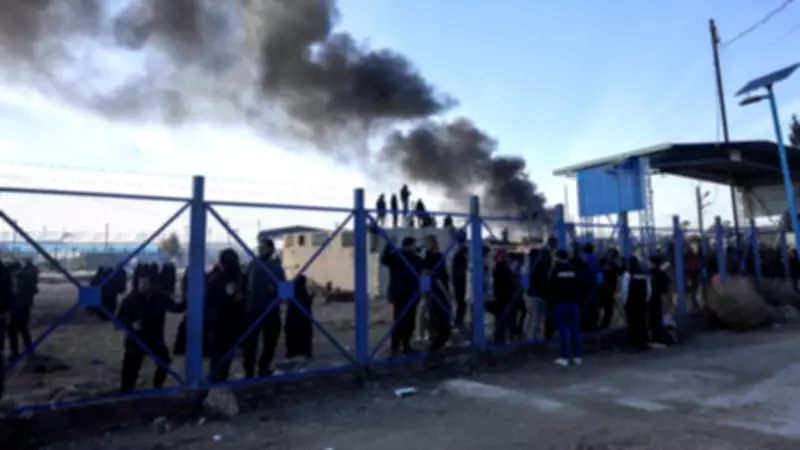
Fadi al Qassem, the Syrian foreign ministry's representative for al Hol camp administration, told Sky News that the camp is now largely emptied of residents. He explained that escapes continued even after the state assumed control, citing the camp's large size and varied smuggling routes as key factors. According to al Qassem, when Syrian forces arrived, the camp was already significantly depleted, with guards absent and gates open, making it challenging for authorities to prevent further departures.
He highlighted that the government inherited unreliable population records and long-standing smuggling networks, complicating efforts to establish an accurate count of who was present at the time of the takeover. Officials discovered evidence of forged documentation, including families using multiple registration cards that belonged to individuals who had already left illegally. Authorities are now attempting to trace those who departed outside official channels, utilizing records from international partners such as the UN Refugee Agency (UNHCR).
UNHCR Reports Significant Decrease in Residents
On Sunday, UNHCR confirmed a significant decrease in the number of residents at al Hol in recent weeks. Gonzalo Vargas Llosa, the UNHCR representative based in Syria, stated that local authorities had informed the agency of plans to relocate remaining families and had requested support for assisting people in new camps. UNHCR has expressed readiness to provide this assistance, emphasizing the ongoing humanitarian efforts in the region.
The Syrian government plans to fully empty al Hol camp, transferring remaining families to sites in Akhtarin and Jarabulus in northern Aleppo province, near the Turkish border. These new locations are equipped with container units and concrete shelters already in place. Al Qassem noted that most of those being moved are women and children, and rehabilitation and social integration programs are planned to support their transition.
Security Fears from Former Kurdish Staff
Former Kurdish staff members who worked at al Hol have voiced serious security concerns over the rapid emptying of the camp. Jihan Hanan, who ran the camp for four years until its takeover by Damascus last month, expressed particular alarm at the lack of clear tracking for those who have left. Her last official figures, from 19 January, estimated the camp's population at around 23,000 people.
Hanan reported that a video circulating online shows a former resident threatening her by name from inside what appears to be her burned and vandalised former office. The individual vowed to track her down and issued warnings to others who had worked at the camp. "This has created real fear for me and my children," Hanan said. "This is the language they used against us all the time. It's the language of extremists."
She added that many former residents blamed camp staff for their detention, leading to fears of reprisals among more than 1,000 civilian and humanitarian workers who had managed al Hol over the years. The Syrian government has concluded that al Hol is no longer viable and will not be restored, citing extensive damage and the high cost of rehabilitation. The first convoy of transfers left earlier this week in coordination with Syria's emergency ministry and the Syrian Arab Red Crescent, involving 10 buses and 35 trucks, with further transfers planned.