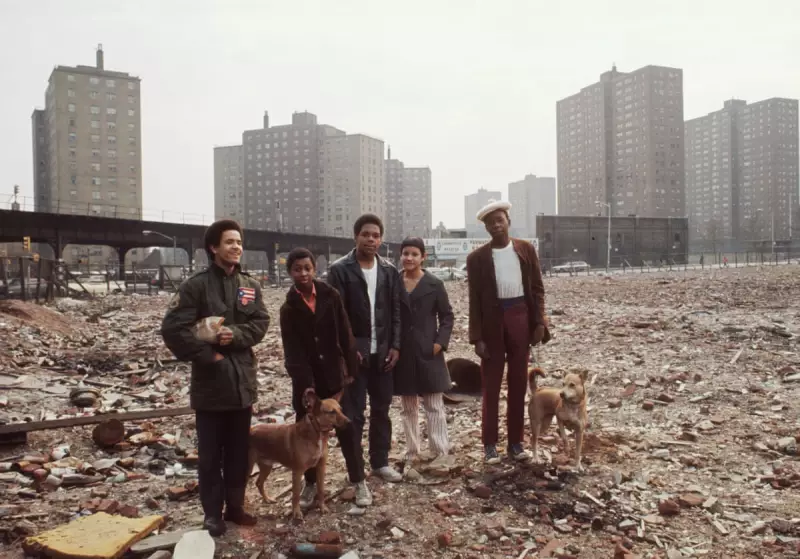
In 1970, a young Chilean immigrant named Camilo José Vergara captured a single, arresting frame in the Bronx that would come to symbolise an era of profound urban transformation and social division in New York City.
An Immigrant's Lens on a Divided City
Arriving in the United States from Chile in 1965, Vergara studied at the University of Notre Dame before moving to New York to attend Columbia University. He felt acutely out of place amidst the prosperity of Columbia, where many students came from extreme wealth. This sense of dislocation, coupled with the loss of leaving his homeland, drove him to explore the city's other side. Armed with a borrowed Pentax Spotmatic camera – his first – he began to walk the streets.
The late 1960s and early 1970s were a period of intense deindustrialisation. Factories shut, jobs vanished, and stores closed. Vergara, whose own family had suffered financial loss, was drawn to this landscape of disappearance. "I was interested to see that in the US," he noted, finding a personal resonance in the economic contrasts.

The Story Behind 'A Very Exciting Shot'
Venturing into areas like the Bronx carried real risk, with desperation palpable and individuals struggling with addiction on the streets. Yet, it was within this environment that Vergara found his subject. One day in 1970, he encountered a group of teenagers with their dogs on a vast vacant lot.
He was struck by the powerful contrast between the impersonal, looming towers of housing projects in the background and the strong, distinct personalities of the youths, evident in their posture and dress. A subway line cuts through the scene, and the empty land itself would later become a juvenile prison. "It was a very exciting shot," Vergara recalled, emphasising his philosophy of never separating people from the urban landscape that shaped them.
Preserving a Vanishing Urban Reality
For Vergara, this photograph was part of a larger mission. As huge swathes of the city were demolished, he asked himself: "How do I preserve this whole damn thing?" While others focused on specific elements like graffiti or street life, his goal was broader. He sought to document the entirety of New York's urban reality, from the skyline down to the smallest details, believing these places were disappearing for good.
His perseverance in this documentary work was later recognised with major honours, including being named a MacArthur Fellow in 2002 and receiving a National Humanities Medal from President Barack Obama in 2012. His seminal New York 1970s series is now published by Café Royal Books, serving as a vital historical record of a city in flux.
Vergara's top advice for aspiring photographers mirrors his own journey: "Be empathic and inquisitive. Hang in there, persevere, the sailing is rough." His iconic Bronx photograph stands as a timeless testament to that empathy and perseverance, freezing a moment of youth, pride, and urban change against the backdrop of a dangerous, decaying New York.