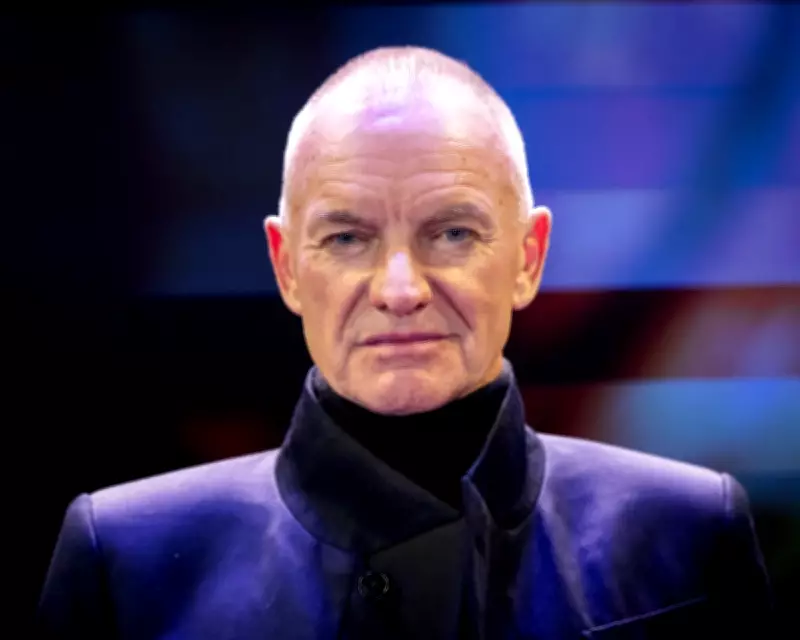
Loss of manual jobs could be driving toxic masculinity, according to musician Sting. The singer, whose musical 'The Last Ship' returns to the West End this autumn, said that the decline of physical labor has left many men without an outlet for their energy.
Sting on Deindustrialisation and Masculinity
Sting, who grew up near the Swan Hunter shipyard in Wallsend, told the Guardian that the loss of physical productivity for men is a byproduct of deindustrialisation. He said: 'I work with my hands every day as a musician, and I’m lucky. It’s a rare thing for modern men to actually use their hands and use their strengths to do anything. We’ve lost something there.'
He added: 'I don’t have any answers, but maybe the toxicity in society at the moment is [a result of the fact] that we’ve lost that direction for our energy, that male strength. It’s rare we have to use it.'

The Story Behind 'The Last Ship'
'The Last Ship,' which debuted in Chicago in 2014 before a Broadway run, focuses on the fate of men working at a shipyard similar to the one where Sting grew up. The yards closed during deindustrialisation in the 1970s and 1980s. Sting, who wrote the music and will star in the show at the Theatre Royal Drury Lane in September, said the closures began an era when the north of England was failed by successive governments.
'Britain’s wealth was created in the coalfields and the steel towns and the mill towns and the shipyards,' he said. 'All of those skill sets were thrown on the scrapheap … for Thatcher’s dream of a service economy.'
Many male characters in the musical face a crisis as their identity is taken from them. One asks: 'For what are we men without a ship to complete?'
Nostalgia for Community, Not the Industry
Sting emphasised that the production does not romanticise the brutal industry, where accidents and fatalities were common. 'I’m the guy who didn’t want to work there and for good reason,' he said. 'They were working in asbestos, all kinds of toxic chemicals. At the same time, I’m nostalgic for the sense of community that I was brought up in.'
He added: 'That environment was so rich with symbolism. The town, although it was depressed a lot of the time, was extremely proud of the ships that were built there. The work was awful and dangerous and hard, but those guys could look back and say: ‘Well, I built that.’ The civic pride was massive.'
From Broadway to the West End
When 'The Last Ship' opened on Broadway, it received mixed reviews and did not match the success of other British musicals like 'Billy Elliot' and 'Kinky Boots.' However, it has since toured worldwide and been revised over the past decade, with some characters cut and a new book by Barney Norris.
When it played in Newcastle upon Tyne in 2018, the Guardian’s Michael Billington praised it for featuring 'the most thrilling choral writing I’ve heard in a British musical since Howard Goodall’s The Hired Man.'
Reflecting on the Broadway run, Sting said he chose a difficult path by creating an original story rather than a jukebox musical based on his own songs. 'Those are the easy routes, but I chose the most difficult one and I’ve enjoyed every minute of it. It’s been incredibly difficult and challenging, but also the most rewarding exploit of my life,' he said. 'I think it needs to find its audience. It needs to find its voice. It’s taken this long, but I think we’re pretty close to it right now.'
Legal Battle with Former Bandmates
Sting is currently embroiled in a high court battle over alleged unpaid royalties with his former bandmates in the Police. The high court in London has heard that Sting has paid more than £500,000 to Stewart Copeland and Andy Summers since they brought the legal action. 'It doesn’t make any sense,' Sting said. 'That’s all I’m willing to say.'
'The Last Ship' will be at Theatre Royal Drury Lane from 22 September to 3 October. Tickets go on sale from midday on 28 May.