The Enigmatic Pilgrims of Sound
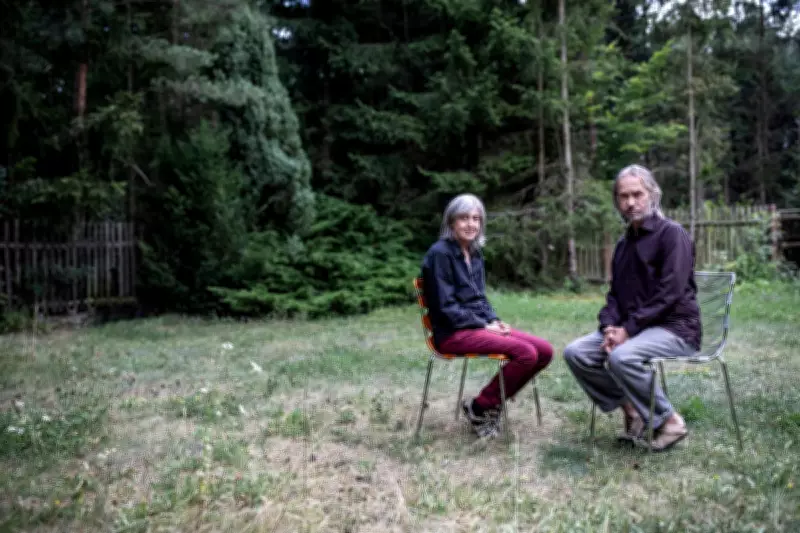
In the landscape of contemporary music, few artists have cultivated an aura of mystery as profound as Irena and Vojtěch Havlovi. The married Czech duo, who described themselves as "pilgrims who wander and play," crafted a unique sonic universe that defied categorization and time. From the mid-1980s until their recent passings, they moved through Europe with an unhurried grace, their music serving as a bridge between ancient traditions and modern sensibilities.
A Symphony Against the Backdrop of Communism
Emerging during the final years of communist Czechoslovakia, the Havels developed their distinctive sound in Prague's churches and monasteries. They filtered minimalist composition, ambient textures, and folk melodies through baroque instruments like the viola da gamba, creating a mysterious fusion that stood in quiet contrast to their political environment. Their music was not a protest but a sanctuary—a space where modernism and old European music could coexist peacefully.
After the Velvet Revolution of 1989, while their country rushed toward capitalism, the Havels maintained their deliberate pace. They toured Europe by rail and bus, performing in intimate settings where their intertwined sounds—Vojtěch's tenor viol and Irena's alto viol—could resonate fully. "Something that can only be shared together, going through us, when the ego is a little asleep," Irena once explained, capturing their selfless approach to performance.
Influences and Admirers Across Generations
The duo's influence extended far beyond their immediate circle. Bryce Dessner of the National became a tireless champion, describing how their 1991 album Little Blue Nothing changed his life. "They opened my mind to a different world of music, similarly to Steve Reich," Dessner said. He noted the music's unique blend of minimalism, medieval and Renaissance elements, and an eastern sense of form and freedom, placing them alongside innovators like Meredith Monk and Moondog.
Other musicians were equally captivated. Jakub Juhás of Slovakian label Mappa recalled being awed by their performances on both monumental organs and worn-out instruments. Spencer Doran of Visible Cloaks encountered their work in a Japanese record store and marveled at how they "cordoned their practice off from the world," allowing it to deepen into a profoundly idiosyncratic space.
A Life of Spiritual and Musical Exploration
The Havels' journey was as much spiritual as musical. Already yoga-practicing vegetarians before the revolution, they traveled to ashrams in India to study Hinduism once borders opened. This exploration translated directly into their music, with Tibetan bowls and Indonesian gamelan featuring on albums like Mysterious Gamelanland. Vojtěch saw clear connections between these traditions and their European roots, noting in a 1995 interview that "Bach and all those masters use minimalistic loops in their compositions" and that early baroque music shares similarities with Indian ragas.
Their esoteric approach placed them within Czechoslovakia's underground scene, alongside collaborators like experimental folk musician Oldřich Janota and ambient musician Jaroslav Kořán. In the early 1990s, they found a home in the Dobrá Čajovna tearoom chain, where alternative lifestyles and sound worlds flourished in the new Czech Republic.
The Twilight Years and Silent Departure
Despite growing international recognition—including a 2021 archival collection Melodies in the Sand and their 2017 Czech Lion award for film music—the Havels remained relatively obscure at home. They lived ascetically, suspicious of technology and rarely uploading their work online. In the 2010s, they withdrew further, performing mostly in Czech tea rooms, vicarages, and yoga retreats.
Their final years saw a modest resurgence with record reissues, NTS radio broadcasts, and their 2024 album Four Hands, their first original material in over a decade. Irena noted how young audiences particularly responded: "As if they need to open up, they often cry, and it stirs up their emotions."
Then came the silent departure. In late March 2026, it was discovered that Irena had died in October at age 66—almost exactly a year after Vojtěch's unexpected death from heart failure at 62. The news emerged only when the curator of the Czech Anděl awards checked royalty records and found Irena listed. Her brother confirmed her passing, revealing that her last wish was "to disappear in silence," remaining in service to the music until the end.
A Legacy That Continues to Resonate
The Havels' pilgrimage may have ended, but their music continues to unmoor listeners from time. Memorial concerts have been organized in Prague tearooms where they played countless times, featuring collaborators like Czech singer-songwriter Václav Havelka and Slovakian vocalist Adela Mede. "Playing music was for them like breathing," Mede observed, capturing the essential nature of their artistic practice.
Their story—of a couple who merged into a symbiotic life-form through music, who wandered as pilgrims, and who ultimately disappeared in silence—leaves behind not just recordings but a testament to artistic purity. In an age of constant connectivity and self-promotion, the Havels' commitment to their craft, their spiritual exploration, and their quiet departure reminds us that some art transcends both time and noise, speaking most powerfully in the spaces between sounds.