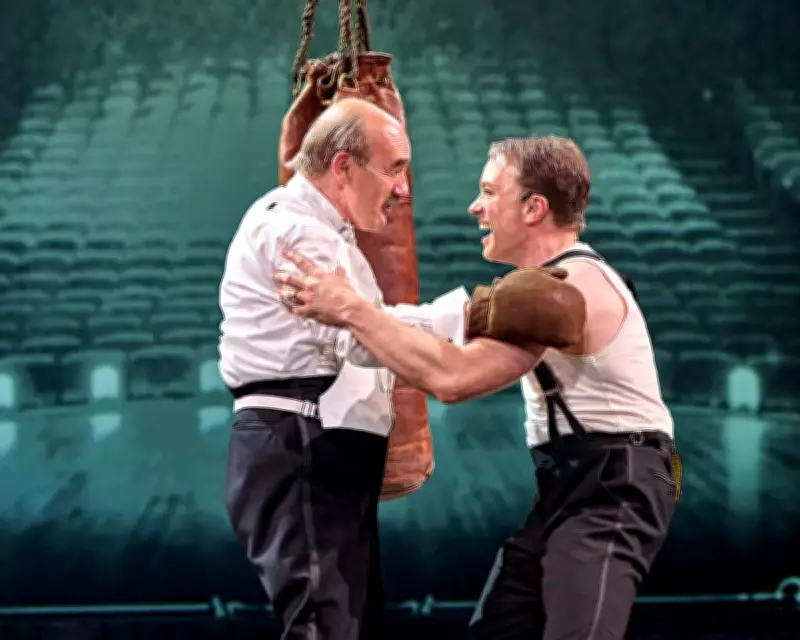
The admirable actor David Haig has a sprightly sideline as a writer of historical bio-dramas. Following My Boy Jack (1997), about Rudyard Kipling’s mourning for a son killed in the first world war, and Pressure (2014), concerning the Scottish meteorologist charged with finding General Eisenhower’s weather window for D-day, comes Magic. This new play dramatises the fraught friendship of two giants of entertainment between the wars: Sir Arthur Conan Doyle and Harry Houdini.
A Battle of Beliefs
Magic overlaps with My Boy Jack in that, like the author of The Jungle Book, the creator of Sherlock Holmes is grieving for a son lost in war. The hope of a reunion brings the writer to the spiritualist movement, but this creates tension with Houdini, the illusionist convinced that seances are as much a theatrical pretence as his own escapes from straitjackets and water tanks. Happy to have the Scot as a fan, the Hungarian-American is alarmed to discover that Conan Doyle believes him to be blessed with supernatural powers.
The men’s debates recall the grand standoffs between religious and rational positions in Peter Shaffer plays such as The Royal Hunt of the Sun and Amadeus. As a dramatist, Haig is both pragmatic and generous, always providing good parts for himself and a co-star. Conan Doyle is the harder role as the audience is more likely to side with Houdini’s scepticism, but Haig makes the writer so vividly bereaved that it seems plausible he effectively killed off Sherlock to focus on resurrecting his child.

Strong Performances
Hadley Fraser’s Houdini has the charisma of a natural showman but also a relentless observation and logic that, without hammering the parallel, invoke Holmes. In those always difficult dramatic roles of famous men’s wives, Claire Price’s Jean Conan Doyle and Jenna Augen’s Bess Houdini enrich the evening with a respective sincerity and subversion that both become more complex. The governing question of our culture – what people are prepared to believe and why – hovers without hollering.
Period Suspense and Illusions
Director Lucy Bailey is an expert in period suspense, having staged several Agatha Christie successes (most recently Death on the Nile), and brings similar atmospherics and twists to a show that becomes in effect a howdunnit, with the tricks of the seance and a remarkable Houdini illusion eventually revealed. Tantalisingly, the way Houdini claims to have fooled us may or may not be how illusion designer John Bulleid brings it off in front of a live audience. Emphasising the peril of any production turning on illusion, one spectacular effect in the published script is absent from the staging. But the writing shows the dexterity of an escapologist in discovering new room within the cramped space of Holmes and Houdini apocrypha. At Chichester Festival theatre until 16 May.