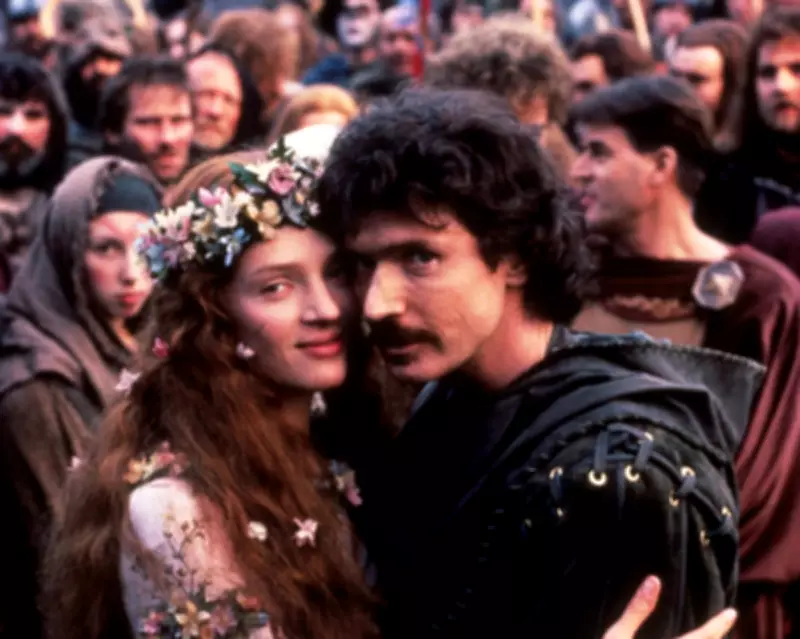
Thirty-five years ago, two films about Robin Hood clashed in cinemas. While Kevin Costner's big-budget Robin Hood: Prince of Thieves triumphed at the box office, another version titled simply Robin Hood offered a gritty, anti-Thatcher alternative. Directed by John Irvin and starring Patrick Bergin as the outlaw and Uma Thurman as Maid Marian, this film aimed to challenge Costner's Americanised take.
A Rival Production Born from Hollywood Politics
John Irvin, now 85, explains that the film was conceived to pre-empt Costner's version. After Joe Roth moved from Warner Bros to 20th Century Fox, he greenlit a rival Robin Hood project. Irvin, known for directing Alec Guinness in Tinker Tailor Soldier Spy, was brought on board. “The studio wanted to go immediately to pre-empt the Costner,” Irvin recalls.
Challenging Winter Conditions and Health Struggles
Filming began in October 1990 at Peckforton Castle in Cheshire, with additional scenes shot in salt mines and north Wales. The winter weather posed challenges, with bare trees making ambushes impossible. Irvin notes, “It was cold and wet. We couldn’t have ‘Merry England’.” The salt mines provided an underground setting for a more realistic medieval depiction. Patrick Bergin, who played Robin Hood, battled chronic colitis during production. Irvin reveals, “He was so ill that we used doubles. We kept it quiet because he hadn’t declared it on his insurance.”

Uma Thurman’s Role and a Subversive Narrative
Uma Thurman, then 20 and fresh from Dangerous Liaisons, was cast as Maid Marian. Irvin says, “I thought she was perfect.” The film’s plot sees Bergin’s Robin challenge Norman rule, with a subtext of anti-Thatcherism. “We tried to make it relevant to Thatcher’s England,” Irvin explains. “It was subversive, but in a nuanced way.”
Critical Reception and Legacy
Released in the US as a three-hour TV movie in May 1991, Robin Hood received warm reviews but was overshadowed by Costner’s blockbuster, which earned nearly $400 million worldwide. Irvin reflects, “We got the reviews, but they got the audiences.” Despite this, he believes the film holds up: “The story of Robin Hood is woven into our national psyche. When there’s oppression, it’s good to have a saviour who gives two fingers to the establishment.”