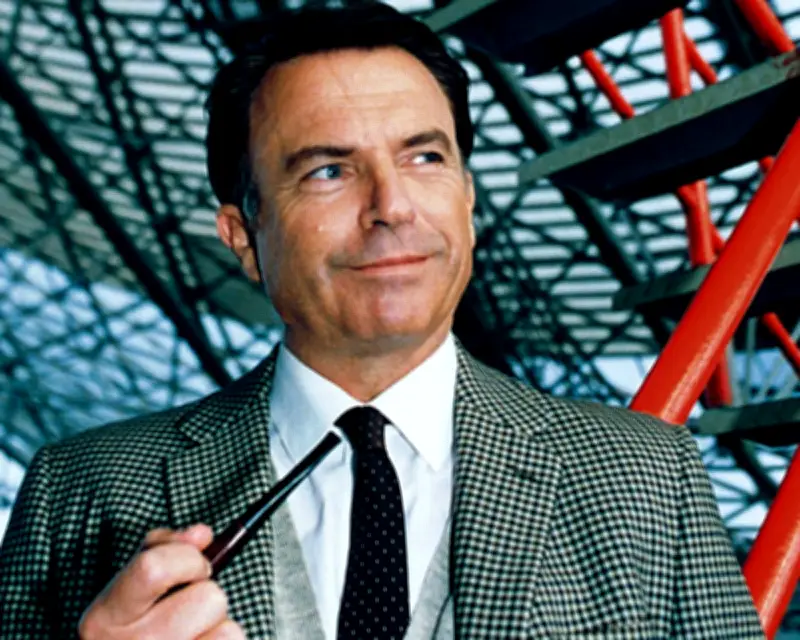
Sam Neill, the charismatic yet self-effacing actor who starred in Jurassic Park, The Piano, and The Dish, has died. He was known for unselfishly showcasing co-stars.
Neill was the leading man's leading man who achieved something no other actor could: he was charismatic and self-effacing at the same time. He could play handsome and good-humoured or devilishly sinister, often the husband and paterfamilias, perennially in some unspecified state of early middle age, sometimes in a period colonial setting, but the movie's oxygen was never sucked away into his own unselfishly excellent performance.
Unselfish stardom
He had a uniquely gallant way of showcasing his female co-star, such as Nicole Kidman in Dead Calm (1989), Judy Davis in My Brilliant Career (1979), Meryl Streep in A Cry in the Dark (1988) or Holly Hunter in The Piano (1993). He was often cast as a calm authority figure from an old-fashioned world, which was perhaps why he became internationally famous playing opposite dinosaurs as Dr Alan Grant in Steven Spielberg's Jurassic Park (1993) – the dinosaurs were the stars, but they would be nothing without the classy supporting human performance of the sort Neill delivered.
Neill was arguably in the tradition of the dependably but unobtrusively good-looking Hollywood romantic lead, like Robert Taylor or Guy Madison, but with a classical actor's unshowy skill in projecting character; he had an impish, wacky sense of humour that entertainingly flowered late in life, notably in his much-loved Instagram posts. Perhaps most of all, he was superb at suggesting that most unfashionable quality of all … manliness.
Favourite performance
My favourite Sam Neill performance is one of his least known: in the sweetly beguiling comedy The Dish (2000), based on the true story of how a team of Australian technicians, led by Neill's amiable, pipe-smoking chief scientist, scrambled to transmit live television pictures of the historic Apollo 11 moon landing in 1969 from their own radio telescope in New South Wales when it became clear that the Americans' equipment wasn't going to be ready in time. It was almost a parable for the old world's underdog relationship to the US in pop culture: a tale of being tough, competent, likable and resourceful. Sam Neill embodied it all.
Among his darker and more reticent roles is Stewart, the dour colonist in Jane Campion's mysterious The Piano, whose bride, Ada, played by Holly Hunter, has been robbed of speech by some unrevealed past trauma or abuse and comes to 19th-century New Zealand with a baby grand piano which has to be transported off the beach by Stewart's strange manservant Baines, played by Harvey Keitel. Perhaps it was Neill's destiny to be upstaged by the more eye-catchingly exotic roles here, as so often in his movie career. (No male performer in the world, incidentally, could have distracted attention from Meryl Streep in her “the dingo took my baby” role in A Cry in the Dark (1988), and Sam Neill had to resign himself to a lack of limelight as her stern pastor husband.)
Classic supporting roles
And yet without his simmeringly unexpressed emotion in The Piano – Neill shows us that he is in some ways mute like Ada – the movie would count for nothing. After this, Neill himself became a respected commentator on the complex history of New Zealand cinema with the documentary he wrote and co-directed: Cinema of Unease: A Personal Journey By Sam Neill (1995).
Another mainstream supporting role was his Russian submarine officer, Borodin in the cold war thriller The Hunt for Red October (1990) subordinate to Sean Connery's commander as Connery embarks on his own mysterious campaign of secret undersea warfare (having, incidentally, killed a political officer by the name of Putin). It is a classic supporting role for Neill, who like the all-rounder he was, could perfectly well play a Russian – though maybe modern Hollywood would now need actual Russians for Connery's and Neill's roles.
Andrzej Żuławski's unclassifiable cult horror thriller Possession (1981) was another espionage drama for Neill in a way – he played a spy whose marriage to Isabelle Adjani is breaking down and their marital and emotional pain finds nightmarish, supernatural expression. Neill gives everything to this deeply strange, startling film which allowed him a free rein to let rip as a performer. Another film that did so was John Carpenter's Lovecraftian horror In the Mouth of Madness (1994) in which he was the insurance official driven to crazed despair by the task of investigating a writer's disappearance.
Dark roles
The apogee of Neill's “dark” roles – fierce, commanding and yet intriguingly atypical within his brand identity as a movie actor – was as the devil himself in Omen III: The Final Conflict (1981), as the now adult antichrist Damien Thorn, played in the previous two films by Jonathan Scott-Taylor and Harvey Stephens. Neill very much looked like the adult version of those child actors: there was something pampered and refined in his look, like a Wasp version of a Renaissance princeling. Liev Schreiber's more robust appearance in the remake was very different. Neill was great casting because even here, at this early stage in his career, he was associated with relatable nice-guy roles. His corporate version of satanism here probably inspired his performance as the CEO vampire in Daybreakers (2009).
In some ways, husband roles were Neill's forte: he is the decent older-man husband in Dead Calm, who gives chase to the sexy villain Billy Zane in the open waters to protect his wife Nicole Kidman. His husband in The Piano was an echo of the husband he played in Gillian Armstrong's My Brilliant Career, falling for Judy Davis's passionate and free-spirited Sybylla in that repressive and alien colonial setting that reeked of the patriarchy – and Neill was often the more compassionate, decent side of that patriarchy.
Later years
In later years, Neill settled into lovable, grey-bearded roles that allowed scope for his wit and fun – and given his international treasure status as cinema's greatest New Zealander (albeit one born in Northern Ireland), it is maybe a shame that he did not get a role in Peter Jackson's New Zealand-set Lord of the Rings movies, reportedly because of a production-scheduling clash with Jurassic Park III (it is interesting to wonder how he might have played Gandalf). He was the sweetly avuncular farmer in Rams (2000) and director Taika Waititi shrewdly tapped into Sam Neill's comedy potential in his family comedy Hunt for the Wilderpeople (2016) in which he gets a classic odd-couple pairing with a kid who is on the run in a forest with his grumpy old foster uncle Hec played by Neill, a role which allowed him to steal filmgoers' hearts in a way he hadn't as a younger man. He was the character actor and star who became an industry legend.