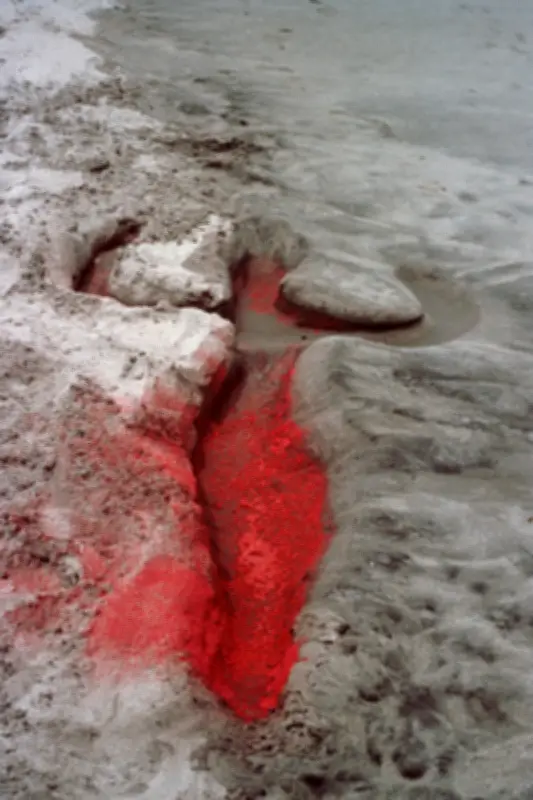
Tate Modern has opened a major retrospective of Ana Mendieta, the Cuban-American artist whose brief but influential career was cut short in 1985 at age 36. The exhibition, which runs until September 2026, brings together over 100 works spanning her entire output, from early performance pieces to her iconic Silueta series.
From Exile to Icon: Mendieta's Journey
Mendieta was sent to the United States as a child refugee in 1961 as part of Operation Pedro Pan, an experience that shaped her lifelong exploration of displacement and belonging. The show traces her development from her student days at the University of Iowa, where she began experimenting with performance and body art, to her mature work that fused her body with the natural landscape.
According to the exhibition's curator, Catherine Wood, "Mendieta's work is about the connection between the body and the earth, but also about the violence of uprooting and the search for a home." The exhibition includes rarely seen photographs and films that document her ephemeral performances.
The Silueta Series: Body and Landscape
At the heart of the show are the Siluetas (1973–1980), in which Mendieta created silhouettes of her own body in natural settings—carved into earth, filled with flowers, or set ablaze. These works, captured in photographs and Super-8 films, are presented in a dedicated gallery that immerses viewers in her ritualistic practice.
The exhibition also features her earlier works, such as "Untitled (Glass on Body Imprints)" (1972), where she pressed her body against a pane of glass, distorting her features. These pieces highlight her interest in the body as a site of both vulnerability and power.
Confronting Violence and Death
Mendieta's work often grapples with themes of violence, particularly against women. Her series "Rape Scene" (1973) recreated the aftermath of a sexual assault, using her own body to confront viewers with the reality of gendered violence. The exhibition does not shy away from these challenging pieces, placing them in the context of her broader exploration of trauma.
The tragic circumstances of Mendieta's death—she fell from her 34th-floor apartment in New York, and her husband, sculptor Carl Andre, was acquitted of her murder—lend a haunting resonance to the show. A small section addresses this legacy, but the focus remains on her artistic achievements.
Installation and Reception
The retrospective occupies the entire fourth floor of the Tate Modern's Blavatnik Building, with works arranged chronologically. The use of dim lighting and intimate galleries encourages contemplation, while the inclusion of archival material, including letters and notebooks, provides insight into her creative process.
Early reviews have been positive, with the Guardian's critic noting that "Mendieta's work feels more urgent than ever in an era of climate crisis and debates about borders." The exhibition is expected to draw large crowds, reflecting renewed interest in her work following recent academic studies and market attention.
Legacy and Influence
Mendieta's influence on contemporary art is profound, with artists such as Ana Teresa Fernández and Rineke Dijkstra citing her as an inspiration. This retrospective solidifies her place as a key figure in feminist and land art movements, demonstrating how her work transcended the boundaries of performance, photography, and sculpture.
The exhibition runs until September 27, 2026. Tickets are available on the Tate Modern website, with concessions for students and free entry for under-18s.