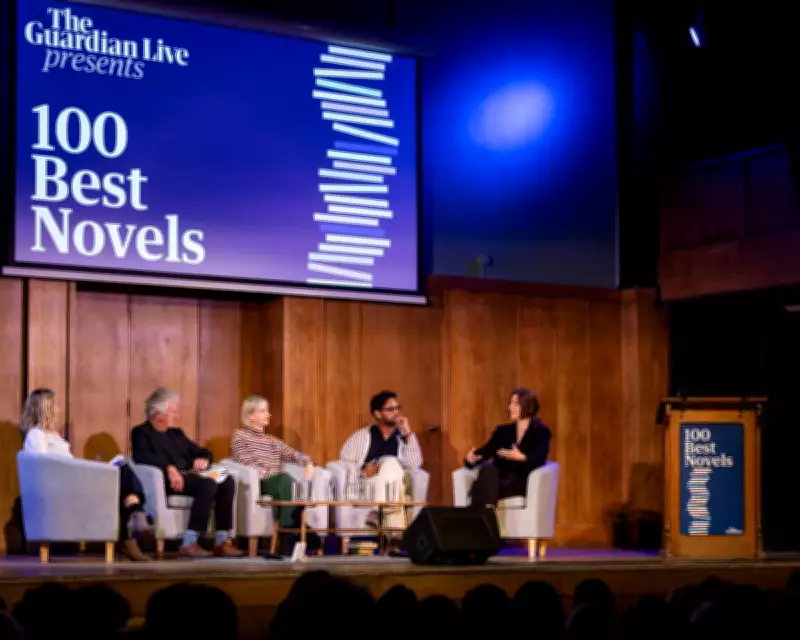
Despite concerns over shortening attention spans, people are still reading novels, said writer Elif Shafak at a panel event discussing the Guardian's list of the 100 best novels published in English. The list was unveiled last week.
"The faster this world spins, the deeper our need to slow down," Shafak continued. "We are so tired of this rush, of this bombardment of information."
The Guardian's landmark poll, which involved more than 170 authors, critics, and academics voting on the best novels of all time, aimed to find "novels that will speak to new readers" amidst the current reading crisis, explained Guardian editor Katharine Viner.

Shafak was joined by writers Kate Mosse, Blake Morrison, and Guy Gunaratne at an event at Conway Hall in London, chaired by Guardian chief books writer Lisa Allardice.
Part of the decline in reading for pleasure stems from "snobbery" surrounding the genres and formats in which books are consumed, said Mosse, co-founder of the Women's Prizes. For some, "listening to the story might be more powerful – it's actually going back to the much older way of storytelling. For other people, they would read on a device. We shouldn't be judging how people choose to read, or the books they choose to read."
The Guardian's list was topped by Middlemarch. While it featured many 19th and 20th-century classics, newer novels such as The Vegetarian by Han Kang, Wolf Hall by Hilary Mantel, and My Brilliant Friend by Elena Ferrante also made the cut.
Asked why older titles are gaining popularity among young people, Mosse said such books "contain a wisdom that is not about the endless revolving door that we live in now."
"This is a time of transition and it's a very bewildering moment," said Shafak. "We're dealing with so many crises. I don't think it's a coincidence that we're focusing more on 19th-century literature unknowingly. Most of the problems that we are dealing with today are actually still the repercussions, the ramifications of the 19th century."
Middlemarch, set between 1829 and 1832, is "full of rupture," said Gunaratne – "the Reform Act, railways, the beginning of modern medicine" – but George Eliot "allows you to enter that world of crises and find some consolation."
Asked what book they would force all politicians to read, Gunaratne chose the Seasonal Quartet by Ali Smith, while Shafak picked the Epic of Gilgamesh. If Donald Trump read it, "he would call Gilgamesh a loser," she said.
"Andy Burnham's life was changed by reading the poet Tony Harrison," said Morrison. "So it does sometimes happen that politicians read."
The list features more women – 36 – than previous iterations of the project (21 in 2015 and 16 in 2003). Yet, the 2026 list still has "an enormous debt to the books that are studied" at school and university, said Mosse, highlighting the discrepancy in books by men and women studied at school: recent data from End Sexism in Schools showed that 5% of GCSE students studied a novel or play by a female author in 2024, with 76% studying An Inspector Calls by JB Priestley.
Shafak said she was happy to see Madame Bovary by Gustave Flaubert on the list, as an example of a man writing about women's experiences. She added that while we live "in a world in which we're constantly being pushed into boxes, and expected to remain in those boxes once and for all," literature "dismantles those boxes, completely dismantles those dualities."