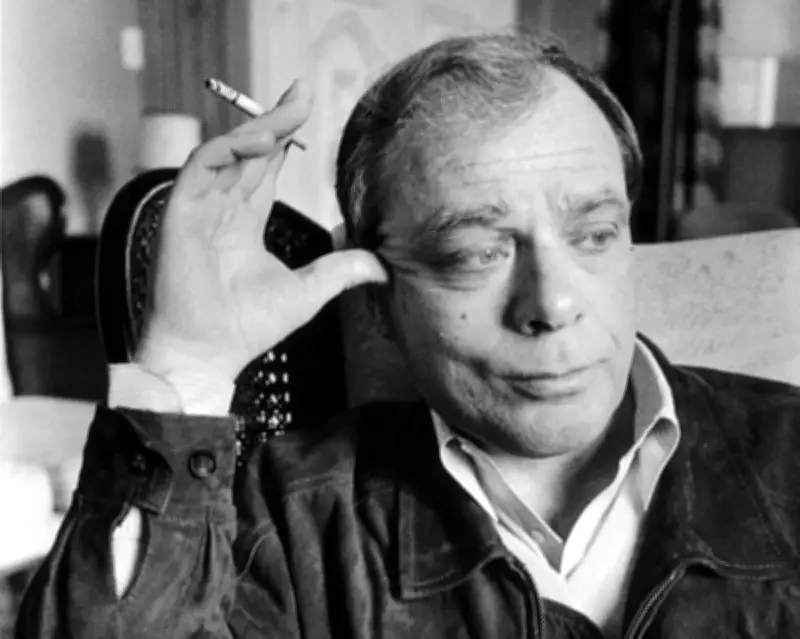
The Uncompromising Voice of Portuguese Literature
António Lobo Antunes, the Portuguese novelist whose exhilarating and provocative works forced his nation to confront its darkest historical moments, has died in Lisbon at the age of 83. With an exacting modernist style and unparalleled courage to address fascism and colonialism directly, Lobo Antunes crafted a literary legacy of unforgiving truths delivered through lush, intricate prose.
A Writer of Daring Style and Substance
Though Lobo Antunes often dismissed discussions about writing mechanics as "such a bore," few contemporary writers demonstrated greater stylistic daring. When fellow Portuguese author José Saramago received the 1998 Nobel Prize in Literature, many literary critics and readers in Portugal believed the honor should have gone to Lobo Antunes instead.
Over more than three decades and 30 novels, Lobo Antunes developed a distinctive modernist approach that explored Portugal's complex relationship with its authoritarian past and the tragic futility of its final colonial campaigns in Africa. Frequently labeled a difficult writer, his prose maintained a stubbornly flirtatious quality—simultaneously inviting and resisting readers with sentences that brazenly defied conventional grammar, syntax, and punctuation rules.

His writing bristled with intricate metaphors, provocative ideas, and preserved a determined idiosyncrasy. Texturally, his stories represented remarkable feats of literary construction, combining discordant elements to create exhilarating effects: nihilism paired with political gusto, farce shot through with horror, and realism that gradually transformed into the weird and surreal.
From Bourgeois Beginnings to Literary Intensity
Born in 1942 to a bourgeois family in Benfica on the outskirts of Lisbon, Lobo Antunes was the eldest of six brothers. He began writing diligently from a young age, but doubts emerged after he started publishing in local magazines during his mid-teens. "I began to nebulously understand that there was a difference between writing well and writing badly," he later reflected. Eventually, he recognized "that there existed an even greater difference between writing well and creating a work of art."
For Lobo Antunes, true artistic works possessed intensity. The novelist he envisioned didn't merely write but "engraved" words so "they could be read, like braille, without the help of one's eyes. So that one could run one's finger over the lines and feel the fire and the blood." This philosophy permeated his entire literary output, creating works that demanded visceral engagement from readers.
Confronting Colonial Trauma and Historical Amnesia
Lobo Antunes gained significant recognition in the English-speaking world through his second novel, South of Nowhere (1979), which first appeared in English translation by Elizabeth Lowe in 1983 and was later retranslated by Margaret Jull Costa as The Land at the End of the World (2011). This Conrad-esque narrative with a stronger anti-colonial foundation centered on Lobo Antunes' personal experience as a military medic in Angola during the peak of the independence war.
The novel distilled his blood-soaked memories into an intoxicated veteran's monologue, ostensibly addressed to a silent woman in a Lisbon bar but truly directed at a Portugal that had largely forgotten its colonial crimes. The narrator passionately rails against this willful historical amnesia while simultaneously tracing the disintegration of his young marriage, expressing yearning for his family and the daughter born during his absence, and denouncing the "crazy ghostly" war against MPLA fighters that exacted terrible casualties on both sides.
A Prolific and Courageous Literary Legacy
Other significant novels that solidified Lobo Antunes' position in contemporary Portuguese literature include The Return of the Caravels (1988), Fado Alexandrino (1983), The Inquisitors' Manual (1996), and The Splendour of Portugal (1997). Among his most powerful works is Act of the Damned (1985), set in the aftermath of the 1974 Carnation Revolution that ended Salazar's Estado Novo regime.

This novel inhabits the minds of a landed aristocratic family gathering at the deathbed of its patriarch in the medieval walled town of Monsaraz, eagerly anticipating their inheritance. The family's affairs are managed by a monstrous son-in-law willing to take extreme measures to secure what remains of a fortune largely lost to debt. As communists demand retribution and the family prepares to flee, the narrative confronts readers with incest, rape, canine slaughter, and wrenching cruelties inflicted on a character with Down's syndrome.
Finishing this novel evokes the word "diluvial"—as though swept up in a torrent, engulfed by a sudden, unforgiving flood. This term serves as both warning and praise when entering Lobo Antunes' literary universe. He remained a writer of uncommon courage and dazzling, showstopping finesse until the end, leaving behind a body of work that continues to challenge and illuminate Portugal's complex historical consciousness.