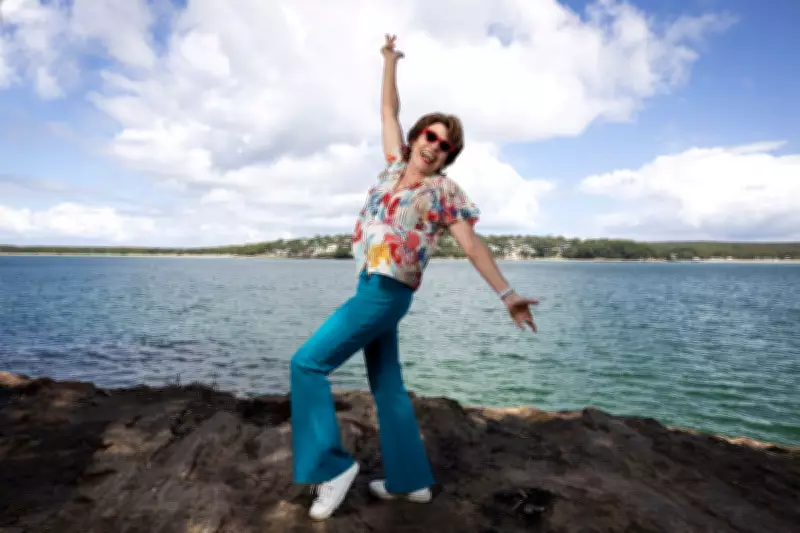
Kathy Lette's Emotional Return to Cronulla
Novelist, television presenter, and self-described professional bon vivant Kathy Lette recently returned to the coastal cliffs of Cronulla in Sydney's south, a place that holds both painful memories and beautiful nostalgia for the celebrated author. Walking along the new boardwalk that tops the cliffs at Cronulla's southern tip, Lette engaged with locals, admired the sparkling water through pine trees, and reflected on how this landscape has shaped her life and work.
From Trauma to Transformation
Lette's connection to Cronulla is deeply complex. As the co-author of Puberty Blues at just nineteen years old, she experienced overnight notoriety that made returning to this beachside community difficult for many years. The book's frank depictions of underage sex, binge drinking, rape, and drug use in Sutherland Shire raised significant controversy when it was published in the 1970s.
"I was so traumatised by my youth here," Lette reveals during our walk. "Apart from the horrible sexism and the surfy tribal rituals of sexual initiation – before that, it was a beautiful place to grow up."

Only recently did Lette's 94-year-old mother confess about the anonymous phone calls their family received after Puberty Blues was published – ranging from heavy breathing to streams of misogynistic abuse. "The anonymous phone call was the Twitter troll of its time," Lette observes wryly, noting that with everyone's names in phonebooks back then, such harassment was almost as easy as modern online trolling.
Generational Shifts and Healing
Today, Lette finds herself wryly enthusiastic about her frequent trips to Cronulla, where she notices profound changes in the community. "I see the girls are all surfing, the surfy boys have finally flopped on the shore and evolved," she says with evident satisfaction. "And the girls, when I talk to them, they're not just surfing – they're also surfing their brainwaves, they're all at university and they've got ambition."
This transformation represents what Lette describes as "a huge generational shift" that she finds particularly heartening. While her mother and sisters still live in the Shire, Lette divides her time between London and Sydney. Initially, returning to Cronulla would make her tense, but she has found healing through "love and laughter and sisterly camaraderie."
The Sisterhood Rules and Female Empowerment
Familial bonds take center stage in Lette's latest novel, The Sisterhood Rules, which follows frumpy music teacher Izzy and her elegant twin sister Verity, who ran off with Izzy's husband five years before the story begins. The true star of the novel, however, is their 69-year-old mother Nicole, who embarks on a mission to live spectacularly through lavish travel and a fling with an often-nude alpine horn player thirty years her junior.
At sixty-seven herself (or "six-seven" as she prefers to say), Lette relates most strongly to Nicole. "My whole literary raison d'être now is saying to women, have a sensational second act," she declares. "Go forth, be fabulous. Don't feel guilty about it."
Menopause, Liberation, and the Male Gaze
Lette speaks passionately about the freedom that comes with age, particularly after menopause. "Post 50, you get a fuck-it-I'm-50 gene, and you're no longer in the male gaze the way you were," she explains. "And it's just totally freeing and liberating."
This liberation has nothing to do with giving up on sex, Lette clarifies. "Because what is good sex about? Feeling. Feeling relaxed in your skin, at ease with your body," she says. "And by this age, you know yourself so well. You know what you want and you're not afraid to ask for it."
These qualities, Lette believes, make older women particularly attractive to younger men. "Young guys are thinking, 'she's funny, she's fabulous, she's independent. She knows her way around a wine list. Great lingerie, knows what you want in bed. Doesn't want kids. What's not to love?'"

Finding Frivolity in a Challenging World
For Lette, humor serves a crucial purpose in navigating contemporary challenges. "Joy builds resilience," she asserts, whether that joy comes from cocktails, chocolate, swinging from chandeliers, or exciting eyewear like her own sharp, studded red catseye glasses.
"We're living in a world where we are challenged every day – politically, environmentally, socially," Lette observes. "We are being bombarded. And you have to make space for friends, for frivolity, fun, family. You just have to do that, or you will lose your equilibrium."
But Lette wants fun to build not just resilience, but resistance. She advocates for women to become more militant in the current political climate. "We are on the road to Gilead," she warns, referencing Margaret Atwood's dystopian novel. "We need to get organised and angrier. We're far too nice. And look what's happening in America. A woman born in America today has less rights than her grandmother."
"Have fun and be joyous, but also be tough," Lette concludes. "We're at a very crucial time right now. We can't be complacent."
As our conversation ends, a photographer arrives with two surfboards for Lette to sign for her teenage daughters – a first for the author. Addressing the girls through a video message as she autographs a board, Lette offers characteristically cheeky advice: "Just make sure you catch some good ones. And drop in on any dickheads."