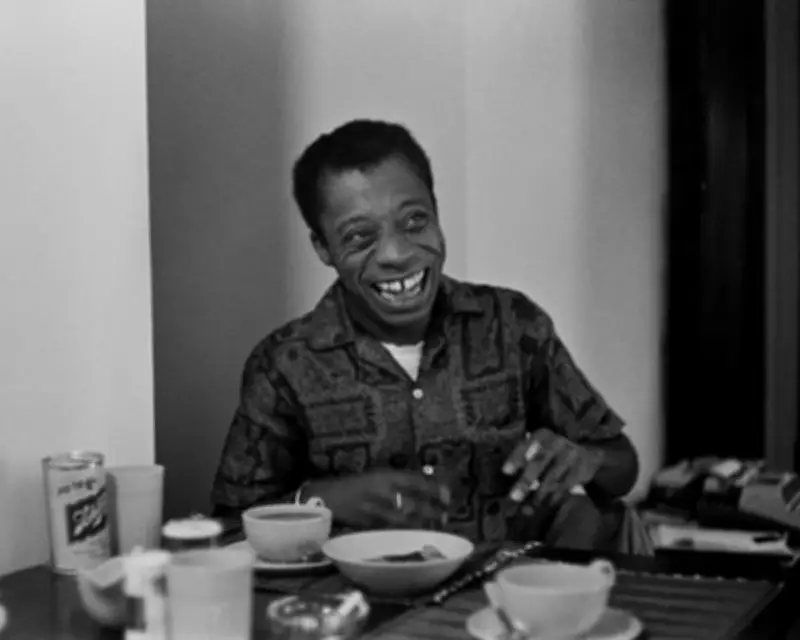
New Biography Puts James Baldwin's Sexuality and Relationships Front and Center
The legacy of American novelist and activist James Baldwin now appears firmly established, but this recognition was not always guaranteed. Following his death in 1987, Baldwin's critical reputation, which had already been declining during his lifetime, continued to diminish. A decade later, when the Library of America published his Collected Essays and Early Novels & Stories, Michael Anderson of the New York Times criticized Baldwin's "intellectual flaccidity" and dismissed his powerful 1963 essay diptych The Fire Next Time as an overly emotional "period piece." This judgment, made six years after the acquittal of the police officers who beat Rodney King, seems remarkably shortsighted in retrospect.
The Baldwin Revival and Its Limitations
A significant turning point in the Baldwin revival came with Raoul Peck's 2016 documentary I Am Not Your Negro. The film effectively juxtaposes footage of modern-day protests and racist police violence with clips of Baldwin's civil rights-era speeches, highlighting his prescience and reaffirming his role as a key witness to that turbulent period. Baldwin himself preferred the term "witness" to describe the writer-spokesperson-celebrity role he assumed by the mid-1960s, a title that conveys both moral obligation and a sense of frustrating passivity.
However, Peck's documentary largely omitted any exploration of Baldwin's sexuality and his critique of "the American legend of masculinity." Baldwin believed this societal construct trapped American men in a state of permanent adolescence, leaving them isolated and unable to reconcile their private and public selves. Narrated by Samuel L. Jackson in a baritone quite different from Baldwin's own affected, transatlantic intonation, the film almost entirely avoided references to his intimate life.

Integrating Sexuality into Baldwin's Story
Throughout his life, Baldwin's most profound and lasting relationships were with men. He consistently resisted labels of sexual orientation, arguing that such categories were inherently dehumanizing. While some accounts of his life have ignored or minimized his sexuality, David Leeming's important 1994 biography sought to integrate it, though even there, names were pseudonymized and details obscured.
The thesis of Nicholas Boggs's new biography, Baldwin: A Love Story, is that a fuller understanding of Baldwin's intimate relationships is essential to comprehending the writer. Published by a major press for the first time in over 30 years, this expansive 600-page work charts a largely chronological course from Baldwin's childhood in Harlem to his death at age 63.
Four Central Relationships
Boggs structures his study into four "books," each named after the men who represented Baldwin's central relationships:
- Beauford Delaney, the modernist painter who served as Baldwin's "spiritual father"
- Lucien Happersberger, Baldwin's first great love
- Engin Cezzar, the Turkish actor whose "eroticized fraternal bond" drew Baldwin to Istanbul
- Yoran Cazac, a French artist whose relationship with Baldwin has previously received little attention
With the exception of Delaney, who harbored unrequited feelings for Baldwin, these were straight-leaning men with whom Baldwin was in love, but who were themselves ambivalent about their romantic attraction to him. As Hilton Als observed, Baldwin's "first principle of love" was "love withheld." Boggs takes a similar view, suggesting that Baldwin's "fetish" was for men who "stood outside society's norms tout court" but were primarily attracted to women—a dynamic structured around impossibility that ensured nothing would interfere with his calling as a writer.
Exhaustive Research and Fresh Material
Boggs's research is remarkably thorough, enabling him to reconstruct Baldwin's life in what might be called biographical ultra-high-definition. Among much fresh material, he incorporates a cache of recently unarchived letters written by Baldwin to his lifelong friend Mary Painter. These letters offer a fascinating glimpse into how Baldwin used correspondence as a form of diarizing, working through practical and creative problems via the epistolary form.

The letters also reveal Baldwin's tendency toward self-absorption as his career flourished. Boggs recounts a shocking incident in which Painter wrote to Baldwin about being sexually assaulted by a mutual friend, only to receive a "woefully inadequate" reply. Baldwin's handwringing response ("I scarcely know what to say") is, in Boggs's estimation, "preposterously insensitive." This moment demonstrates Boggs's resistance to hagiography and adds texture to his analysis of Baldwin's late-career relationships with emerging Black female writers, particularly his 1971 televised dialogue with poet Nikki Giovanni.
The Turbulent 1960s
At 250 pages, the second book is the longest and most challenging section, as Boggs meticulously documents Baldwin's most prolific and tumultuous decade. During the 1960s, Baldwin's involvement with the civil rights movement deepened but grew increasingly fractious. His rising profile placed him firmly in the crosshairs of J. Edgar Hoover's FBI and critics who viewed his celebrity as the death knell for his art.
This period brought profound heartache: Happersberger married, Delaney descended into paranoid psychosis, and Cezzar remained out of reach. Baldwin also experienced all-consuming grief following the deaths of Lorraine Hansberry, the victims of the 16th Street Baptist church bombings, and the assassinations of Medgar Evers, Malcolm X, and Martin Luther King Jr. By the decade's end, a bedraggled Baldwin found temporary refuge in Istanbul, his creative haven, where he directed an adaptation of John Herbert's play Fortune and Men's Eyes. Boggs conveys with great affection Baldwin's "teeth-chattering" excitement as he watched his play premiere in the final week of a decade that nearly killed him.
A Personal Quest and Literary Analysis
The biography shifts gear completely in its final section, as Boggs narrates his own efforts to bring Baldwin's curious "children's book for adults," Little Man, Little Man, back into print. This quest involved tracking down the mysterious Cazac, who illustrated the text. The prose here becomes significantly pacier, gracefully cutting between Boggs's research trips to France in the early 2000s and lushly illustrated scenes of Baldwin's later years in his final home in Saint Paul de Vence.
These chapters also provide the book's most illuminating literary analysis, particularly a gloss on Baldwin's unpublished, auto-fictive work-in-progress, No Papers for Mohamet, which he used as a "portal" for much of his later creative output. Boggs interweaves interviews with a gregarious yet somewhat recalcitrant Cazac in Paris, attempting to uncover the truth of his relationship with Baldwin.
The Most Touching Moment
With the same care and respect that undergirds his entire project, Boggs conjures what is unquestionably the book's most touching moment. When asked when he last saw Baldwin, Cazac turns to look out the window and replies, "I can't imagine that I can't see him outside there, now." In the end, the truth of their relationship lies not in biographical details but in that image: a man staring out a window, believing that his feeling for another man is so powerful it might collapse the decades and bring him back to life.
Baldwin: A Love Story powerfully demonstrates how the painful but productive tension between heartache, solitude, and the pursuit of the unattainable shaped the geographic, artistic, and emotional trajectory of Baldwin's remarkable life. This comprehensive biography offers fresh perspectives on how Baldwin's relationships with men fundamentally influenced his work and legacy, providing a more complete understanding of one of America's most important literary figures.