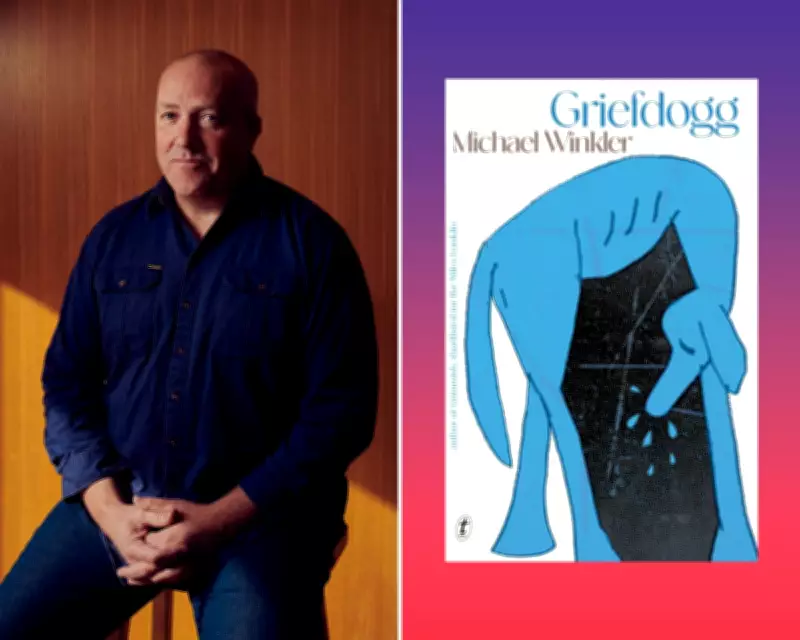
Michael Winkler's Griefdogg: A Surreal Journey into Psyche and Transformation
In his latest novel Griefdogg, Michael Winkler returns to the exploration of human consciousness with a cryptic and compelling narrative that delves into the depths of personal and collective grief. Following his acclaimed work Grimmish, which earned recognition as the first self-published novel shortlisted for the Miles Franklin prize, Winkler continues to establish his distinctive literary voice—erudite, uncanny, and bleakly comic.
A Tale of Metamorphosis and Existential Crisis
The novel centers on Jeffrey Watson-Johnson, a middle-aged hydrologist living in Mildura who embodies disciplined monotony. As a climate-conscious, fitness-obsessed vegan with community-minded values, Jeffrey appears to be a model citizen. However, beneath this surface lies a profound malaise that awakens after he receives an unexpected inheritance and engages in an affair with his cousin.
This personal crisis triggers Jeffrey's realization that his conscientious efforts are futile against what he perceives as the lost battle against climate change, defeated by "crony capitalism and toasty-warm apathy." In a moment of existential surrender, he declares his desire to "be a human, but live as a pet," initiating a remarkable transformation into Hubert, a family dog seeking Zen-like detachment.

Plumbing Psychological Depths
Winkler's narrative operates on multiple levels, simultaneously examining Jeffrey's personal unraveling while probing broader philosophical questions. Through Hubert's canine perspective, the novel explores themes of:
- The pain of human consciousness and the desire to escape "the pain of being upright"
- The privilege that permits disillusionment and withdrawal from societal obligations
- The hidden grief that pools within ordinary individuals concealing ordinary secrets
- Humanity's relationship with the natural world, particularly whether we would treat it differently if it possessed "memory and feelings"
As Jeffrey transforms into Hubert, he develops an unexpected ability to sense and alleviate other people's "secret grief," creating a paradoxical connection through detachment.
Literary Craft and Self-Reflexive Narrative
Winkler employs autofictional techniques that draw attention to the novel's constructed nature. An unnamed narrator, serving as Winkler's proxy, struggles to write Jeffrey's story while identifying with his creation's desire to annul the contract of adulthood. This self-referential approach includes moments where the narrator admits "But I lie. (You know I lie!)" exposing the artifice of storytelling while questioning what ultimately holds meaning.
Despite the cerebral weight of these ontological inquiries, Griefdogg maintains a surprising levity. The novel is punctuated by countless dad jokes that afflict Jeffrey like a psychological condition, creating a counterpoint to the philosophical depth. Winkler demonstrates remarkable skill in making complex metaphysical concepts accessible and engaging, guiding readers through "pleasurably tortuous, sparky neural pathways."
Critical Assessment and Literary Significance
Griefdogg represents an ambitious continuation of Winkler's literary project—what he describes as an attempt to "spelunk into the recesses of himself and wring words from underground water flow." The novel functions simultaneously as:
- A beguiling ode to ordinary people with hidden interior lives
- A sardonic examination of navel-gazing and masculine midlife inertia
- A philosophically and environmentally poignant inquiry into contemporary consciousness
While some critics note that the novel's disparate elements don't always harmonize perfectly, and that a certain detachment pervades the narrative (perhaps intentionally), Griefdogg undeniably establishes Winkler's distinctive voice in Australian literature. The work scratches "a metaphysical itch you didn't realise you had," offering readers both intellectual stimulation and dark humor in equal measure.

Published by Text Publishing and priced at $34.99, Griefdogg solidifies Michael Winkler's position as a writer unafraid to explore the uncomfortable intersections of personal psychology, environmental consciousness, and literary form.