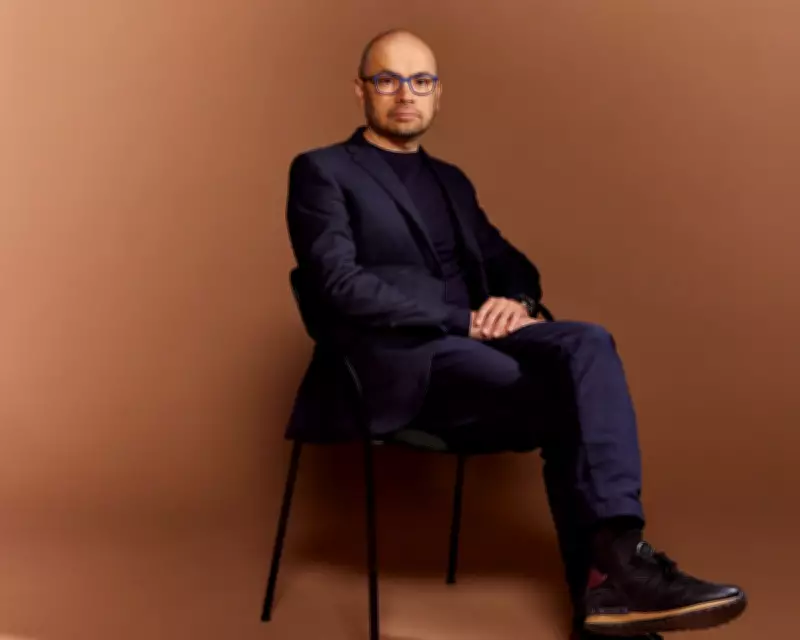
The Infinity Machine: A Critical Look at Demis Hassabis's AI Odyssey
In March 2016, the world witnessed a historic confrontation at Seoul's Four Seasons Hotel that would redefine humanity's relationship with artificial intelligence. On one side stood Lee Se-dol, South Korea's second-highest ranked Go master. On the other was AlphaGo, an artificial intelligence program developed by London-based DeepMind. Over five matches watched by more than 200 million people globally, DeepMind secured a decisive 4-1 victory, marking a watershed moment in technological advancement.
From Ancient Game to Modern Revolution
"Chess is the greatest game mankind has invented," game designer Alex Randolph once observed. "Go is the greatest game mankind has discovered." This ancient Chinese board game, with its staggering complexity and more legal board positions than atoms in the observable universe, had long resisted computational mastery. While chess fell to IBM's DeepBlue nearly two decades earlier, Go remained humanity's final bastion of gaming supremacy until AlphaGo's breakthrough.
Following his third defeat, Lee Se-dol offered a poignant reflection: "I, Lee Se-dol, lost, but mankind did not." The true victor emerged as DeepMind and its visionary CEO, Demis Hassabis, whose remarkable journey forms the core of Sebastian Mallaby's new biography, The Infinity Machine.

A Prodigy's Unconventional Beginnings
Hassabis's origins read like something from fiction. His Chinese Singaporean mother endured childhood poverty as an orphan on Singapore's streets, while his Greek Cypriot father pursued musical dreams while selling toys from a battered red Volkswagen van. From this unlikely background emerged one of computing's most influential minds.
The young Hassabis displayed extraordinary intellectual gifts from his earliest years. He began defeating adult chess opponents at just four years old. By five, he competed in tournaments while perched on phone books atop stacked chairs to see the board. At nine, he captained England's under-11 team, achieving chess master status by thirteen and ranking as the world's second-strongest player in his age group.
This competitive environment proved intense and demanding. Tournament organizers placed wooden boards beneath tables "to prevent players from kicking each other." Hassabis's father responded to losses with explosive reactions, creating pressure that shaped the young prodigy's approach to excellence. "The only way I'd know I'd succeeded was if I exerted myself to near-collapse," Hassabis recalled, describing pushing himself "to the point just before death."
The Path to DeepMind
After contributing to Bullfrog Games' successful Theme Park under designer Peter Molyneux, Hassabis pursued studies at Cambridge University, founded his own gaming studio, then returned to academia for a neuroscience PhD. In 2010, he co-founded DeepMind with friends Mustafa Suleyman and Shane Legg, launching what would become one of artificial intelligence's most influential research organizations.
DeepMind's mission evolved strategically depending on their audience. Early support came from controversial tech investor Peter Thiel, co-founder of PayPal and surveillance company Palantir, who would later emerge as a significant political figure supporting JD Vance's rise and promoting apocalyptic visions of technological salvation. Thiel's involvement highlights the complex ecosystem surrounding AI development, where visionary research intersects with speculative investment and ideological agendas.
The AGI Promise and Critical Shortcomings
Hassabis captivated investors with visions of Artificial General Intelligence (AGI) – systems capable of matching or surpassing human performance across all cognitive domains. "It's really finding God's algorithm," one investor marveled, capturing the quasi-religious fervor surrounding these technological ambitions.
Yet Mallaby's biography demonstrates significant limitations in its critical engagement with these claims. The author asserts that artificial intelligence "heralds a transformation more profound than anything since Homo sapiens acquired the capacity for abstract thought" – a hyperbolic statement that overlooks humanity's fundamental developments in agriculture, language, and other foundational technologies.

The narrative also suffers from stylistic excess, with characters constantly "confessing," "declaring," "fretting," or "vowing earnestly" rather than simply speaking. This embellishment extends to Hassabis's own philosophical musings, which Mallaby presents with uncritical reverence. "Doing science is, sort of, like reading the mind of God," Hassabis offers. "Understanding the deep mystery of the universe is my religion, kind of." These qualified statements reveal more about aspirational branding than substantive revelation.
Missed Opportunities and Substantive Achievements
Perhaps most frustratingly, Mallaby dedicates excessive attention to corporate dinners and management disputes while minimizing Hassabis's genuine scientific contributions. The DeepMind founder shared the 2022 Nobel Prize in Chemistry with John Jumper for adapting AI systems to predict protein structures – groundbreaking research with profound implications for medicine and biology that receives inadequate exploration.
This represents precisely the type of practical, life-changing AI application that contrasts sharply with Silicon Valley's more speculative ambitions. While figures like OpenAI's Sam Altman appear in the narrative as cynical opportunists releasing ChatGPT prematurely to capture market attention, Hassabis's protein-folding work demonstrates AI's tangible potential for human benefit.
Mallaby's tendency to conflate Hassabis's computing expertise with universal genius proves particularly problematic. The biography treats casual philosophical observations as profound insights, missing opportunities to critically examine the gap between technological capability and human wisdom. "I am really a practical philosopher," Hassabis explains. "I'm not just sitting there thinking ... I'm also doing experiments. Isn't that wonderful?"
The Infinity Machine ultimately presents a paradoxical portrait: an extraordinary life story constrained by conventional biographical approaches. While documenting Hassabis's journey from chess prodigy to Nobel laureate, Mallaby struggles to balance admiration with analysis, often celebrating technological ambition while neglecting its broader implications. The result is a fascinating but flawed examination of one man's quest to reshape intelligence itself.