Exploring Iran's Complex History Through Literature
Iran stands at a critical juncture in its history, with recent events highlighting deep-seated tensions and conflicts. Without delving into the immediate crisis, it is valuable to turn to literature that sheds light on the formation of modern Iran and helps explain the protests that have been harshly suppressed by the regime. During my tenure at English PEN, an international writers' organization, I advocated for political prisoners in Iran and fought for freedom of expression. This experience allowed me to meet Iranian writers, poets, and human rights activists, deepening my understanding of the nation. Below are several books I have read, reviewed, or been recommended—each cutting through misinformation and war rhetoric to reveal the true essence of Iran's struggles.
Key Books on Iran's Revolutionary Era
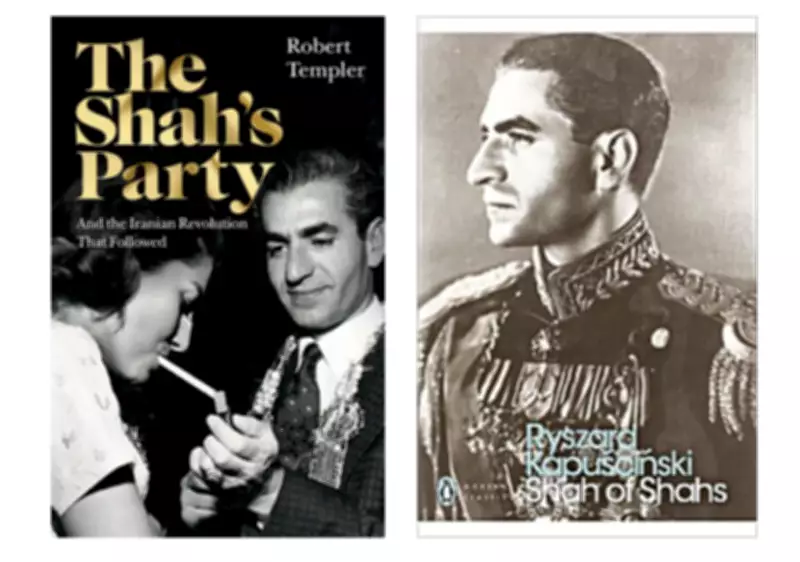
Robert Templer's The Shah's Party: And the Iranian Revolution That Followed (Hurst Publishers) is set for release this month and captures Iran's oil-rich boom years. In 1971, eight years before the dynasty's fall, Shah Mohammad Reza Pahlavi and his wife, Farah Diba, hosted a lavish gathering of world leaders to celebrate the 2,500th anniversary of the Persian monarchy. However, this event occurred amid rising leftist agitation and a shift toward political Islam. Ruhollah Khomeini, an exiled mullah, launched a relentless campaign against the Shah, exploiting growing inequalities and promoting his theocratic vision, especially among rural migrants seeking work. By 1971, early dissent had begun to swell into a revolutionary torrent that would eventually overthrow the dynasty.
Ryszard Kapuscinski's 1985 classic, Shah of Shahs (Penguin Modern Classics), also portrays the Shah's final years, offering a chilling reflection on how fear impacts a nation.

Personal Narratives and Human Rights Accounts
Azar Nafisi's Reading Lolita in Tehran (Penguin Modern Classics), first published in 2003, became an instant bestseller. This "memoir in books" is set in late 1990s Iran, where an all-female book club discusses forbidden Western literature. Inspired by these works, the women share their personal stories, aspirations, and disappointments, providing a poignant look at life under repression.
Shirin Ebadi's works, including Iran Awakening (Ebury Publishing, 2007) with Azadeh Moaveni, offer vivid accounts of post-revolution Iran from the perspective of a female judge who later won the Nobel Peace Prize for her human rights efforts. The Golden Cage (WW Norton, 2011) explores the revolution's impact on a single family through three brothers, illustrating how political upheavals affect ordinary Iranians. Until We Are Free: My Fight for Human Rights in Iran (Ebury Publishing, 2016) details her reform struggles and the backlash after winning the Nobel Prize.
Recent Protests and Modern Uprisings
Arash Azizi's What Iranians Want: Women, Life, Freedom (Oneworld, 2025) examines the protest wave sparked by Mahsa Amini's death on September 16, 2022. Amini, a young Kurdish woman, was arrested by the morality police for alleged hijab violations and brutally beaten, leading to her death. Her funeral ignited nationwide demonstrations with the rallying cry "Women, Life, Freedom," as women burned headscarves and protested against Supreme Leader Seyyed Ali Hosseini Khamenei, who served until his recent assassination.
Marjane Satrapi's graphic novel Persepolis (Vintage), first published in English in 2003, is a memoir of growing up during the Islamic Revolution, with family members hunted and imprisoned. It was adapted into an Oscar-nominated animated film in 2007. Satrapi's recent work, Woman, Life, Freedom (Seven Stories Press UK, 2024), collaborates with activists and artists to depict the 2022 women's uprising through comics that bypass censorship.
Diverse Perspectives and Exile Stories
Nasrin Alavi's edited collection We Are Iran (Granta, 2005) compiles web diaries on topics from repression to nostalgia, offering a fascinating portrait of early 2000s Iran, where online expression provided a freedom absent in print.

Refugee Nasrin Parvaz's memoir One Woman's Struggle in Iran, A Prison Memoir and her novel The Secret Letters from X to A (both Victorina Press, 2018) detail her detention and the treatment of political prisoners.
Christopher de Bellaigue's In the Rose Garden of the Martyrs (HarperCollins Publishers, 2004) blends history, reportage, and memoir from his years as a journalist in Tehran, creating a compelling personal account.
Shahrnush Parsipur's novels, such as Touba and the Meaning of Night (first published in Iran in 1989) and the upcoming Women Without Men (Penguin, longlisted for the 2026 International Booker Prize), explore strong Iranian women's lives, with her works banned in Iran and her living in exile.
Contemporary Voices and Prison Experiences
Narges Mohammadi's White Torture (Oneworld, 2022) documents the abuse of women prisoners in Evin Prison through interviews, with Mohammadi herself imprisoned and currently on a hunger strike.
Sepideh Gholian's The Evin Prison Bakers' Club (Oneworld, 2025) features 16 recipes symbolizing solidarity among women in Iran's notorious prison.
Sanam Mahloudji's novel The Persians (HarperCollins, 2025), shortlisted for the Women's Prize for Fiction, follows three generations of exiled Iranian women grappling with identity and loss.
These books collectively provide a comprehensive view of Iran's turbulent history and ongoing struggles, from revolutionary times to recent protests, emphasizing the resilience and voices of its people.