A fresh academic perspective is challenging long-held beliefs about the rise of Britain's industrial might, arguing that a key chapter in economic history has been misrepresented in museums and books across the UK.
Re-examining the Roots of Industrial Dominance
The conventional story attributes the 19th-century global supremacy of Lancashire textiles to technological innovation and free-market competition. However, historian Sven Beckert's work, reviewed in the Guardian, presents a starkly different analysis. His book, Capitalism: A Global History, serves as an antidote to Eurocentric views, highlighting the role of state-backed force in shaping markets.
It remains common, Beckert argues, for institutions in the UK to overlook the deliberate destruction of the hitherto dominant Bengali textile industry. This oversight ignores how British military and naval power were deployed to dismantle a major competitor, thereby securing Lancashire's position.
Letters from Readers: A Broader Conversation
The discussion of Beckert's work appeared within the Guardian's letters page, which also featured a range of other reader observations. These included a note on the adoption of the Gregorian calendar in 1752, where 5 September 1752 did not exist in Great Britain as the country jumped from 2 September to 14 September.
Another correspondent urged the newspaper's style editors to adopt the degree symbol for temperature readings, suggesting 18°C is clearer than 18C. Meanwhile, a nostalgic letter recalled a humorous amended road sign in Lincolnshire pointing to "Old Bolingbroke and Mavis Enderby," with the added phrase "A son" underneath.
The letters section also featured a complaint about the misuse of Cyrillic script in branding, specifically targeting the Toys Я Us logo, which the writer insisted on pronouncing phonetically as "Toys Ya Us."
A Clearer View of Economic History
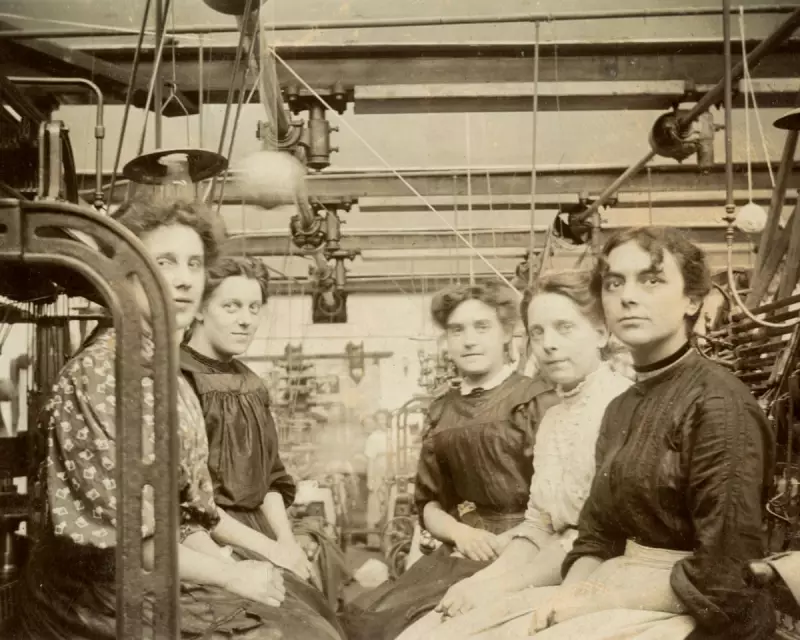
The core argument presented in the review of Beckert's book insists that understanding the full picture of global capitalism requires acknowledging its violent and coercive foundations. The prosperity of mill towns like Rochdale, immortalised in a 1911 photograph of its workers, was not forged in a vacuum of pure competition.
This revised historical viewpoint suggests that the narrative of British industrial success requires a significant recalibration. It moves beyond a celebration of machinery and entrepreneurship to confront the complex, and often forceful, interactions between imperial power and global trade that shaped the modern economic world.