Lost Nazi Cipher Manuals for Machine More Advanced Than Enigma Found After 80 Years
Lost Nazi cipher manuals relating to a secret German encryption device believed to be more sophisticated than the famous Enigma machine have been discovered in Prague archives after more than eight decades. The original wartime documents for the highly classified Schlüsselgerät 41 (SG-41) cipher machine were uncovered during an academic investigation by cryptography researchers Eugen Antal, Carola Dahlke, and Robert Jahn.
Discovery in Czech Archives
The papers were found in two Czech institutions: the Military History Institute in Prague and the country's Security Services Archive. The files include operating instructions, encryption rules, and original key tables used during the closing weeks of World War II in 1945. Researchers located a folder titled Wehrmacht Encryption Guidelines containing several original German documents in good condition, including the official operating manual for the SG-41 and its variant, the SG-41Z, dated September 2, 1944.
Significance of the Find
Historians say there have been remaining questions about how the SG-41 operated due to the lack of surviving documentation—questions these new documents can now answer. The recently found documents provide insightful information on several levels, the researchers, led by Eugen Antal of the Slovak University of Technology in Bratislava, wrote. Firstly, the extent of cryptanalysis in Central Europe and its influence becomes clearer in a broad historical context. Secondly, for the first time, it is possible to view complete instructions on how to use the machine in the field.
The documents on key design are particularly exciting, confirming the previously assumed cipher operation and answering other previously unanswered questions. The archive also contained a field manual for operators, a regulation known as Vorschrift Nr. 90 explaining how encryption keys were generated, and monthly key tables used between March 16 and 31, 1945. These tables are considered particularly valuable as they reveal how the machine was configured during the final weeks of the conflict.
Technical Innovations of the SG-41
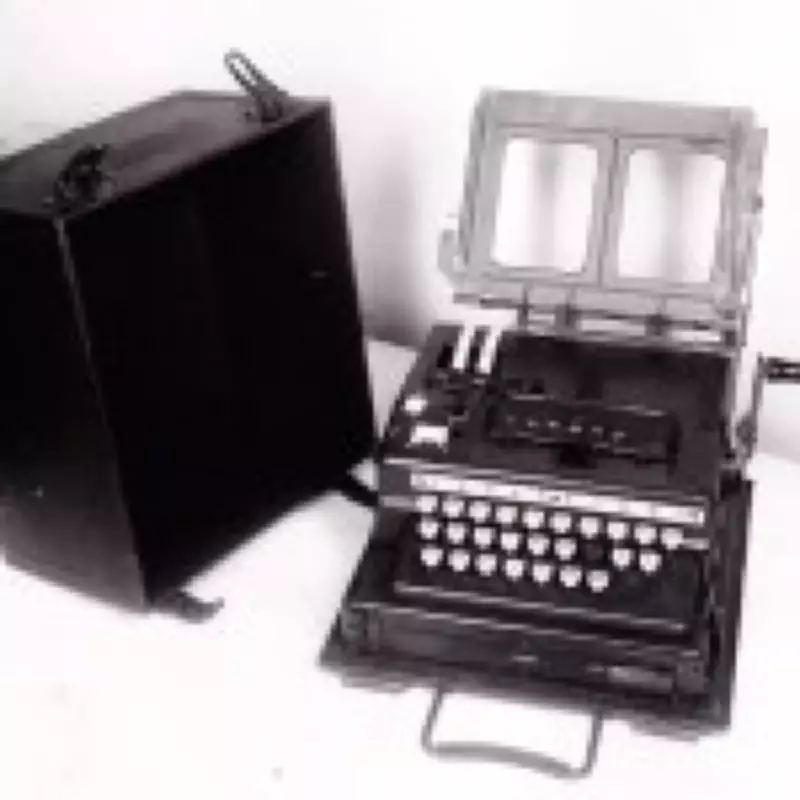
During World War II, the German military relied heavily on encrypted communications. The Enigma machine became the best known of these systems after Allied codebreakers succeeded in deciphering its supposedly unbreakable code. The SG-41, designed in 1941 by German engineer Fritz Menzer, was widely regarded as a more sophisticated device. Unlike Enigma, which used electrically powered rotors, the SG-41 relied on a fully mechanical system based on a pin-and-lug principle first developed by Swedish cryptography pioneer Boris Hagelin.
The machine used six rotating wheels fitted with movable pins. These pins could be set to active or inactive positions according to daily encryption settings. When an operator typed a letter on the keyboard, the internal mechanism analyzed the pin positions and generated a pseudo-random number. That number was added to the original letter to produce the encrypted text. To decrypt the message, the receiving machine had to be configured identically so the same value could be subtracted.
The research suggests the SG-41 incorporated several innovations that made it difficult to analyze. One was an irregular stepping mechanism. In many cipher machines, internal wheels rotate in predictable sequences. In the SG-41, however, the wheels influenced each other's movement, creating irregular patterns that complicated attempts to identify repeating sequences in encrypted messages. A second feature was a negation function built into the sixth wheel. When activated, it reversed the state of pins on the other wheels, instantly changing the machine's behavior and increasing its unpredictability. Together, these features made the SG-41 one of the most advanced mechanical cipher systems developed during the war.
Physical Design and Operational Details
The manuals also shed light on the machine's physical design. Although intended for field use, the SG-41 was far from lightweight. The device itself weighed around 10kg and about 17kg when fully assembled with its protective lid and base plate. To make it usable in the field, German engineers developed a padded wooden support known as a Knieplatte, or knee plate. This allowed operators to rest the machine on their knees while typing messages, in a manner similar to using a laptop computer. The board could also be converted into a backpack frame so soldiers could carry the heavy device during transport.
The newly found documents also clarify how the machine's complicated key system worked. Operators used a monthly table containing 26 possible pin configurations, corresponding to the letters of the alphabet. Each day they received a six-letter daily key that determined which configuration from the table would be used for each of the machine's six wheels. Additional settings included a camouflage key, designed to disguise the starting position of messages, and a two-digit identification number assigned to each communication station. Before sending a message, operators had to set all of these values correctly.
Remaining Mysteries and Future Research
Despite the discovery, several questions remain unanswered—as few working machines exist today, with some of the best examples thought to be possibly languishing in Russian state archives. As a result, manuals like these could be key to carrying out simulations to get a feel for how the SG-41 actually worked. Unfortunately, there are only a few intact machines in the world, the authors write. Most of them are unlikely to be in perfect working order, as regular maintenance of the mechanics is absolutely essential. Cryptanalytic studies such as these can therefore only be carried out with the help of simulations today.
For now, the Prague discovery represents one of the most significant breakthroughs in understanding the SG-41. After decades of mystery, researchers say the forgotten documents are finally helping to reveal how one of World War II's most complex cipher machines actually operated. As with Enigma, British cryptographers did succeed in breaking some SG-41 due to errors by German operators in October 1944, but did not fully understand what they were dealing with until the final months of the war when machines were captured and analyzed. Researchers also found a 41-page document written in Czech describing the machine's technical design along with a post-war cryptanalysis carried out by Czechoslovak intelligence.