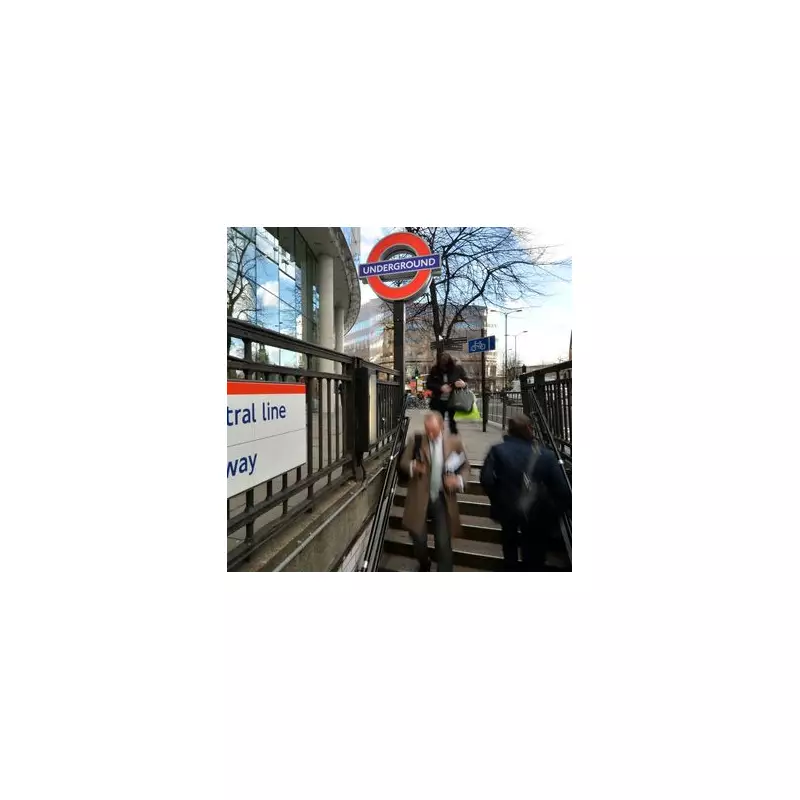
Beneath the bustling streets of London's financial district lies a Tube station with a remarkable and largely forgotten secret, one that played a crucial part in securing Britain's victory during the Second World War.
A Station with a Hidden Purpose
St Paul's Underground Station, situated on the Central line between Chancery Lane and Bank, is far more than just a commuter hub. While passengers hurry through its ticket halls today, few realise that during the dark days of the Blitz, the station housed a facility integral to the national war effort.
The station first opened its doors in 1900, originally named Post Office after the nearby General Post Office headquarters. Its initial entrance was on Newgate Street's north side. A major renovation in the 1930s moved the entrance eastwards and introduced an underground ticket hall and escalators, modernising the site for the growing city.
The Secret in the Lift Shaft
During World War II, the station's infrastructure was repurposed for a vital strategic function. Concealed below ground within a disused lift shaft was the electricity grid control room for London and Southeast England.
This hidden nerve centre was absolutely critical. Controlling the power supply was essential for keeping the capital running and, more importantly, for sustaining the production of munitions and other essential wartime materials in factories across the region. Its protected underground location kept it safe from the devastating aerial bombardments above.
Post-War Changes and Modern Identity
The station's wartime service was followed by a prolonged period of reconstruction. Work that began in 1937 and 1939 to replace lifts with escalators was interrupted when the new street-level ticket hall was bombed during The Blitz.
Remarkably, the final retiling and completion of this work was not finished until 1987. The station now displays the classic white and red tiling synonymous with the Central line. Today, its entrances are found at the junction of Newgate Street, Cheapside, and St. Martin's Le Grand, just a short walk from the iconic dome of St Paul's Cathedral.
This piece of hidden history transforms St Paul's station from a simple transit point into a monument to London's resilience, a silent testament to the ingenious and secretive measures that helped a nation survive its finest hour.