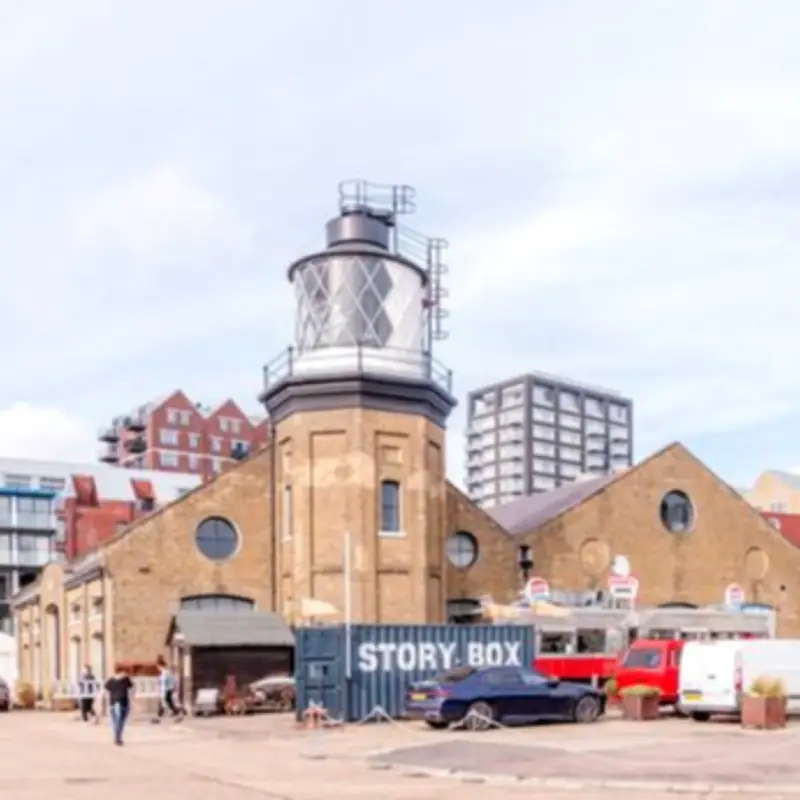
From Big Ben to Buckingham Palace, London is full of iconic landmarks, but hidden away in Tower Hamlets lies one of the capital's strangest and least-known treasures. Tucked within the waterfront setting of Trinity Buoy Wharf in the Docklands, the Experimental Lighthouse is a remarkable piece of history that most Londoners have never even seen.
The Experimental Lighthouse: A Laboratory, Not a Beacon
Designed and built between 1864 and 1866 by Sir James Douglass, the Experimental Lighthouse is London's only surviving lighthouse. However, it never actually guided a single ship to safety in the traditional sense. Instead, this distinctive structure served as a working laboratory, used to test the very latest maritime lighting equipment and train lighthouse keepers in new technologies of the time.
The story of the site stretches back even further. The earliest building on the wharf, the Electrician's Building, dates to 1836 and was designed by James Walker, then Chief Engineer of Trinity House, the organisation responsible for designing and maintaining the navigational buoys, lightships and lighthouses that kept Britain's coastal waters safe.
Walker later built the first of two lighthouses on the site in 1854, before his successor Douglass constructed the iconic Experimental Lighthouse that still stands today. Adding another remarkable layer to its history, the lighthouse stands adjacent to the workshop once used by the great British physicist and chemist Michael Faraday. It was here, while experimenting at Trinity Buoy Wharf, that Faraday first began his pioneering work on electric lighting for lighthouses.
A 1,000-Year Musical Composition
The lighthouse is also home to one of London's most extraordinary artistic curiosities. Longplayer is a 1,000-year-long musical composition written by Jem Finer, originally commissioned by Artangel and now in the care of the Longplayer Trust. Designed to play continuously and without repetition for 365,243 days, beginning on 1 January 2000 and running through to the year 2999, it stands to become the longest piece of music in human history if it succeeds. Visitors to the lighthouse can hear it playing, though you may need to take their word for it on how it sounds a few centuries from now.
From Sewing Bee to Creative Hub
In more recent times, the lighthouse found a new kind of fame when the BBC chose it as the filming location for The Great British Sewing Bee, which moved to studio space beneath the lighthouse for its 2021 series. Judge Patrick Grant described the experience warmly: "It was a real joy to spend time there. We'd come onto the set just before 7am every day and the sunrises and sunsets were amazing. Having that wonderful vista across the River Thames from the sewing room can't help but inspire the sewers. It was a spectacular place to shoot."
The lighthouse sits within the wider Trinity Buoy Wharf complex, which has itself undergone a remarkable transformation since the derelict site was taken over in 1998. Today, the wharf is a thriving creative community of over 750 people, home to artists, photographers and small businesses, as well as major organisations including English National Opera, Uber Boat by Thames Clippers and The King's Foundation.
Visitors can also enjoy The Orchard Café and Fat Boy's Diner, making a trip to see the lighthouse well worth the journey East.
So next time you find yourself ticking off the capital's famous sights, consider venturing a little off the beaten track. London's only lighthouse, with its hidden history of scientific discovery, maritime heritage and musical endurance, may just be the most interesting landmark you have never visited.