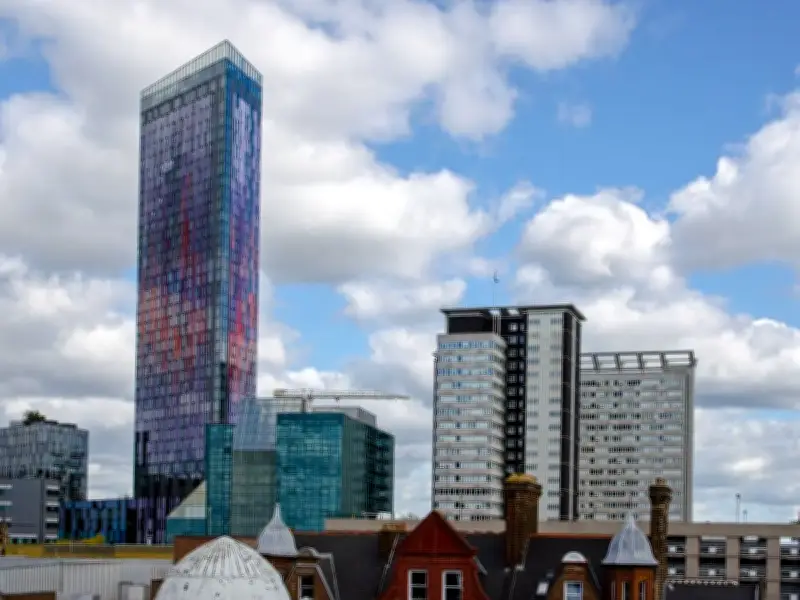
Croydon's second-tallest building, known as Saffron Tower, offers a direct visual clue to the town's historical name origin. The skyscraper's red, pink and purple façade is a nod to the saffron crocuses that once carpeted the area, according to local historians.
The Anglo-Saxon Roots of 'Croydon'
The name 'Croydon' is thought to derive from the Anglo-Saxon words 'Crogdene', meaning 'valley of the crocuses'. This is because Croydon was renowned for its abundance of saffron crocuses throughout the Middle Ages. Saffron, a spice obtained from the flower of the Crocus sativus plant, was a highly valued commodity during that period, serving a wide range of purposes, from medicinal and culinary uses through to textile dyeing.
In Croydon, saffron was predominantly used for dyeing textiles, making it a vital industry for the town. The saffron crocuses were cultivated in specially prepared beds, with the flowers being harvested each autumn. The stigmas were then painstakingly hand-picked and dried to produce the prized saffron spice, which was subsequently sold at local markets or exchanged for other goods.
The Decline and Legacy of Saffron Cultivation
The cultivation of saffron in Croydon fell into decline during the 16th century owing to competition from imported supplies, yet the town's historic ties to the spice remain fondly remembered to this day. The town's coat of arms proudly displays a saffron crocus, and Saffron Central - a local community group dedicated to celebrating the town's saffron heritage - actively encourages the growing of saffron throughout the area.
Croydon's second-tallest building is also known as Saffron Tower and sits in a part of the town called Saffron Square. The building's distinctive façade serves as a modern reminder of the flowers that once flourished in the area.
Evolution of the Name and Alternative Theories
The town's name has changed considerably over the centuries, with variations including 'Croindune' and 'Croindone' both recorded in the Domesday Book, before eventually evolving into the Croydon we recognise today. There are, however, several alternative theories regarding the origin of the name. One school of thought proposes that Croydon derives from the Old French 'croie dune', meaning 'chalk hill'.
Yet another theory puts forward that the name Croydon stems from the Celtic word 'craeg', meaning 'rock' or 'hill', combined with the Old English word 'dun', meaning 'down' or 'hill'. This particular theory implies that the name is a direct reference to the undulating landscape that characterises the surrounding area, offering a different perspective on the town's etymological history.