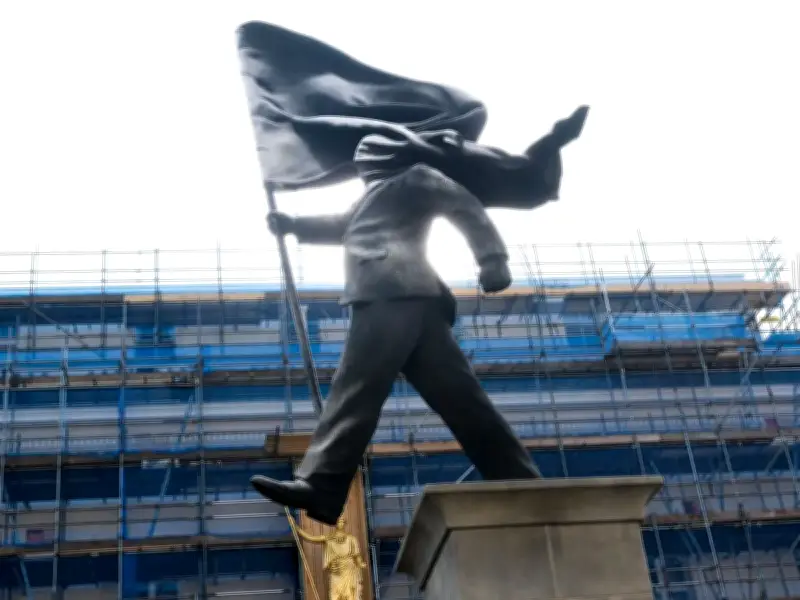
Westminster City Council has confirmed it is “exploring all options” for the future of Banksy's Blinded by the Flag statue, which stands in Waterloo Place near Waterloo Bridge. The elusive street artist installed the piece overnight on April 29 this year, and the council, which describes itself as the custodian, has been responsible for its safety costs since then.
The statue depicts a man marching forward off a plinth, his face covered by a billowing flag he holds, interpreted by critics as a commentary on the dangers of blind allegiance to symbols. It sits near the Florence Nightingale statue and the Crimean War Memorial, and a protective fence was erected around it after it first appeared.
No formal decision yet on statue's long-term future
Discussions about the artwork's fate have been ongoing throughout the summer, but no formal decision has been made. The Local Democracy Reporting Service understands that options will be discussed at an upcoming Cabinet meeting for the council.
A council spokesperson said: “Over the summer the council has been exploring all options for the Banksy Statue in Waterloo Place. No formal decision has been made about its long-term future.”
Council in contact with Banksy's team over copyright and costs
Westminster City Council has been in contact with Banksy's team. While Banksy retains the copyright, the council has covered the costs of keeping the statue safe since its installation in April. The council's role as custodian places it in a central position for determining the piece's next steps.
Banksy's London works and social commentary
Banksy, who was born in Bristol, frequently creates artwork in the capital. One of his most famous recent projects was the 2024 Menagerie, which saw animals sprayed across London, including elephants in Chelsea and piranhas at a Ludgate police box.
His works often offer social commentary, as seen in his controversial mural on the Royal Courts of Justice, which has since been removed. That piece depicted a judge beating a protester with a gavel, a tool not actually used by British judges, sparking significant debate.
The upcoming Cabinet meeting will be the next formal step in deciding the statue's fate, though the council has not provided a timeline for a final decision.