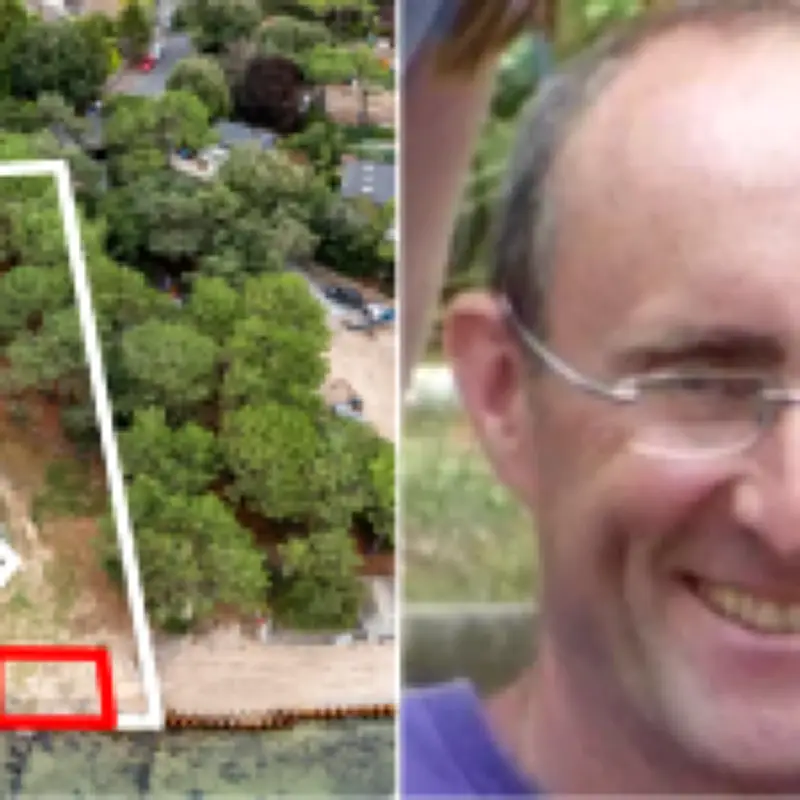
Simon Bowden, a 66-year-old millionaire and former banker, has secured planning permission to build a new five-bedroom house on his £820,000 plot in Sandbanks, Dorset, after a 28-year planning dispute. The property, located in the affluent area that is home to figures such as former Portsmouth and Spurs manager Harry Redknapp, will be built further back from the seafront than originally planned.
Long-running planning dispute
Bowden purchased the plot in 1998 and had fought for almost three decades to build his dream home. The original plan involved converting a 90ft-long 1920s wooden boathouse, which had already been converted into a residential property, into a new home. However, builders demolished about 90% of the structure instead of refurbishing it, which violated local planning rules introduced in the 1990s that prohibited new buildings within 82ft of the waterfront.
The 1920s boathouse had been exempt from these rules because it predated them, and a successful planning application in 1977 had allowed for an extension. But the exemption no longer applied after the structure was largely demolished, prompting the council to halt the work. Over the next 28 years, more than 20 planning applications were submitted, some of which were approved.

Approved design and features
The latest successful application permits the construction of a three-storey, five-bedroom house set back from the seafront. The L-shaped property will include an open-plan kitchen, living and dining area, an outdoor swimming pool, and a sea-facing balcony overlooking Brownsea Island, where Lord Baden-Powell staged the first Scout camp, according to the Daily Mail. The garden will extend down to Poole Harbour and include a jetty for direct water access.
The flat-roofed home has been designed to blend in with more than 50 trees on the site, which are protected under a preservation order. Planning documents stated: 'The design approach adopted and careful siting amongst the mature landscape will ensure that the dwelling is viewed as a positive addition which sits comfortably within its context.' Bowden's agent said only glimpses of the house will be visible from the road, and it will sit entirely outside the part of the plot identified as being at high risk of flooding.
Criticism of other developments
During the planning saga, Bowden criticised other proposed developments in Sandbanks, which has been dubbed 'Britain's Palm Beach'. He accused wealthy newcomers of replacing historic properties with 'ugly houses' and described one project as 'visual barbarism'. He recently objected to plans to demolish a 115-year-old Arts and Crafts home called Cama in Sandbanks and replace it with a modern home.
Bowden said: 'Replacing such a historic house is a great shame, especially as the replacement dwelling is a very poor pastiche of Arts and Crafts, but sadly typical of the new style of Sandbanks Barratt boxes on steroids. It has absolutely zero architectural merit.' Referring to letters supporting that application, he added: 'I see there were many letters of support, all from people who are recent migrants to Sandbanks and who also live in ugly houses. When it's gone few will remember the quality architecture on Sandbanks. No doubt this will get approved, but the effect on Sandbanks of these fake houses is highly negative.'
Bowden described his own approved project as an 'architecturally distinctive house which will add to the visual interest' of the conservation area. He declined to comment on his own development when contacted by the Daily Mail, and Metro has also contacted him for comment. The approval marks the end of a long-running dispute, with construction expected to proceed on the site.