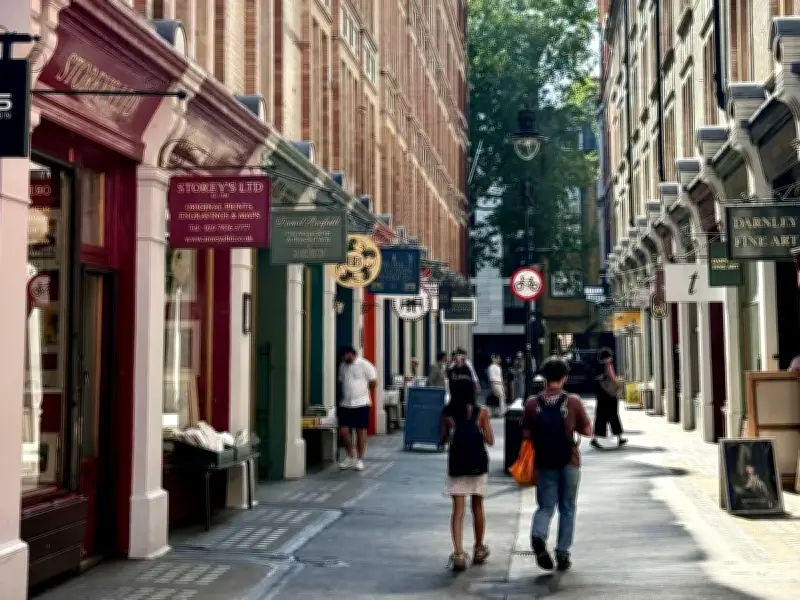
Cecil Court, a narrow pedestrian street tucked between Charing Cross Road and St Martin’s Lane in London’s West End, is home to specialist bookshops, antique dealers, and a store dedicated to Alice in Wonderland. Despite being just minutes from Leicester Square, many Londoners remain unaware of its existence, making it a hidden gem for those seeking an alternative to Oxford Street’s high-street chains.
The street is often compared to Diagon Alley from the Harry Potter series, though this connection remains unconfirmed. J.K. Rowling has not verified any link, but the whimsical atmosphere and concentration of independent shops contribute to the magical feel. Visitors can browse rare children’s books at Marchpane, which also houses a genuine 1970s prop Dalek, or explore Watkins, described as London’s oldest esoteric bookshop.
A Community of Independent Shops
The street’s independent businesses create a tight-knit community. Dr Matthew Eve, who manages Marchpane, told MyLondon: “We’re all very good friends. If I’m not having such a good day, I’ll just go have a natter with one of them. We help each other. If I can’t help I’ll send someone to another shop.” This collaborative spirit is evident in the range of offerings, from Bryars & Bryars’ antique maps and prints to the Alice in Wonderland-themed store.
The concentration of specialist businesses gives Cecil Court a unique character that contrasts sharply with nearby commercial areas. Shoppers can spend hours exploring rare finds, from first editions to vintage ephemera, all within a short walk from the bustling Leicester Square station.
Mozart’s London Lodgings and Flicker Alley
Cecil Court’s history is as rich as its shopfronts. In 1764, eight-year-old Wolfgang Amadeus Mozart lodged here with his family between April and August, marking their first London address after an initial night at an inn in Piccadilly. They rented rooms from barber John Couzin, and Mozart and his sister performed for King George III and Queen Charlotte from these lodgings. Some scholars argue Mozart composed his first symphony here, though the exact location remains uncertain.
The street later became a hub for the early British film trade, earning the nickname ‘Flicker Alley’. Its bookselling heritage also runs deep: William and Gilbert Foyle opened their first West End shop at number 16 in 1904, laying the groundwork for the famous Foyles bookshop chain. This layered history adds to the street’s appeal, blending literary, musical, and cinematic legacies.
Supportive Landlords and a Lasting Character
Shopkeepers credit the Cecil family’s Gascoyne Holdings with helping independent businesses remain viable through supportive management and reasonable commercial rents. Tim Bryars, of Bryars & Bryars, told MyLondon: “They are not trying to squeeze every last penny out of us every time.” Gascoyne Holdings confirmed to MyLondon that it aims to retain the street’s character and mix of tenants rather than seek the highest possible market rent.
This approach has preserved Cecil Court’s distinctive atmosphere, allowing independent shops to thrive despite broader retail pressures. For visitors, the street offers a chance to discover rare books, antiques, and unique gifts just a short walk from Leicester Square, making it a worthwhile detour for both tourists and long-time Londoners alike.