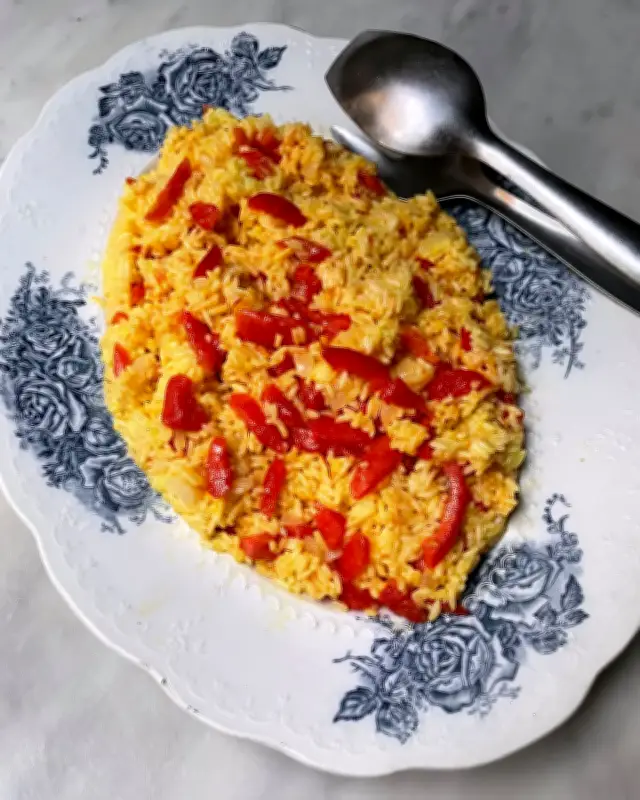
Rachel Roddy presents a recipe for Richard Olney's buttered saffron rice with ripe tomato slivers, a delicate dish that pairs well with poached chicken, fish, or hard-boiled eggs. The recipe follows the advice of David Smale, a commercial English saffron grower, on how to properly infuse the precious spice.
The laborious harvest of saffron
The saffron crocus produces six lilac-purple flowers, each with three yellow stamens and three orange-red stigmas that extend beyond the petals like insect antennae. These thread-like stigmas must be hand-picked when the flowers are fully open, a task that has remained unchanged since ancient times. To preserve color and flavor, the stigmas require rapid drying, a process that reduces their weight by about 80%. Tens of thousands of fiery filaments are needed to produce half a kilogram of dried threads, explaining saffron's exorbitant cost. Fortunately, just a few threads go a long way.
Saffron's journey from Persia to Essex
Native to Crete, Iran, and south-west Asia, the saffron crocus has been cultivated since early civilization for medicinal, cosmetic, culinary, and dyeing purposes. According to Alan Davidson in The Oxford Companion to Food, the Moguls introduced saffron from Persia to India, particularly Kashmir, while Arabs cultivated it in Spain by AD 960. Cultivation spread to Italy, France, Germany, and England—especially Essex—by the 13th century. In The Last Food of England, Marwood Yeatman describes fields of saffron crocuses near the Essex wool town of Chipping Walden, where women called 'crokers' harvested the crop on damp September mornings. By the early 1500s, the town had been renamed Saffron Walden.
Drying methods and historical theft
To preserve quality, stigmas must be dried immediately without damage. In hotter climates, drying occurs outdoors in the shade; alternative methods include mesh trays over charcoal, while English growers used kilns. The dried threads, or 'chives,' were sold as hay saffron or pressed between boards. A University of Cambridge project found documents from as late as 1871 recording saffron thefts from warehouses and druggists, but commercial cultivation in Britain had ceased by a few decades later.
Modern English saffron and the recipe
Today, growers like David Smale, a geophysicist by training, cultivate English saffron commercially. Smale advises that saffron threads must be soaked and infused to release their sunset color and warm, pungent, slightly metallic taste. He notes that 'after infusing, the strands should be very pale and the colour should have leached into the liquid,' adding that 'it takes just 10 or so saffron strands' for an exquisite effect.
Saffron rice with tomato serves four. Ingredients: 50g butter, 3 tbsp olive oil, 1 medium onion (peeled and finely diced), salt, 300g long-grain rice, 6-10 saffron strands (soaked in 2 tsp just-warm water), 500ml light vegetable stock or water, and 500g fresh ripe tomatoes.
In a heavy-based casserole with a lid, melt the butter and oil over medium-low heat. Add the onion and a pinch of salt, cooking for about 10 minutes until soft but pale. Stir in the rice and saffron with its soaking water for a minute until grains glisten. Add the stock or water, stir, then reduce to a gentle simmer, cover, and cook for 18-20 minutes until tender. Meanwhile, peel tomatoes by immersing in boiling water for five minutes, then cooling in cold water; skins should pull away easily. Quarter, deseed, and cut into strips or cubes. When rice is cooked, let it sit off the heat for 10 minutes to dry and swell, then stir in tomatoes and season with salt to taste.