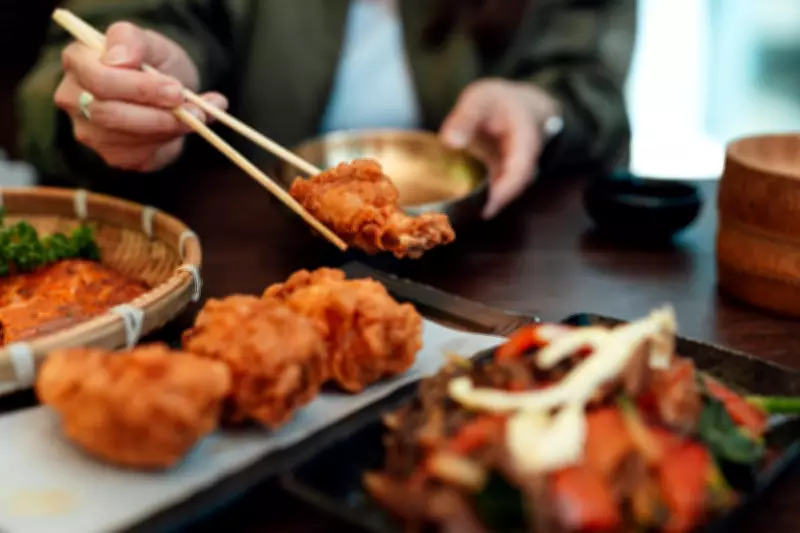
The Global Rise of Korean Fried Chicken
Korean fried chicken has transformed from a humble post-war import into a worldwide culinary sensation, earning South Korea the affectionate nickname Republic of Fried Chicken. This crispy, flavorful dish now sits at the forefront of the global K-food movement, with Korean chicken brands operating more than 1,800 stores across approximately 60 countries worldwide.
From American Import to Korean Innovation
The journey of Korean fried chicken began with American soldiers stationed in South Korea following the Korean War. However, the technique that made it distinctly Korean emerged decades later through culinary innovation. In the early 1980s, chicken shop owner Yoon Jong-gye in Daegu noticed customers abandoning chicken once it grew cold and dry.
Through experimentation with brining techniques and a glaze incorporating chili powder and corn syrup, he created yangnyeom chicken – sweet, sticky, spicy, and appealing even at room temperature. Yoon never patented his recipe but lived to see his creation spread far beyond his original small shop.

The Chicken University Phenomenon
At Chicken University southeast of Seoul, aspiring entrepreneurs learn the secrets of Korean fried chicken through intensive two-week residential programs. More than 50,000 people have passed through this sprawling campus, which features a giant chicken statue at its entrance. The training emphasizes delicate batter techniques and precise frying methods using specialized oil blends heated to exact temperatures.
"Don't rub it," instructors emphasize during batter preparation. "Keep it delicate." This attention to technique has helped standardize quality across thousands of establishments worldwide.
Culinary Technique and Cultural Significance
What sets Korean fried chicken apart is both its preparation and presentation. Unlike fast-food chains that sell individual pieces, Korean establishments typically serve whole birds cut into portions. The double-frying technique – first par-frying, then finishing when ordered – creates the signature extra-crispy texture that holds up under various sauces.
"We fry it once first, then when the customer orders, we fry it again," explains Kim Ki-deuk, who has operated a chicken shop near Korea University for over two decades with his wife Baek Hye-kyeong. "Otherwise it gets soggy. That's what makes it extra crispy."
The Chimaek Cultural Revolution
The cultural breakthrough for Korean fried chicken came in 2014 when the Korean drama My Love from the Star became a sensation across China. A line from its lead character about having "chicken and beer on the day of the first snow" reportedly triggered queues outside Korean chicken restaurants even during avian flu outbreaks.
This created chimaek – the portmanteau of "chikin" and "maekju" (beer) that has since entered the Oxford English Dictionary. The term describes both a meal and a social experience: friends gathered around a table with chicken at the center and draught beer within reach. Daegu now hosts an annual chimaek festival attracting over one million visitors each July.
Global Appeal and Market Expansion
South Korea boasts approximately 40,000 fried chicken restaurants – just a few thousand short of the total number of McDonald's branches worldwide. Most are small, family-run operations, but international expansion has accelerated dramatically. The number of stores abroad has nearly doubled in the past decade, appearing on menus from London to Los Angeles.
According to a South Korean government survey of 11,000 consumers across 22 cities spanning Asia, Europe, the Americas, and Australia, Korean fried chicken ranks as the most popular Korean food among international consumers.
Cultural and Social Significance
Professor Joo Young-ha, a cultural anthropologist specializing in food culture at the Academy of Korean Studies, attributes Korean chicken's global success to its universal appeal. "Unlike pork, chicken crosses religious prohibition boundaries," he notes. "And unlike kimchi, which is treated like a side dish, or bibimbap, which isn't immediately obvious as a dish, fried chicken is immediately recognizable as a meal."

The rise of Korean fried chicken also reflects broader social changes in South Korea during the 1980s and 1990s, when apartment living, dual-income households, and delivery culture reshaped daily life. Fried chicken – fast, convenient, and perfectly packaged for takeaway – fit perfectly into this evolving lifestyle.
"It's great that Korean chicken is known worldwide," reflects Kim Ki-deuk between orders at his shop. "Chicken is for everyone, young and old. Korea is such a small place. One bird doing all this work, introducing our country, our culture. It's quite something."