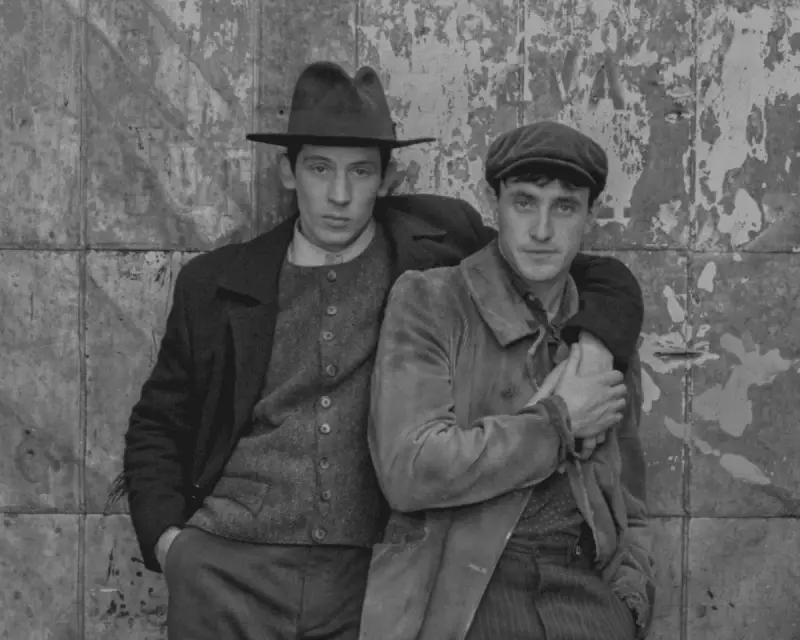
In a London hotel room on an autumnal afternoon, actors Paul Mescal and Josh O'Connor share an easy, tactile camaraderie that speaks of a deep friendship. They are here to discuss their latest collaboration, the poignant wartime love story The History of Sound, a project they remained devoted to for four years while funding was secured. Despite both having higher-profile films currently in release, their pride in this intimate work is palpable.
The Intimacy of Performance and Song
The film, set during the First World War, sees Mescal play Lionel, a farmer and singer from the American South, who falls for O'Connor's character, David, a musicologist. Separated by war, they later reunite to travel through rural Maine, capturing folk songs on wax cylinders. The act of singing, both actors agree, brought a unique layer of vulnerability to their performances.
"One of the things I love about this film is that it tells a story of intimacy in a new way," O'Connor reflects. "Irrespective of my own insecurities about my voice, singing is such a vulnerable act." Mescal concurs, comparing the tension to the hushed silence in an Irish pub before a song begins. "You're afraid to breathe," he says.

This project offered a stark contrast to Mescal's immediately prior work on the epic Gladiator II, a transition he describes as a "real headfuck" that involved losing significant weight. "The History of Sound felt like home to me," he admits. "It's where I'm most comfortable. I want to make more films like that versus ones on the scale of Gladiator II."
A Friendship Forged in Mutual Admiration
The pair's bond was evident throughout the interview, with O'Connor even helping the journalist with a chair. Their professional respect runs deep. O'Connor, who first contacted Mescal via video call in 2020 to congratulate him on Normal People, said he wanted to make the film partly to observe Mescal's process up close.
"When 'action' is called, and you look into your friend's eyes and see something depart, and something else take its place, that is a very moving experience," O'Connor explains. "Physically, the form is Paul. But emotionally, spiritually, he's vacated. How he does that, fuck knows."
Mescal returns the compliment, praising O'Connor's "generosity of spirit" which extends into his performances, sometimes at a cost to his own well-being. They discuss the concept of actors as "soul collectors," a term used by their friend Jessie Buckley, acknowledging that the characters they play leave a lasting imprint.
The Case for Rationing and Future Priorities
Perhaps the most striking revelation comes from Mescal, who, despite being at the peak of his career, is considering a strategic pullback. "I'm five or six years into this now... I'm also learning that I don't think I can go on doing it as much," he reveals, talking about rationing future roles.
He clarifies that rationing doesn't necessarily mean working less, but being more selective with projects that demand a significant emotional toll, like The History of Sound. "You can't keep going back and expect to consistently deliver something you're proud of," he states. Personal priorities and a desire to return to theatre are also factors. O'Connor echoes the sentiment, agreeing on the need for time off to avoid resenting the work.
This mindful approach extends to managing their mental health amidst playing often-troubled characters. "Being in your life, with your family, having privacy. You have to be in your life," O'Connor advises. Mescal jokes that if they applied the same care to themselves as they do to their characters, "we'd be therapists."
Looking ahead, Mescal is set to play Paul McCartney in Sam Mendes's upcoming Beatles films and is years into the two-decade-long production of Merrily We Roll Along with Richard Linklater. After the awards campaign for Hamnet, he hopes for a break until the Beatles project in 2028. O'Connor, meanwhile, can recently be seen in Wake Up, Dead Man: A Knives Out Mystery and The Mastermind.

The History of Sound is in cinemas from 23 January. It may not generate traditional Oscar buzz, but for its two leads, it represents the pure, vulnerable kind of filmmaking they cherish and hope to protect through their newfound philosophy of careful, conscious choice.