Exit 8 Review: A Disquieting Descent into Subway Station Madness
A glitch in the matrix, a tear in the fragile fabric of existence, and suddenly everything we understood about reality evaporates into thin air. Perhaps it reveals the world's true nature for the very first time, exposing its arbitrary cruelty and vast indifference toward the frantic lab rats scurrying toward an unimaginable demise. Genki Kawamura's psychological mystery film, Exit 8, draws inspiration from the Japanese video game bearing the same title, while echoing the repetitive cycles of Groundhog Day and the vertigo-inducing perspectives of The Shining's Overlook Hotel corridors, where every corner turned confronts you with something horrifying.
The Commuter's Existential Trap
Kazunari Ninomiya portrays a profoundly depressed young man navigating the crowded rush-hour chaos of a Japanese subway train. One fateful day, he witnesses a boorish commuter screaming at a young mother over her baby's noise. Upon disembarking at the platform, he receives a phone call from his ex-girlfriend, whose iPhone ringtone alone triggers visceral discomfort, compelling every audience member to instinctively reach for their own device with guilty dread. She reveals her pregnancy, and the eerie coincidence of these events deeply unsettles the protagonist.
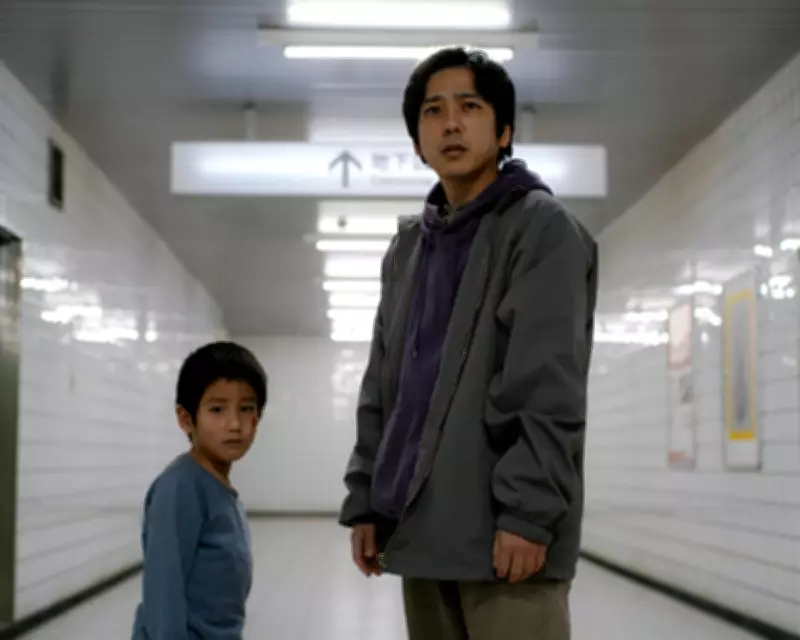
Venturing through lengthy, echoingly empty white-tiled passageways, he seeks the correct exit, Exit 8, a snake-eating-tail number reminiscent of the endless Möbius strip featured on posters for an Escher exhibition adorning the walls. Patiently following the signs for Exit 8, he soon realizes he has returned to his starting point. Another eerie, fruitless circuit reveals the same impassive man walking past him at precisely the same location. With mounting irritation, dismay, and ultimately existential panic, he comprehends that the exit has vanished. He is irrevocably trapped.

The Rules of the Psychological Game
Or is he truly imprisoned? Mysterious "rules" posted on the wall indicate that escape remains possible by simply continuing to walk forward. However, he must turn back in the opposite direction whenever he detects "anomalies" or inconsistencies in his surroundings. The posters, photo-booth machine, pile of rubbish, and locked security doors gradually become as familiar to him, and to the audience, as the layout of our own homes. Each successfully navigated circuit transforms into a completed level within this video game from hell.
He begins developing a peculiar relationship with other lost souls inhabiting this liminal space, including the impassive man portrayed by Yamato Kochi and a small boy played by Naru Asanuma. Typically, a film's overt resemblance to its video game source material results in fatal inertia or an imaginative deficit. Here, that connection constitutes the entire essence of the narrative. All these wage-slave commuters on the metro blindly believe in the game of life, swallowing the blue pill, repeating the same routines daily, and completing the levels of their professional careers, trusting that the rules, however fiendishly difficult, remain fair on their own terms.
A Parable of Modern Alienation
Yet the young man cannot escape. Is his nightmarish paralysis a metaphor for expectant-father anxiety? Perhaps. However, this film requires no midlife metaphorical interpretation to evoke sheer terror. It achieves crushing dread merely by unfolding within featureless modern buildings, what Marc Augé termed the "non-places" of modernity, whose architectural forms insist upon our anonymity and insignificance. Exit 8 stands as an elegant, chilling dream of despair, masterfully blending psychological tension with existential exploration.
This adaptation remarkably maintains fidelity to its video game origins, transforming potential weaknesses into narrative strengths. The sterile, repetitive environment amplifies the protagonist's psychological unraveling, while the sparse dialogue and haunting sound design immerse viewers in his escalating panic. The film's visual composition, with its stark white corridors and meticulous framing, creates a claustrophobic atmosphere that lingers long after the credits roll.

Exit 8 arrives in UK and Irish cinemas commencing 24 April, offering audiences a uniquely unsettling cinematic experience that transcends traditional horror tropes to probe deeper philosophical questions about reality, routine, and human connection in an increasingly impersonal world.