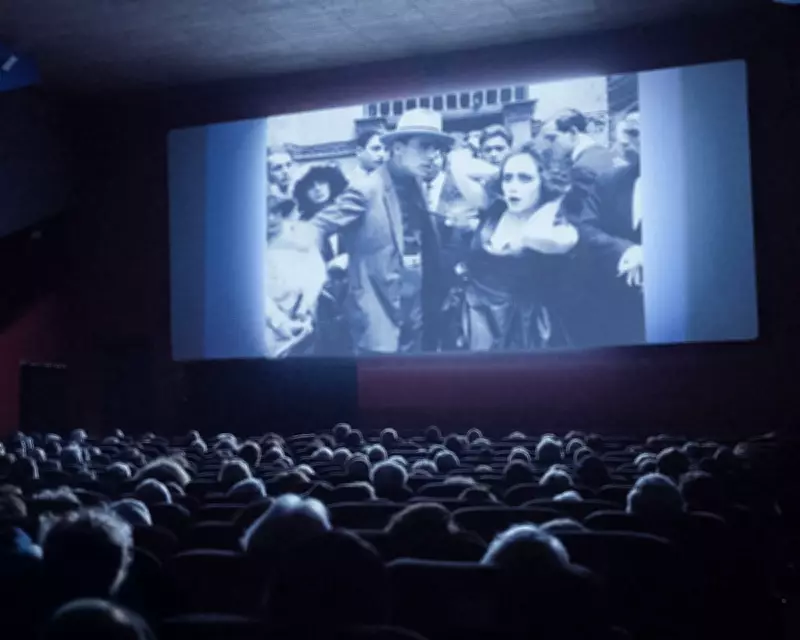
Elvira Notari: The Lost Pioneer of Italian Cinema Rediscovered in New Documentary
Elvira Notari, Italy's first female director, created a remarkable body of work that captured the raw, gritty squalor of early 20th-century Naples. With 60 feature films to her name, many hand-colored, and hundreds of documentaries and shorts, she was a prolific force in the film industry. However, her legacy was nearly erased by fascist censorship under Mussolini, leaving only three surviving features and fragments of her other works. Now, a new documentary titled Elvira Notari: Beyond Silence, directed by Valerio Ciriaci and produced by Antonella Di Nocera, is giving her a voice again, highlighting her artisanal approach and enduring influence.
The Gritty Realism of Notari's Films
Notari's films, such as È piccerella (1922), delved into the seamy underbelly of Neapolitan society. This melodrama follows the manipulative Margaretella and her obsessed suitor, Tore, who steals from his elderly mother to buy gifts for her. The movie opens with documentary shots of middle-class pilgrims at the Candelora festival, described in an intertitle as an "orgiastic pandemonium of Bacchantes." Notari's camera unflinchingly captured scenes like an obese drinker quaffing wine and a pauper displaying his few remaining teeth, challenging societal norms and the camera's gaze.
Giuliana Bruno, author of the 1992 book Streetwalking on a Ruined Map, notes that Notari had a desire to document reality as it was. "The fascists didn't want to see films about Neapolitan society in which a son takes money from his mother, but Notari didn't hide it," Bruno explains. "She wanted to show that Italy isn't this perfect place of white telephones, but a place that has all kinds of sexual and social deviant behaviors and where people go to jail." This commitment to realism made her work a target for censorship.

Fascist Censorship and the Loss of a Legacy
Notari ran Dora Film with her cameraman husband, Nicola, producing films that depicted Naples' squalor and brutality in Neapolitan dialect. Mussolini's regime, promoting a wholesome vision of a unified Italy, could not tolerate such depictions. A 1928 fascist censorship law specifically denied approval for Neapolitan films showing "stallholders, beggars, urchins, dirty alleyways, and people dedicated to dolce far niente [sweetly doing nothing]." Notari attempted to conform by bowdlerizing her earlier works, but the cost of shooting talkies and political pressure led to Dora Film's closure in 1930. She retired to Cava de' Tirreni near Salerno and died in obscurity in 1946.
Influence on Modern Cinema and Feminist Perspectives
Despite the loss of most of her films, Notari's DNA lingers in the works of Italian-American auteurs like Francis Ford Coppola and Martin Scorsese. Her pulsing street festival scenes presage the deceptively joyful weddings in The Godfather and Goodfellas, as well as the sordid sequences in Taxi Driver. Coppola's grandfather, Francesco Pennino, imported Notari's silent melodramas in the sceneggiata style, which involved live musicians interacting with emotional beats, influencing emigrant audiences' nostalgia.
Researchers also parse Notari's work for signs of feminist consciousness. Bruno points to a scene in 'A Santanotte where a girl sacrifices herself by marrying a man she suspects of killing her father, only to be stabbed in the breast—a motif repeated in È piccerella. Bruno likens this to sfregio, a 17th-century Neapolitan custom where women who defied patriarchal laws had their faces cut, a crime treated leniently. This highlights Notari's awareness of women's marginal roles in society.
The Documentary: Giving Notari a Voice Again
Elvira Notari: Beyond Silence investigates her truncated career by collaborating with modern artisans—a photographer, visual artist, novelist, and musicians—who draw inspiration from her work. Director Valerio Ciriaci explains that Notari left no accounts of her career, making her story fascinating due to its silence. "Thanks to the emptiness and the silence, we found an opportunity to collaborate with people already making projects about her," he says.

Producer Antonella Di Nocera adds that Notari's films resonate today because of their carnality and sensuality. "Elvira speaks to us like a contemporary because of her films' carnality and sensuality. The texture of silent film makes you feel so close to that sensuality," she notes. The documentary serves as a symbol of the right to memories, especially for women who have been silenced historically.
Cristina Jandelli, a member of the Elvira Notari National Committee, emphasizes that Notari's intertitles and depictions of street life reflect a class consciousness and empathy for social reality. "Street life was not a picturesque or convenient backdrop for her stories; it was the life she knew," Jandelli states.
Screening and Legacy Revival
Elvira Notari: Beyond Silence is screening at the Film Forum in New York on April 6 and will tour the UK in April and May. This revival comes at a time when Notari's work is gaining recognition as a crucial part of film history, challenging the erasure imposed by fascism and celebrating her pioneering spirit in Italian cinema.