Hollywood is finally turning its lens on big tech with the upcoming films The Social Reckoning and Artificial, but the industry itself is increasingly owned by the very companies it seeks to critique. The new movies promise drama and intrigue, yet the film industry's growing dependence on tech giants like Amazon, Apple, and Netflix is creating a complex dynamic that could stifle critical storytelling.
New Films Take on Tech Titans
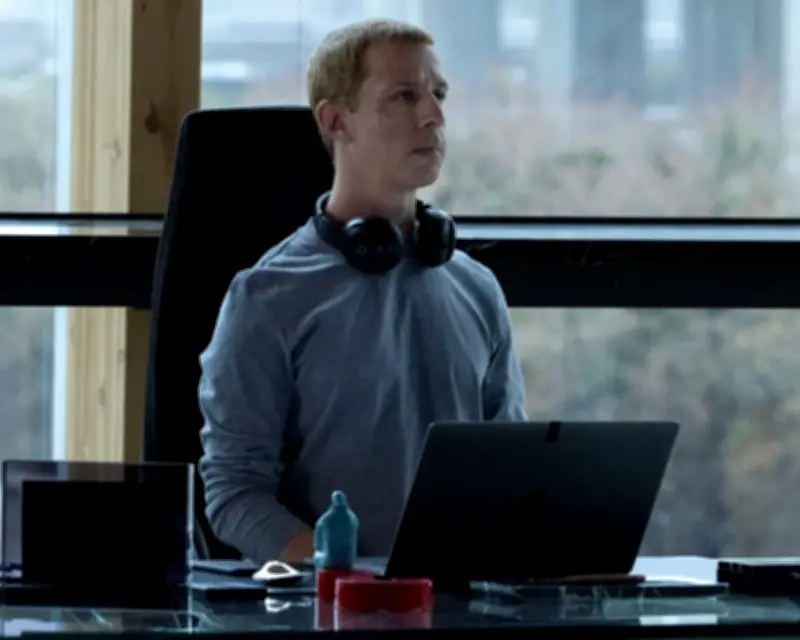
The Social Reckoning, the sequel to the 2010 hit The Social Network, focuses on Mark Zuckerberg's Meta and whistleblower Frances Haugen, played by Mikey Madison. Written and directed by Aaron Sorkin, the film stars Jeremy Strong as Zuckerberg, replacing Jesse Eisenberg. The trailer sets the tone with a reporter saying, "I know there are easier enemies to make," to which a colleague replies, "The mafia would be an easier enemy to make."
The original The Social Network, directed by David Fincher and co-written by Sorkin, won three Oscars and was a commercial success. It depicted Zuckerberg as an obnoxiously smart mogul whose mission to connect the world contrasted with his own social deficiencies. The sequel has a lot to work with, as Meta has been blamed for various social, emotional, and political harms over the past 16 years, and Zuckerberg has become increasingly controversial.
Artificial and the Perils of Tackling Big Tech
Luca Guadagnino's Artificial dramatizes the real-life saga of OpenAI and its CEO Sam Altman, played by Andrew Garfield. The film covers Altman's many enemies, including Elon Musk (Ike Barinholtz) and the OpenAI board (Monica Barbaro, Cooper Hoffman, and Yura Borisov), whose efforts to oust Altman backfired. The script has been described as "the Social Network on steroids."
However, life imitated art in an unexpected way. In June, Amazon MGM Studios dropped the completed movie, saying it would be "better served if it were released by a different studio." This came after Amazon and OpenAI entered into a $50bn "strategic partnership" to develop customised models for Amazon's customer-facing applications. Indie distributor Neon eventually stepped in and will release Artificial in early 2027.
Tech's Growing Influence on Hollywood
Most Hollywood studios are already wholly or partly owned by tech companies: Amazon, Apple, Sony, and Netflix. The $110bn takeover of Warner Bros by Paramount is currently held up in US courts, with a large chunk of funding coming from Oracle CEO Larry Ellison, whose personal wealth peaked at over $400bn but has since plummeted. Disney made a $1bn investment and entered into a licensing agreement with OpenAI last year, and A24 has entered into a $75m "research partnership" with Google's DeepMind.
This tech takeover could have a chilling effect on what gets made. Many Hollywood tech moguls are cosy with the Trump administration, which has exerted influence over media and entertainment. This may explain why Artificial nearly didn't get released and why Amazon paid $40m for Melania, a puff-piece documentary on the first lady. In 2024, Netflix announced Thumblite, a show billed as a "Silicon Valley House of Cards" starring Rosamund Pike, but it never got off the ground.
Resistance and Repercussions
Not even big tech calls all the shots. Elon Musk used his X platform to rant against Christopher Nolan's "woke" Odyssey, but everyone ignored him and went to see it anyway. Musk now faces a four-hour documentary by Alex Gibney, premiering at the Venice film festival, which promises to "reframe the story of the tech titan as the 21st-century reincarnation of the confidence man."
Meanwhile, Zuckerberg's Meta has resolved another landmark case in the US, agreeing to a $17bn settlement over allegedly harmful products. This could lay the groundwork for a third instalment in the Social Network/Reckoning franchise. As Hollywood becomes more entangled with big tech, the industry faces an uncertain future where the lines between critic and subject are increasingly blurred.