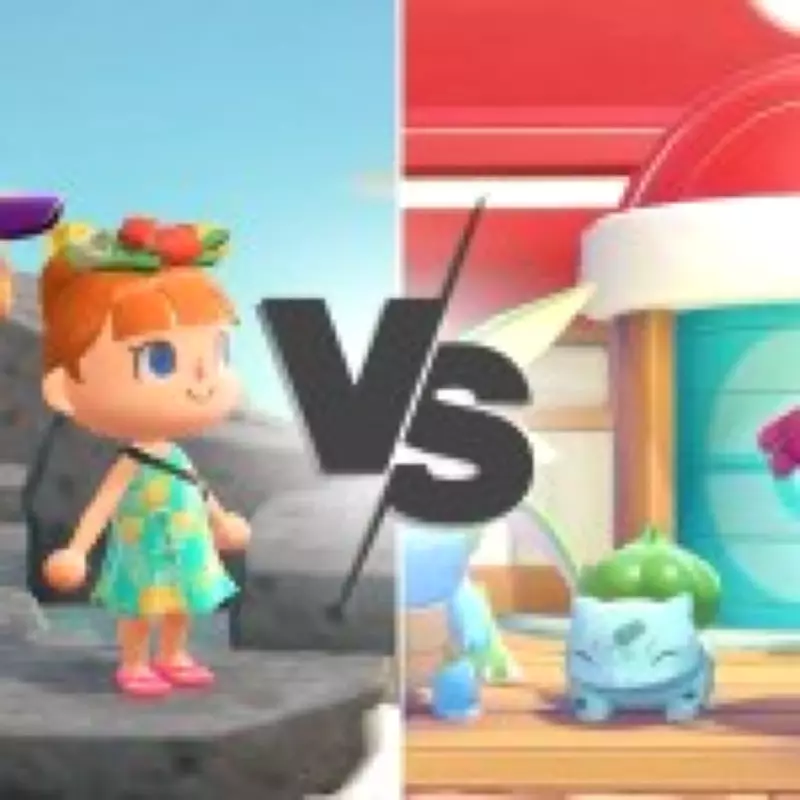
Animal Crossing Marks Quarter-Century Milestone Amidst Uncertain Future
Today marks the 25th anniversary of Nintendo's beloved Animal Crossing franchise, a series that began as an experimental title on the Nintendo 64 in 2001 before making its Western debut on GameCube the following year. Originally conceived as a unique gaming experience devoid of violence or traditional goals, Animal Crossing pioneered what would later become known as the "cosy game" genre, encouraging gentle interaction with virtual villagers and fellow human players.
The Rise and Plateau of a Quiet Giant
Throughout its history, Animal Crossing maintained a consistent presence across Nintendo consoles, quietly building its reputation with each new iteration without ever achieving blockbuster status. That all changed dramatically in 2020 with the release of Animal Crossing: New Horizons, which arrived fortuitously during global lockdowns and became an unprecedented cultural phenomenon. The game sold an astonishing 49.32 million copies, making it the second-best selling title on the original Nintendo Switch, surpassed only by Mario Kart 8 Deluxe.
Nintendo's puzzling response to this massive success has left fans and industry observers baffled. Rather than capitalizing on the momentum, the company cut support for New Horizons unusually early and has remained conspicuously silent about any potential sequel. Many had speculated that Nintendo was preparing a follow-up for the Switch 2 launch, but instead the company released a minimally enhanced Nintendo Switch 2 Edition this year, suggesting no proper sequel is imminent.

The Pokémon Pokopia Phenomenon
Complicating Animal Crossing's anniversary celebrations is the unexpected success of Pokémon Pokopia, which emerged as a surprise hit earlier this spring. While the exact sales figures remain undisclosed, the game has reportedly given a significant boost to console sales and transformed its Ditto protagonist into an internet sensation. Pokopia shares remarkable similarities with Animal Crossing in terms of overall atmosphere and customization mechanics, allowing players to create and furnish their own villages.
The parallels between the two games are impossible to ignore, with Pokopia even utilizing identical sound effects for certain emotes. While Nintendo has historically developed multiple titles within the same genre—most notably its extensive platformer lineup featuring Mario, Yoshi, Kirby, and Donkey Kong—the striking resemblance between Pokopia and Animal Crossing raises fundamental questions about the latter's future direction.
Identity Crisis in the Cosy Game Space
One of the few criticisms leveled against Animal Crossing: New Horizons concerns the gradual dilution of villager personalities throughout the series' evolution. Early games featured surprisingly acerbic characters, while recent iterations have smoothed these edges to create universally pleasant, if somewhat bland, interactions. This presents a potential opportunity for differentiation, as Pokopia's Pokémon characters operate with limited dialogue and personality types.
However, reversing this trend toward character blandness would represent a significant departure from Nintendo's recent approach to its mascots. The company has systematically softened the edges of its characters across multiple franchises, making a return to more distinctive personalities unlikely despite the creative possibilities it would offer.
Mechanical Comparisons and Future Possibilities
Animal Crossing maintains advantages in furniture and clothing customization breadth, but Pokopia offers more complex mechanical systems. While Animal Crossing's laidback nature remains part of its core appeal—making Pokopia seem almost frantic by comparison—the franchise faces genuine challenges in identifying meaningful evolutionary paths beyond villager personality adjustments.
Potential areas for expansion include enhanced online functionality and accessibility improvements, though these would represent departures from Nintendo's traditional design philosophy. The introduction of entirely new gameplay mechanics remains possible but would break with Animal Crossing's established traditions, particularly since crafting represented New Horizons' most significant innovation.

A Pivotal Anniversary at a Crossroads
Nintendo's handling of the Animal Crossing franchise continues to perplex observers, with the company failing to capitalize meaningfully on New Horizons' extraordinary success. The emergence of Pokémon Pokopia as a formidable competitor in the cosy game space adds further complexity to Animal Crossing's 25th anniversary, potentially relegating the once-dominant franchise to second-place status within Nintendo's own portfolio.
What Nintendo plans for Animal Crossing's future remains shrouded in mystery, as does how the company will respond to Pokopia's popularity. This anniversary arrives at an awkward juncture for the franchise, celebrating past achievements while facing an uncertain future in a suddenly more competitive landscape. Whether Nintendo's approach represents strategic genius or missed opportunities will only become clear with time, but for now, Animal Crossing's silver anniversary is tempered by the realization that its cosy game crown may no longer be secure.