AI or human? The hit song sparking debate
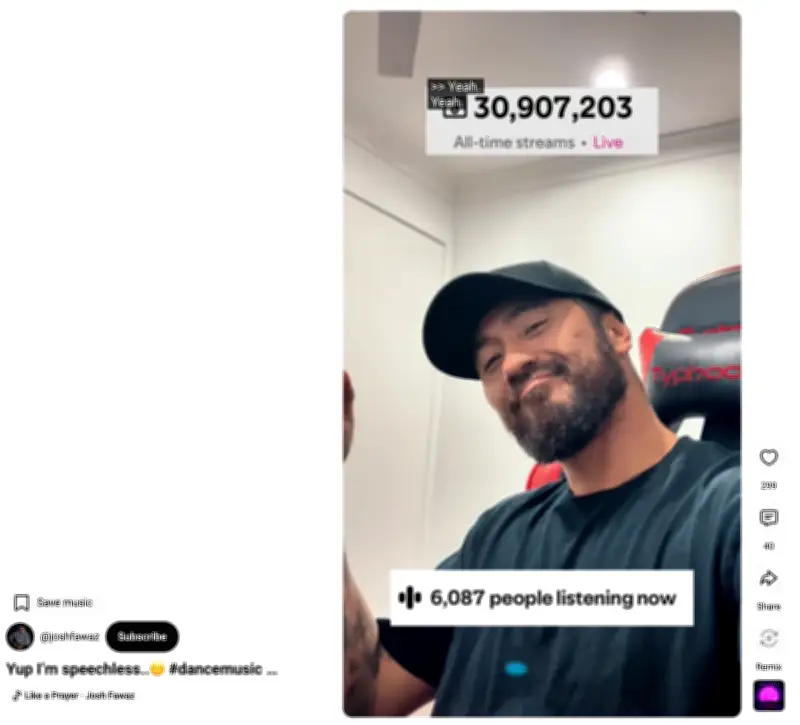
An Australian producer, Josh Fawaz, has gone from little-known artist to viral sensation in months, with his cover of Madonna's Like a Prayer topping the National Radio Airplay chart and the global iTunes electronic chart. However, music experts and fellow musicians question whether the track was produced using generative AI.
While producers often use software like Ableton Live or AI for mixing and mastering, generative AI creates the song from a text prompt with minimal human input. Fawaz's song credits list him as performer and his uncle Fadi Fawaz on synths and production, but critics point to hallmarks of AI music generators like Suno, such as heavy compression.
Expert analysis and industry concerns
Sam Whiting, senior research fellow at RMIT's school of media and communication, said the vocal performance would be impressive if human, but if AI-generated, it raises worrying questions about valuing human expression. Needs No Sleep, a producer and DJ, described AI-generated content as the biggest issue in music, noting that AI music receives royalties that divert funds from real artists. He pointed to distinguishable features like sloppy drums and vocal artefacts.

Fawaz responded on Instagram, stating, "I use AI as a tool. What I care about is providing my listeners with good music." His management, Hallwood, did not respond to questions.
Commercial success and radio play
Fawaz's Like a Prayer has 35 million streams on Spotify and his album Dance Like Nobody's Watching reached No. 18 on the Aria Australian artist albums chart. Since July 1, a new commercial radio code requires transparency about AI-generated voices on air, but it does not apply to music. Major radio networks ARN, Nova Entertainment, and Southern Cross Austereo did not comment on their AI policies.
Copyright and royalty implications
The Australasian Performing Right Association and Australasian Mechanical Copyright Owners Society confirmed Fawaz has been a member since 2021, and royalties for Like a Prayer will be paid to original human rights holders Madonna and Patrick Leonard. The Media, Entertainment and Arts Alliance advocates for equitable remuneration in copyright law to compensate creatives when their work is used by AI companies, and for mandatory watermarking of AI-generated content.
Whiting noted that streaming culture has conditioned listeners to accept AI-produced sounds without critical engagement, and commercial radio promoted the track without scrutiny. The debate highlights the growing trend of AI in music, with major labels striking deals with AI companies and AI songs reaching top charts.