Marie Kreutzer, the Austrian director known for the psychological thriller The Ground Beneath My Feet and the Habsburg biopic Corsage, presents a new Franco-German drama that is both coldly eloquent and deeply disquieting. The film explores the lives of two women who find themselves imprisoned by their sense of duty and loyalty to the men they love. One woman discovers something horrific about her husband and immediately enters a state of negotiated denial, while the other, a dedicated police officer, becomes increasingly dependent on a live-in caregiver for her difficult elderly father.
A Tale of Two Women
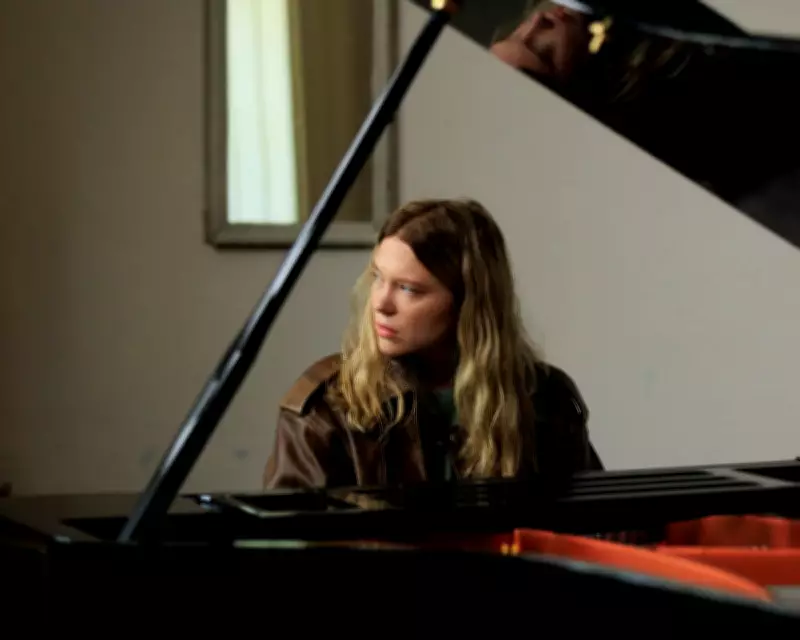
Léa Seydoux portrays Lucy Weiss, a French musician who has cultivated a devoted, albeit niche, following for her experimental pop-classical hybrid performances. Her mother, played in a cameo by Catherine Deneuve, was a more conventionally successful concert pianist. Lucy enjoys a comfortable life in Munich with her German TV director husband, Philip (Laurence Rupp), and their lively nine-year-old son, Johnny (Malo Blanchet). However, when Philip suffers a breakdown, collapsing into sobs in Lucy's arms due to apparent overwork and drug problems, she agrees to move to the countryside to ease his emotional pain. For a while, things seem to improve. Philip is clearly devoted to Johnny, playfully filming him and Lucy for a personal project and building a trampoline for his son in the garden.
But their tranquility is shattered when Elsa (Jella Haase), a detective with the Munich police, arrives at their door accompanied by half a dozen uniformed officers with a search warrant. They demand to confiscate all of Philip's computers, tablets, and smartphones. Stunned, Lucy pleads for an explanation from both Elsa and Philip, but Philip, though clearly aware of the reason, remains silent.
Compelling Performances
Haase delivers a fierce, calm, and professional performance as Elsa, her gaze uncompromising yet not confrontational, with her hair tied back. This contrasts sharply with Lucy's tousled, often sleepy sensuality, which from this moment disintegrates into a kind of horror, as if a sleepwalker has been suddenly awakened. Kreutzer cleverly invites the audience to compare Philip's expression to that of another suspect Elsa and her team investigate. When they arrive at another door, the man of the house opens it, sees the police, realizes instantly what is happening, but his denial and aversion keep his expression politely blank as he asks if he can help.
Philip spins Lucy a series of fatuous lies: that he was viewing material on chat groups and online picture-sharing forums as research for a new documentary, or even more implausibly, that he was merely brokering these images for money to afford their new country home. Lucy's ordeal lies in her desperate need to believe him, to twist and contort what she sees to fit his shifting explanations. Meanwhile, Elsa is unbending in her pursuit of wrongdoers at work, but at home, she makes excuses for her father, Hermann (Sylvester Groth), when he inappropriately harasses his care worker, Natalia (Patrycja Ziółkowska).
The Central Question
The film's central point is whether all this involves Johnny. Philip swears it does not, but Elsa notes that despite the police child psychiatrist and doctor finding no evidence of abuse, one can never be sure. It is this uncertainty that forms the drama's agony. Gentle Monster is a bleak, pessimistic film with two excellent lead performances. It screened at the Cannes film festival.