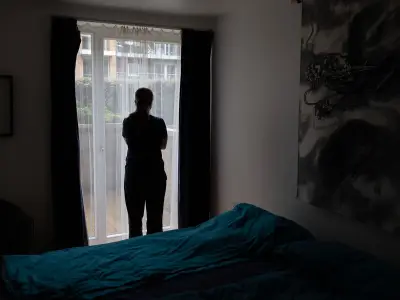
A 33-year-old woman, Flora, recalls how her life changed after being raped in her sleep in 2017. 'I used to be a happy-go-lucky person – really positive and just got my teeth stuck into life,' she says. 'My love for life completely flipped after the incident. I lost myself mentally, physically and emotionally and gained weight from overeating and drinking a lot of alcohol.' Nearly 10 years later, the impact persists, but one aspect she believes is rarely discussed is the financial toll.
The Financial Fallout of Sexual Assault
According to the Office of National Statistics (ONS), among women who reported rape or assault by penetration (including attempts) between March 2017 and March 2020, 21% had to take time off work and 5% lost or gave up their job. While emotional and physical effects dominate conversations about violence against women and girls (VAWG), the financial and professional ramifications – and their impact on the economy – are often overlooked.
Flora worked for her family's business, which allowed her to prioritize her mental health, but the assault still affected the company. 'I couldn’t face my front-of-house role after the assault, so my family had no choice other than to hire more people,' she explains. Three years later, she moved back to London for a new job and prepared for trial by booking compassionate leave, only for the case to be dropped days before the start date.

When the defence claimed Flora had 'sexsomnia,' she spent £1,850 on sleep consultations to prove otherwise. The Crown Prosecution Service (CPS) closed the case, and her assailant was formally acquitted. Without compelling new evidence, the case cannot be reopened, meaning Flora may never see justice.
Compensation and Emotional Devastation
The CPS admitted an error and awarded Flora £35,000 in damages, but the emotional impact was catastrophic. 'Two weeks later, everything sunk in and it took me back to day one of being raped,' she recalls. 'Knowing there’s a rapist out there with no accountability made me spiral. I was completely broken, but this time it felt 10 times worse.' She felt suicidal and sought emergency help. When she returned to work in June 2021, she was signed off for six months on mental health leave. After a slow-phased return, she realized she could no longer manage her managerial position. 'I could barely manage myself, let alone a team, so I took a demotion. To go back to where I’d started in the job was very demoralising, and obviously a financial hit too.' She has since returned to a senior role but cannot recover the lost years of career progression.
From March 2021-22 in England and Wales, 798,000 women were victims of sexual assault, and 1.6 million experienced domestic violence. With underreporting, the true financial impact is likely higher. The UK government estimates VAWG cost the country around £66 billion for the year ending 2017, including healthcare, social services, housing, and lost economic output. Each NHS appointment costs £30-£40, specialist police services up to £100 per hour, and trials thousands of pounds. Survivors also face hidden costs like private therapy, new phones (if police keep evidence), and security systems.
Dr. Sara Reis, deputy director of Women’s Budget Group, notes that domestic abuse often involves financial abuse, restricting women’s ability to work. 'Survivors of domestic abuse are therefore more likely not to have had a job and so when leaving the abusive relationship, they may struggle getting back into the labour market, particularly if they have children and have to arrange childcare.'
Research on Economic Costs
Professor Abi Adams from Oxford University has researched the economic costs of VAWG using Finnish data. She found that 'perpetrators of violence in the workplace are less likely to end up leaving the firm and losing their job than the victim, and the suicide rate quadruples for survivors of sexual assault.' Her data also shows that 'women who are raped have 26% lower earnings in the five years after an assault compared to women who had identical career trajectories and identical mental health right up to the assault.' Additionally, those assaulted in their late teens and early 20s are 'almost a third less likely to complete university.'

Anu Verma, a trauma therapist and survivor of childhood sexual abuse, says low self-worth impacted her 'schoolwork and career path.' 'I remained in lower-paid jobs because I didn’t feel I deserved anything more.' She sees the same pattern in her clients, who struggle to fulfil their potential after abusive experiences.
The Cost of Court Transcripts
Charlotte endured a Magistrate’s court trial where she was grilled for over four hours, and her alleged perpetrator was found not guilty. Advised not to stay after testimony, she didn’t understand the verdict. When she asked for transcripts, she learned they typically cost between £0.74 and £2.30 per 72-word folio, potentially over £25,000 for a full trial. 'I was immediately told that they would cost thousands of pounds, which I didn’t have, so I wasn’t able to get them,' she says. Because Magistrate’s court proceedings are never recorded and notes are only kept for three to six years, by the time she asked, they had been deleted.
Charlotte launched the campaign Open Justice For All to fight for free access to notes for crime victims. A pilot scheme launched in May 2024 now allows victims of rape and serious sexual offences to apply for transcripts of judges’ sentencing remarks at no cost – a significant victory.
Former Safeguarding Minister Jess Phillips commented on the government’s 2024 pledge to halve VAWG in 10 years, with £13 million invested so far: 'The plague of violence against women and girls continues to scar victims up and down the country, and also brings a significant economic burden for our society. We are committed to supporting survivors to raise awareness and ease the burden of hidden costs.' However, Professor Adams notes, 'At the end of the day, the government has a budget constraint. There’s a finite amount of money and resourcing, and what we want to understand is, where should that be going?'